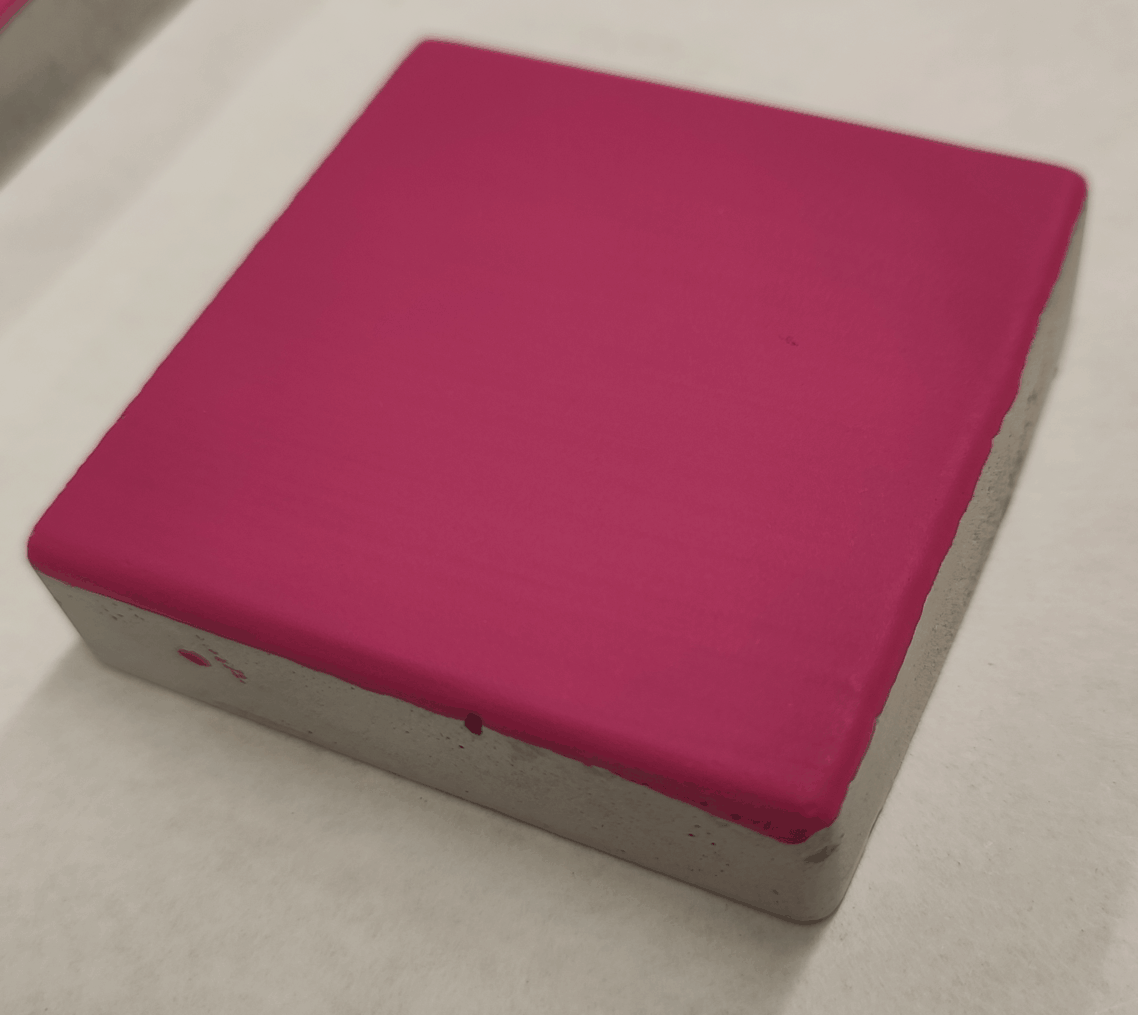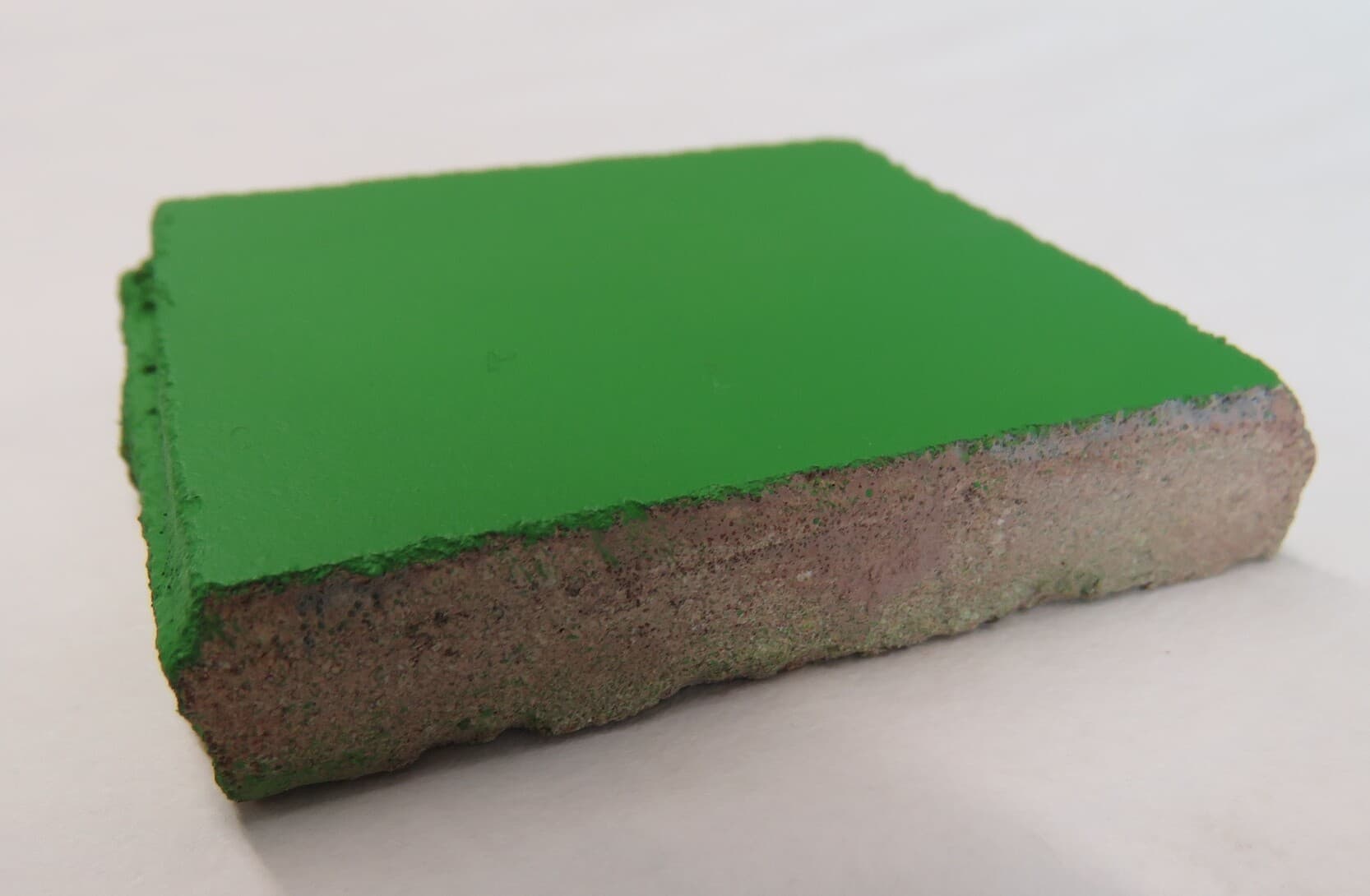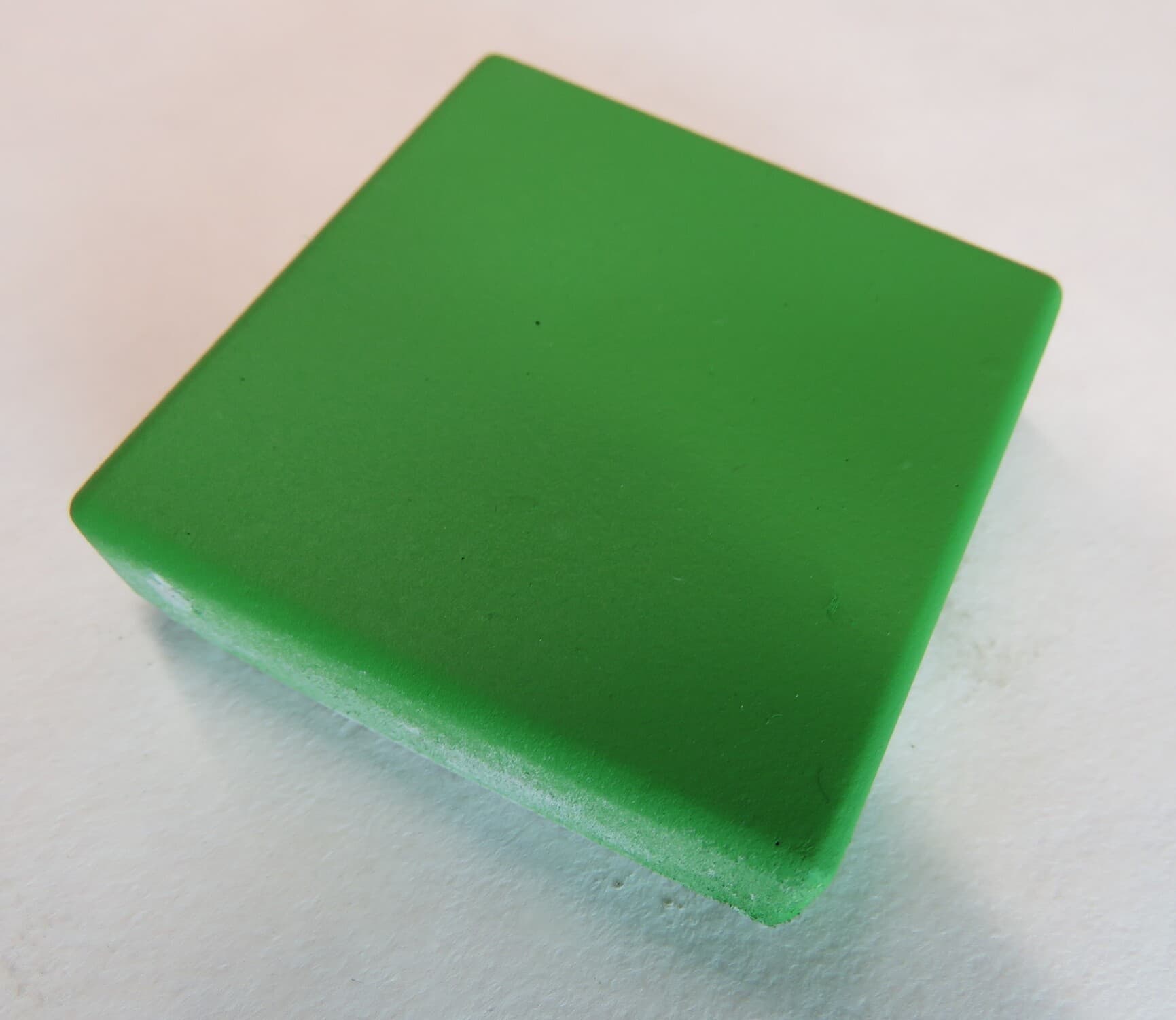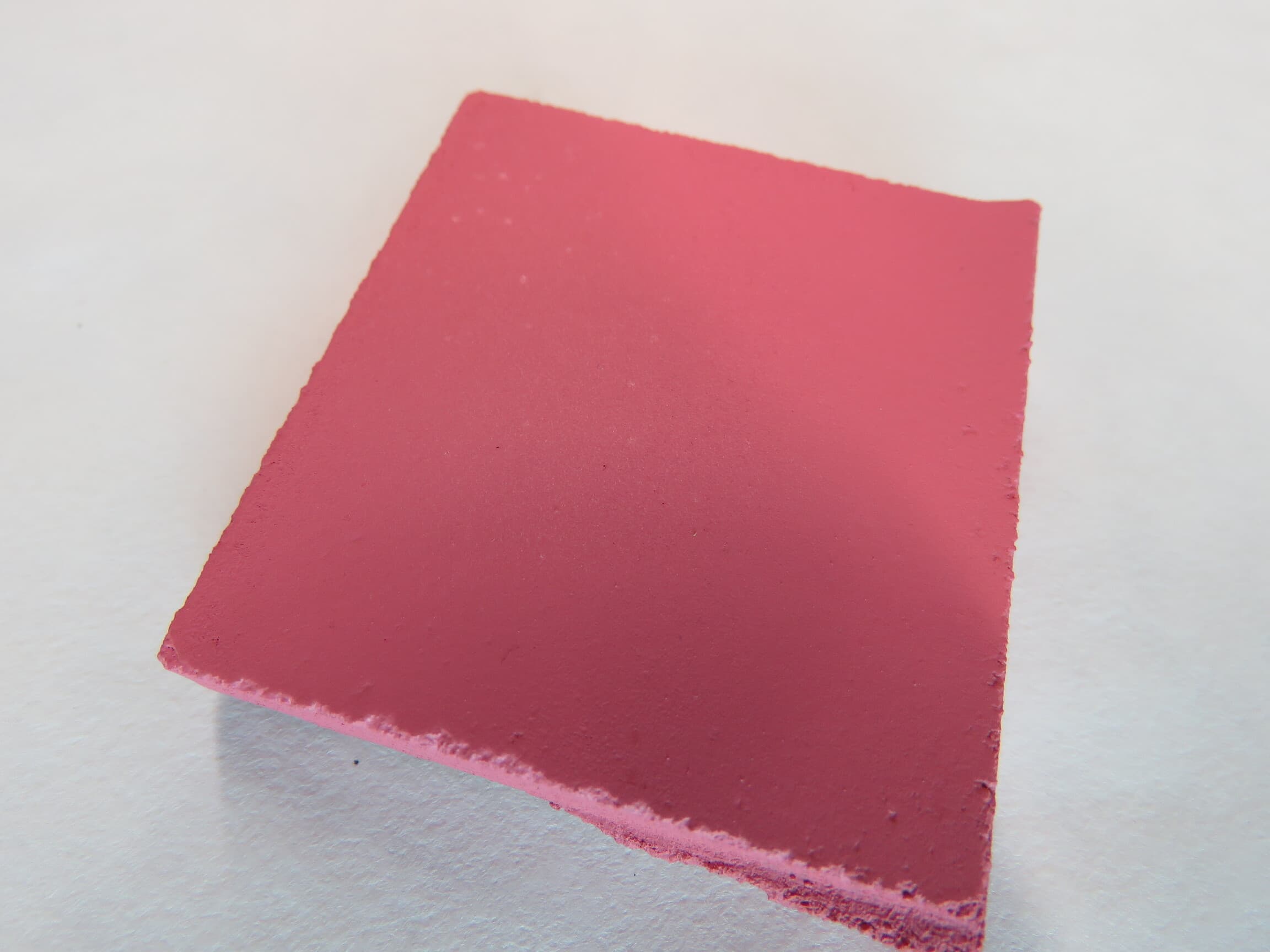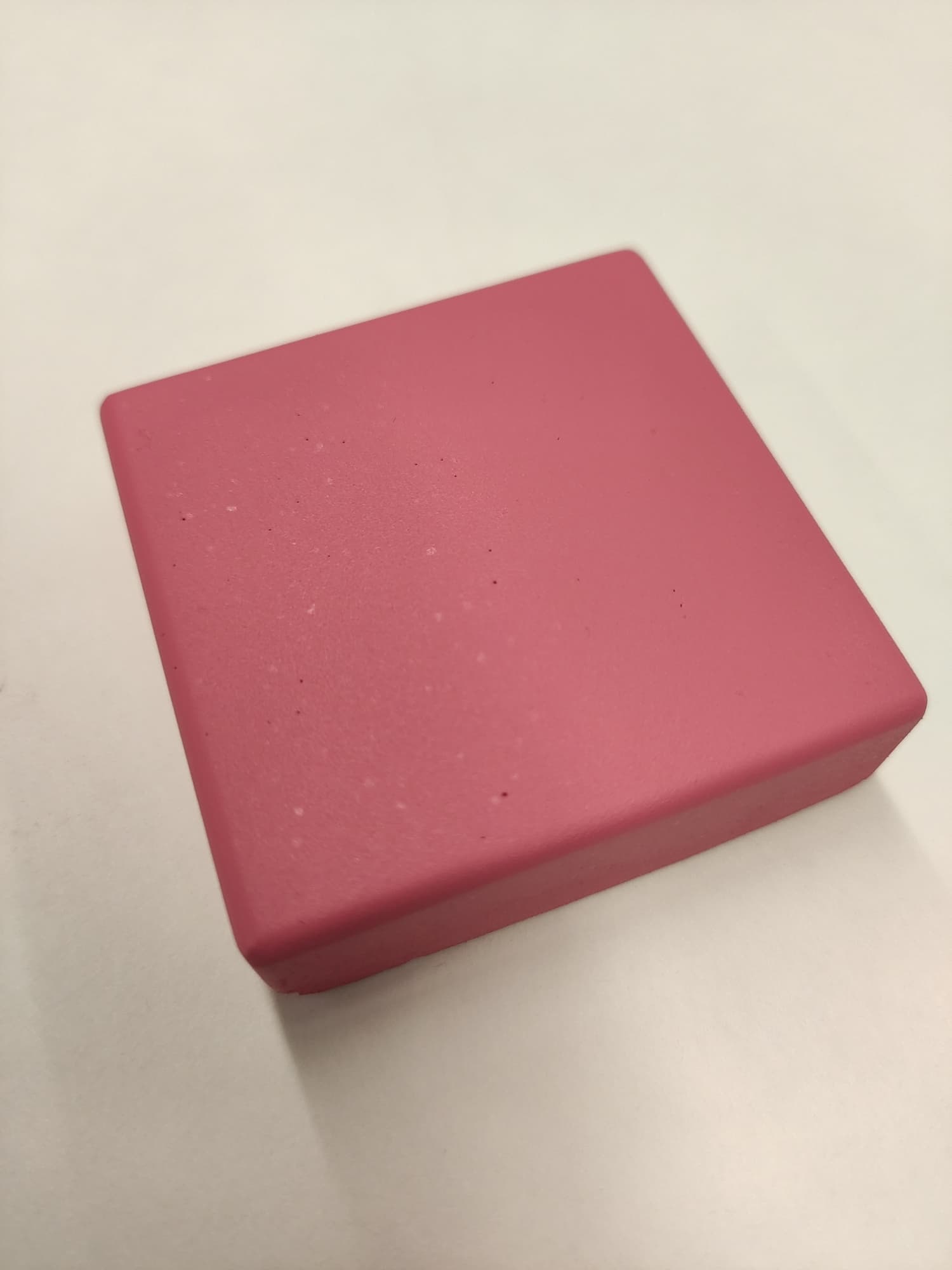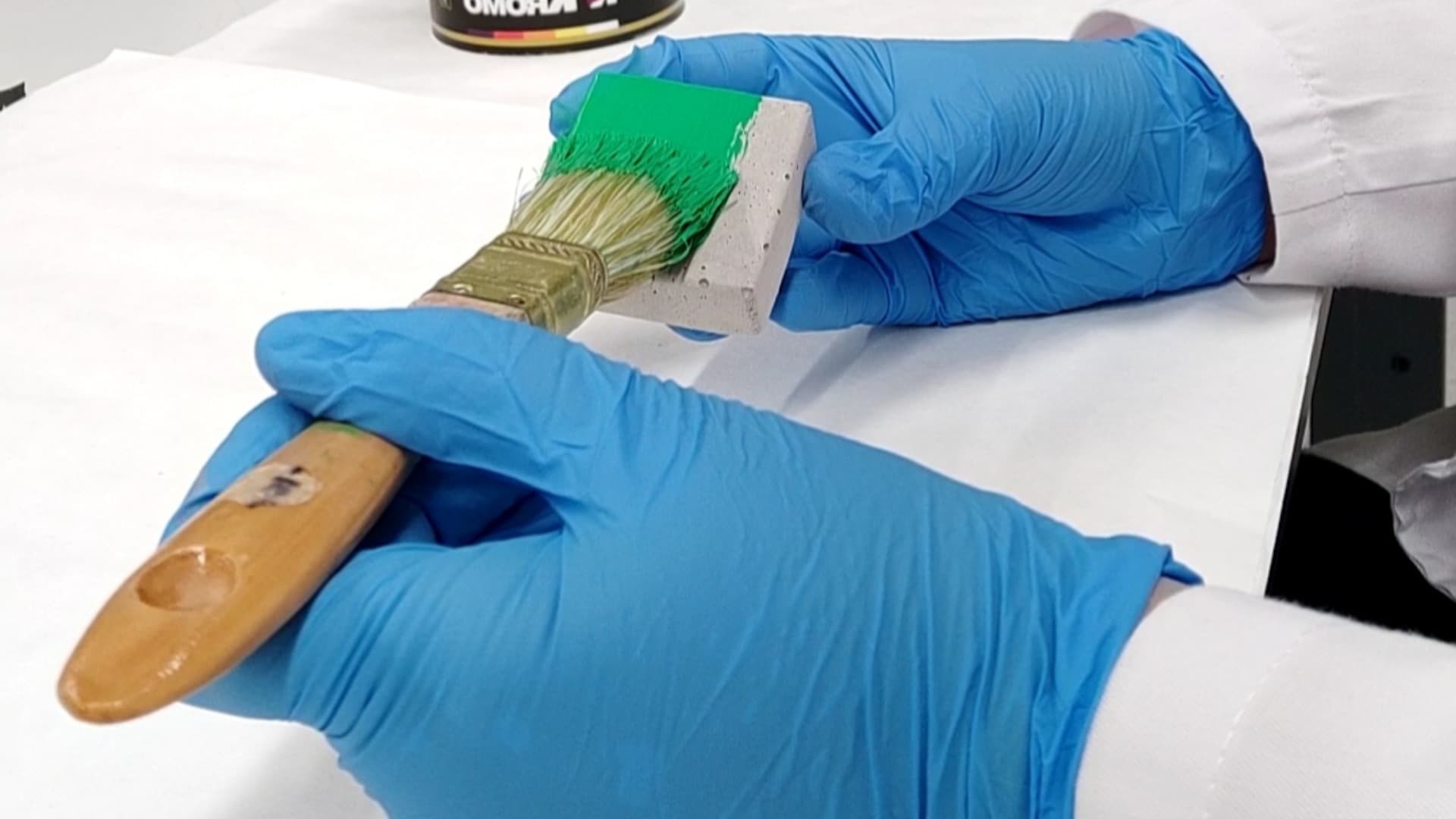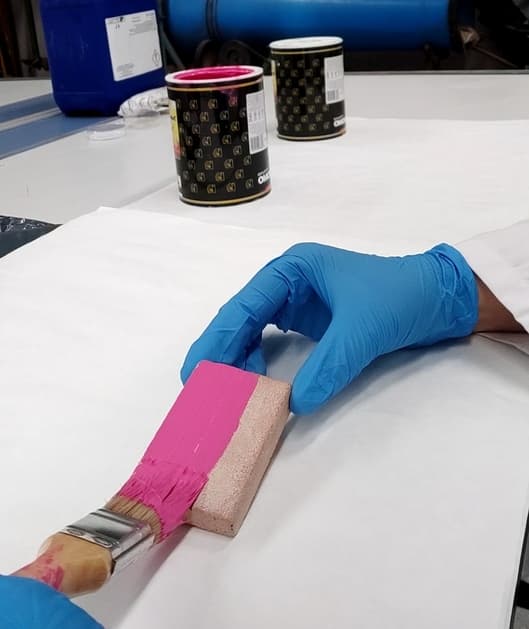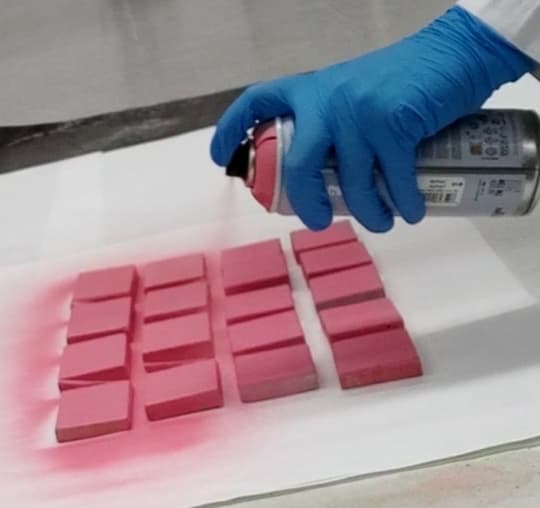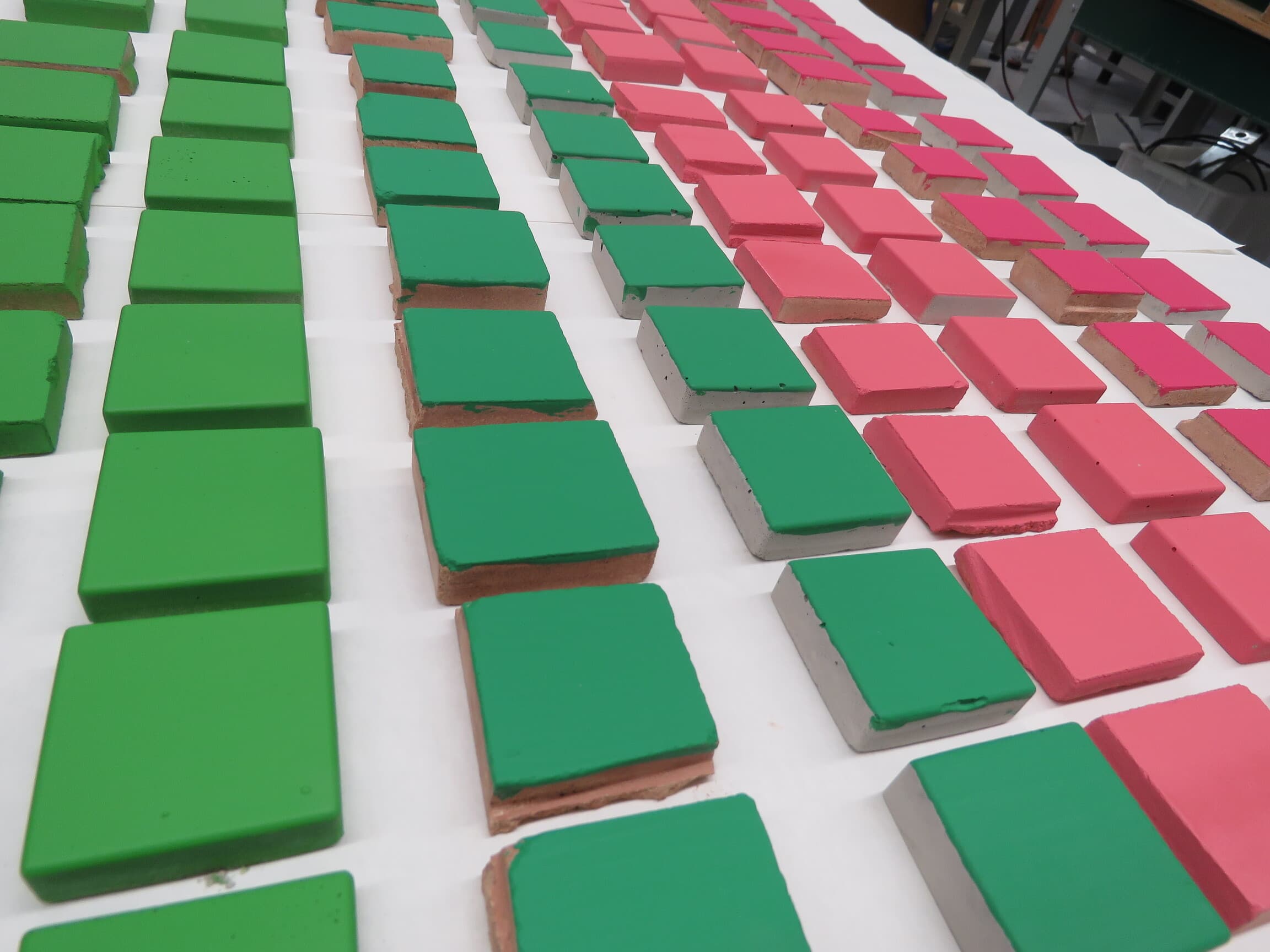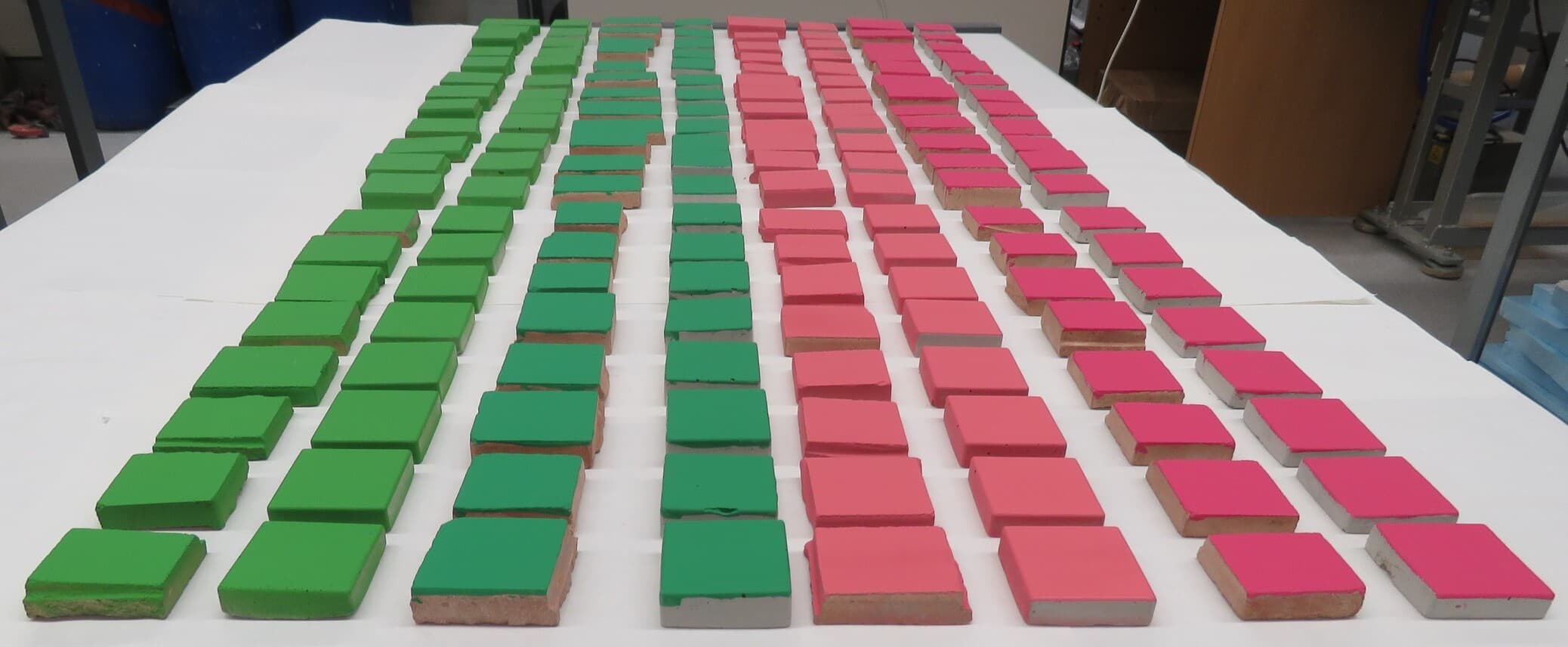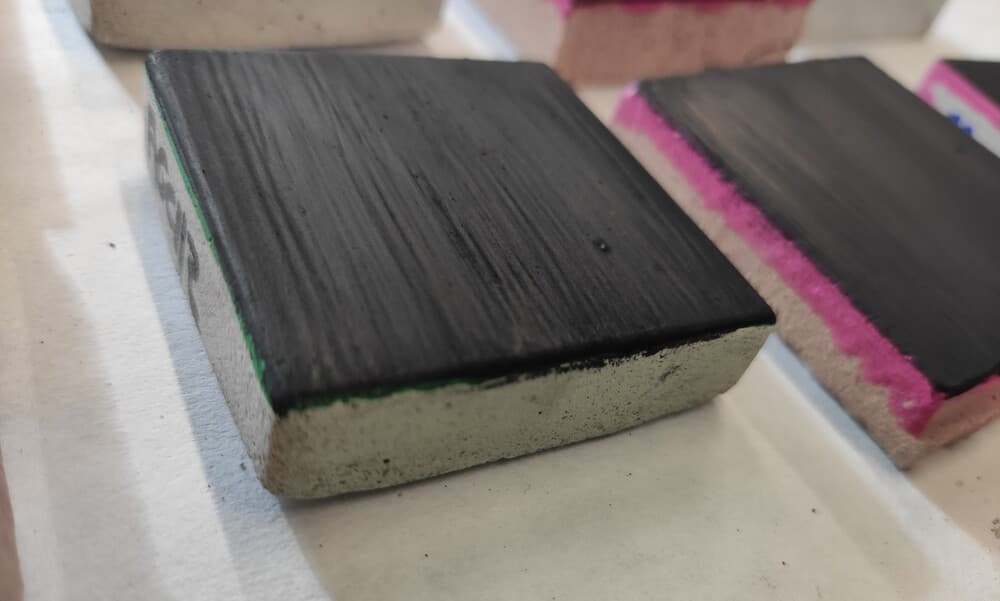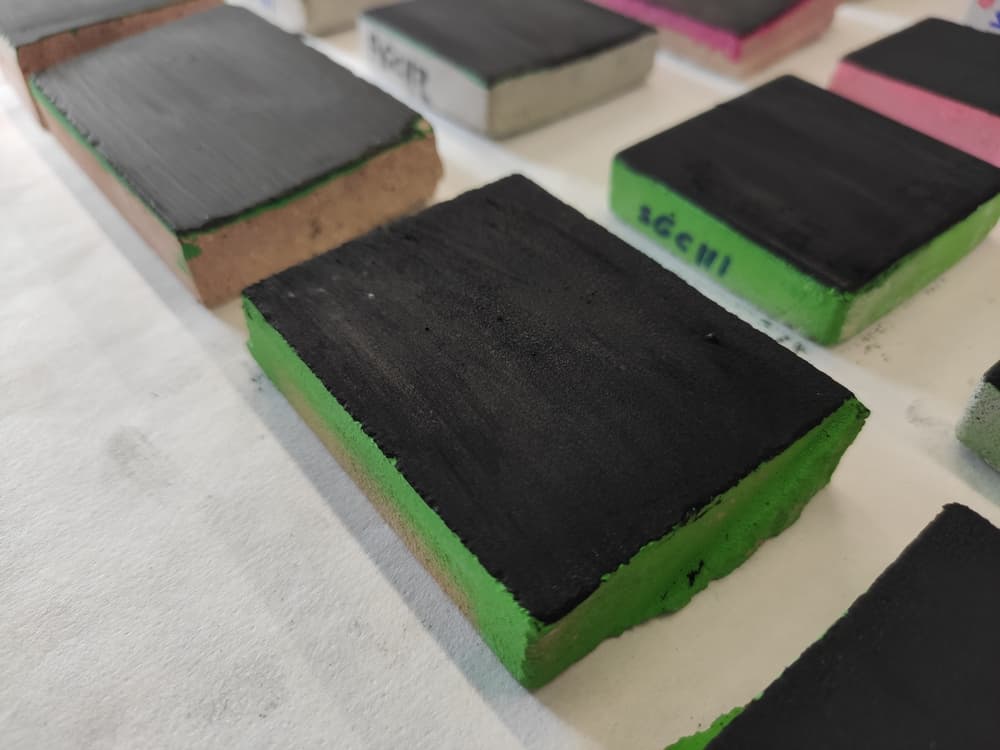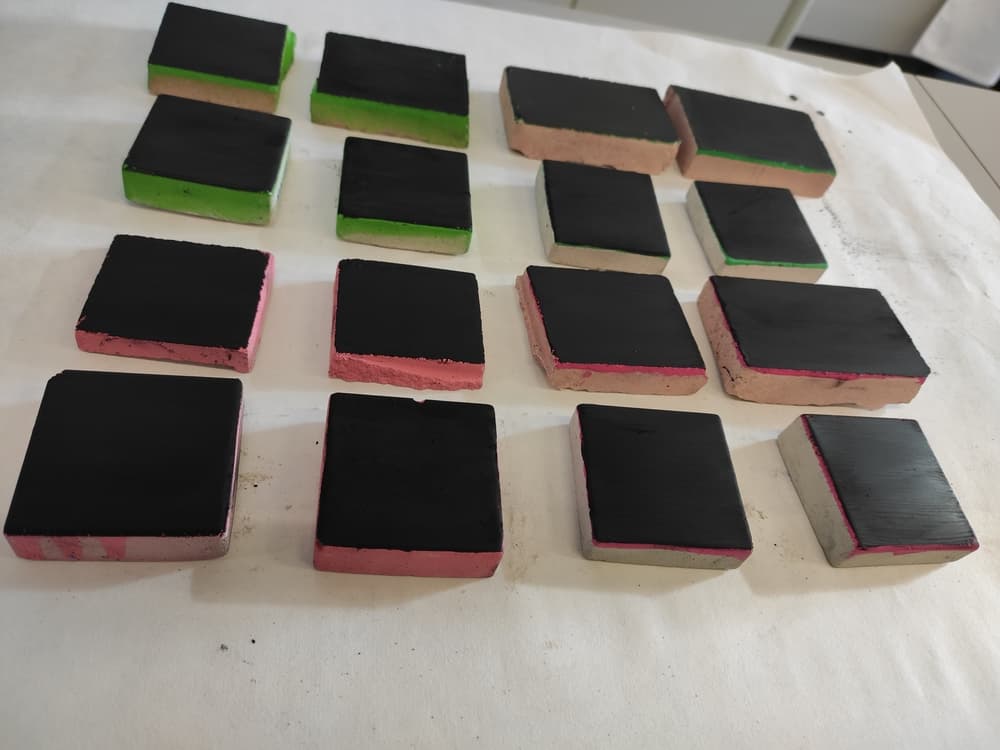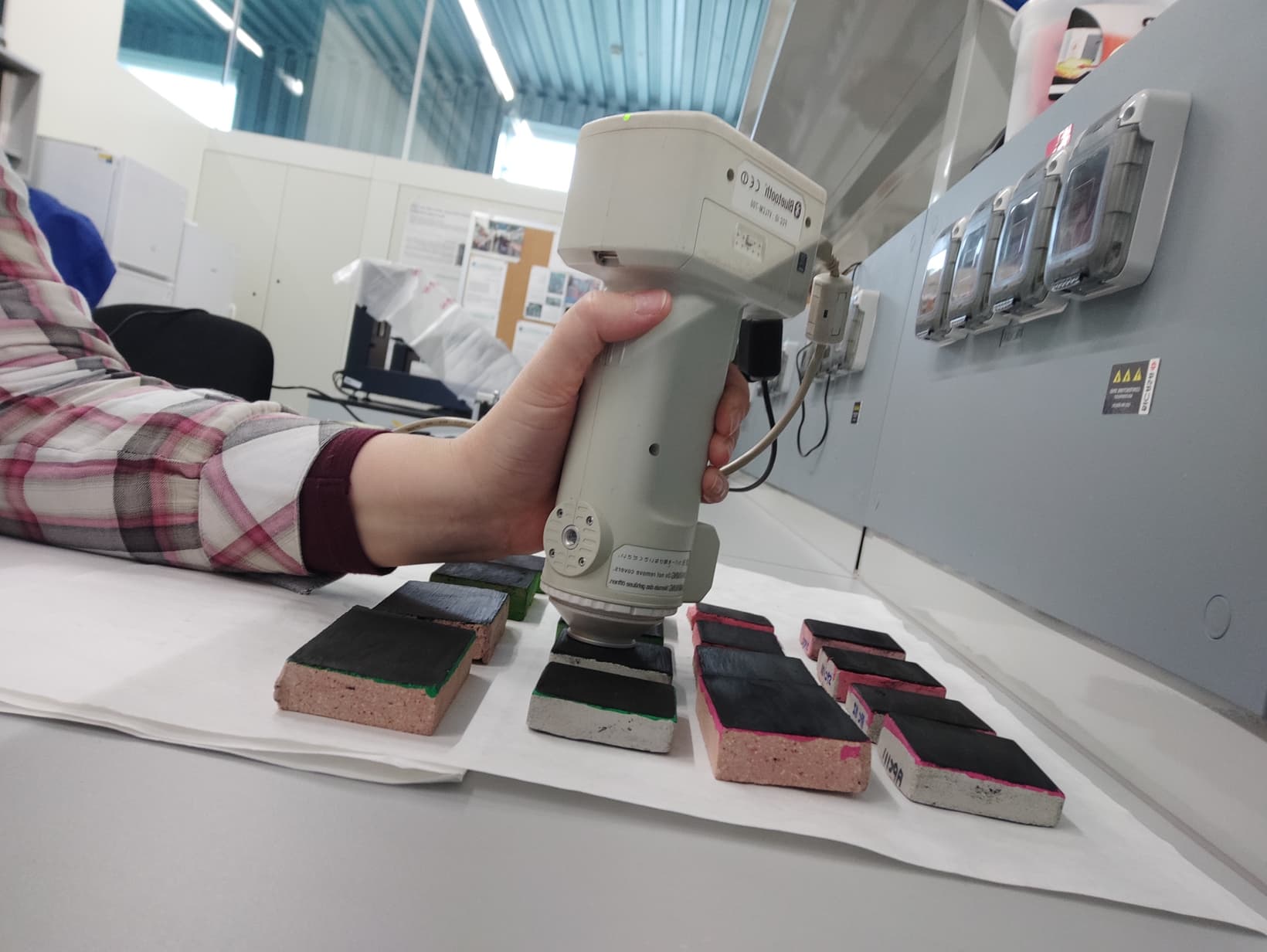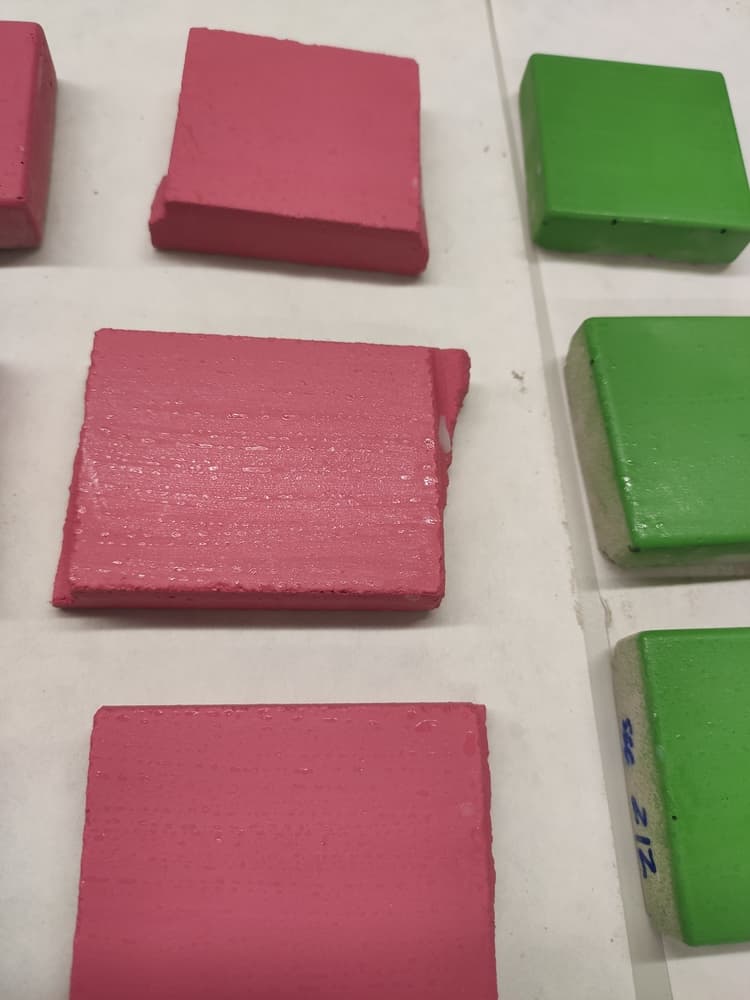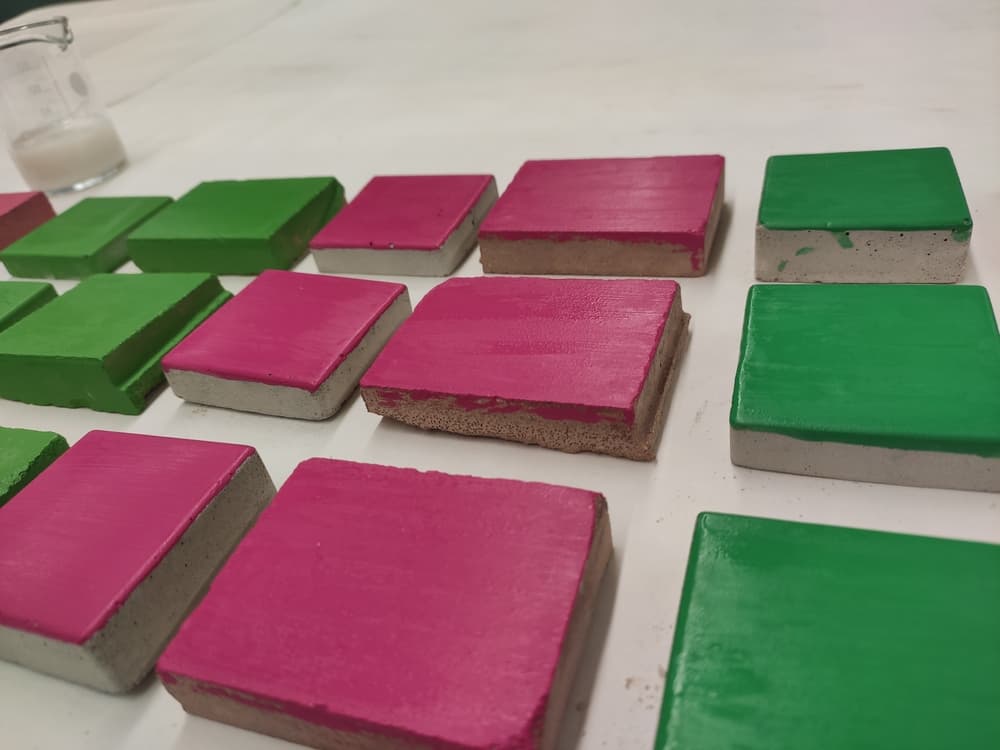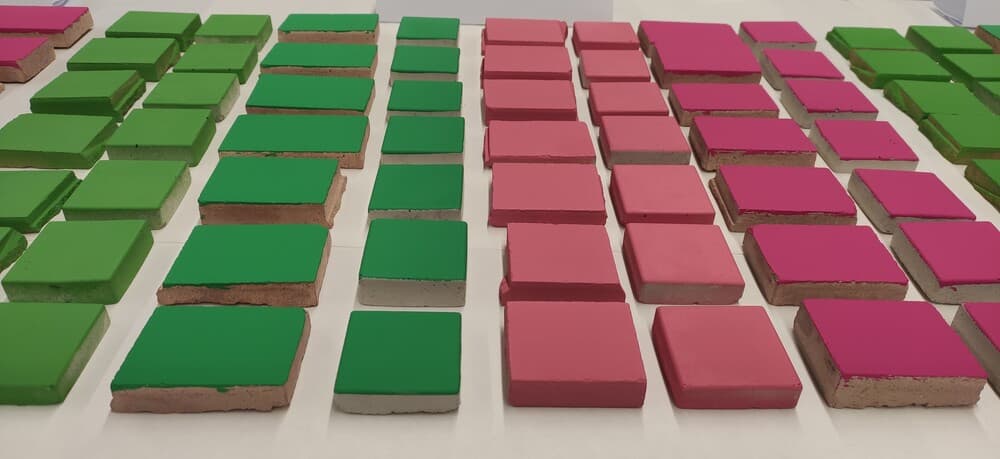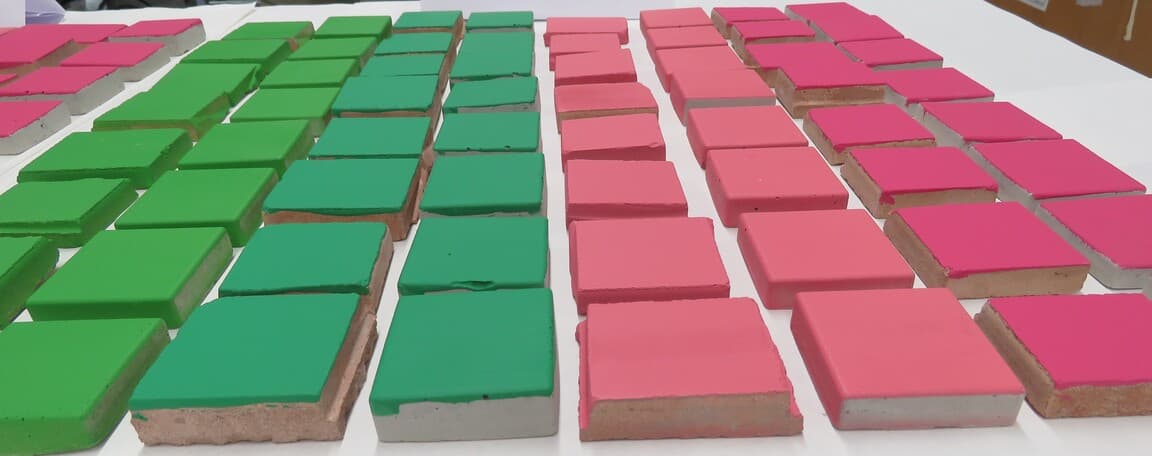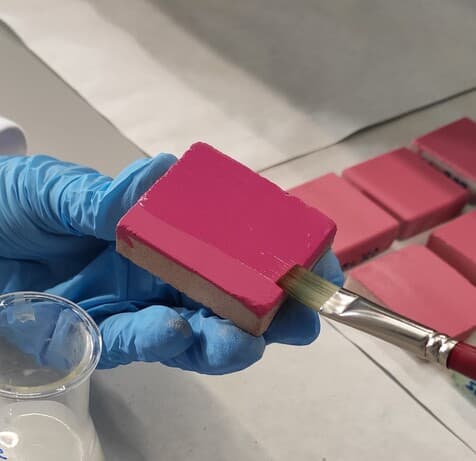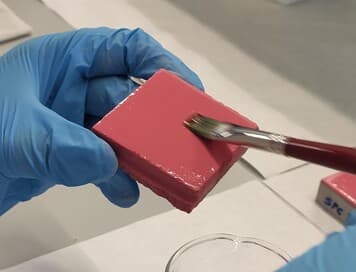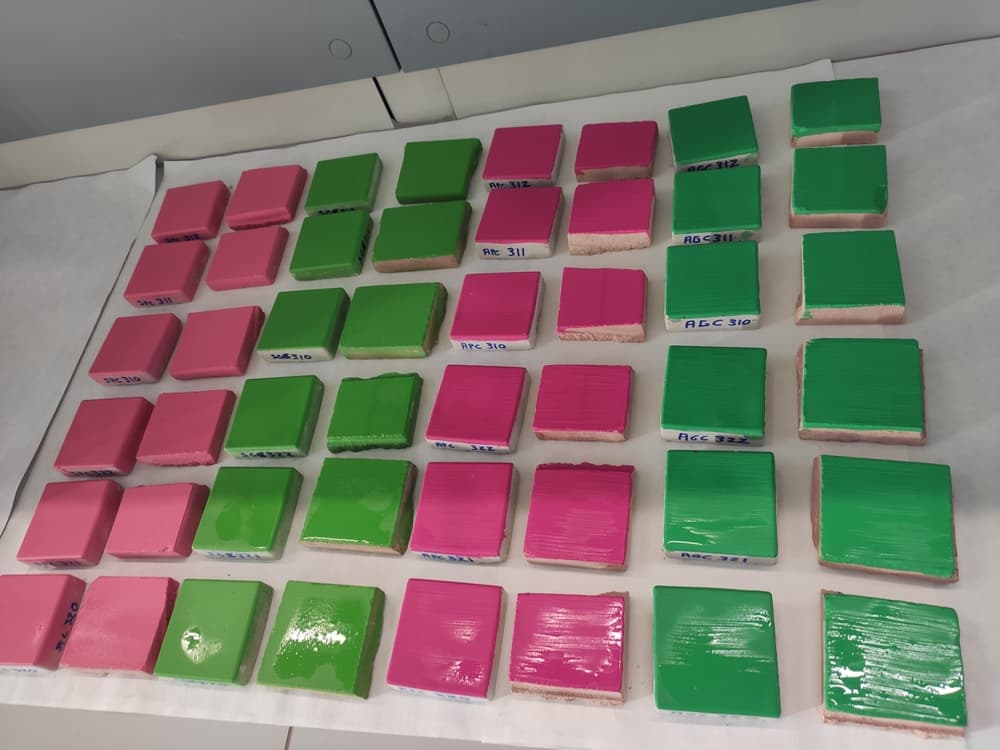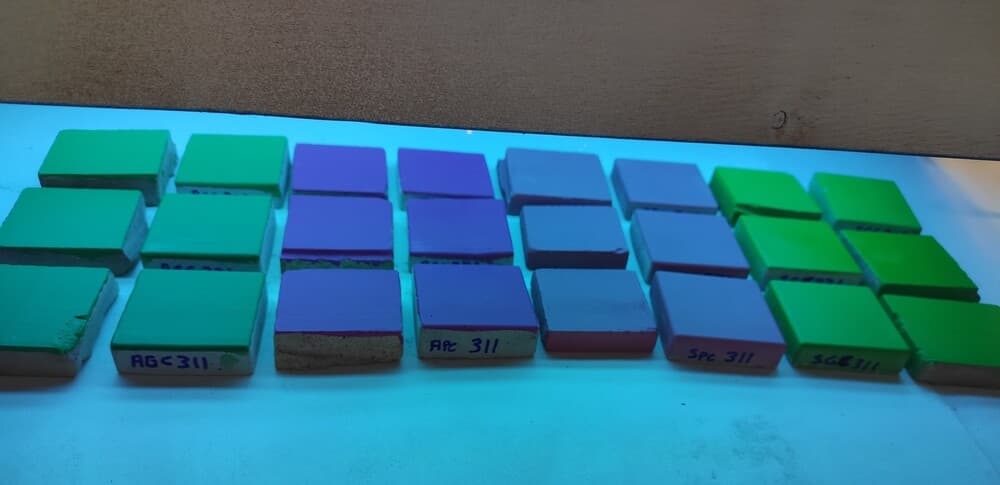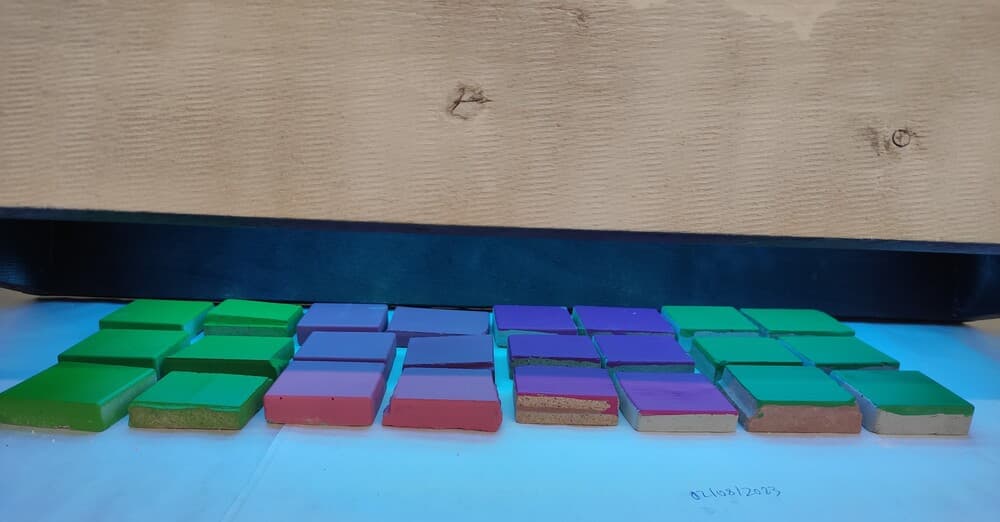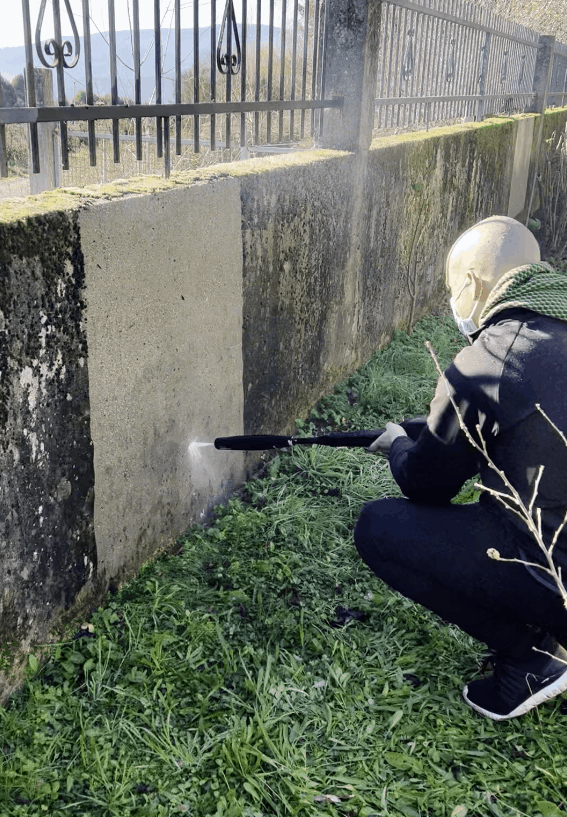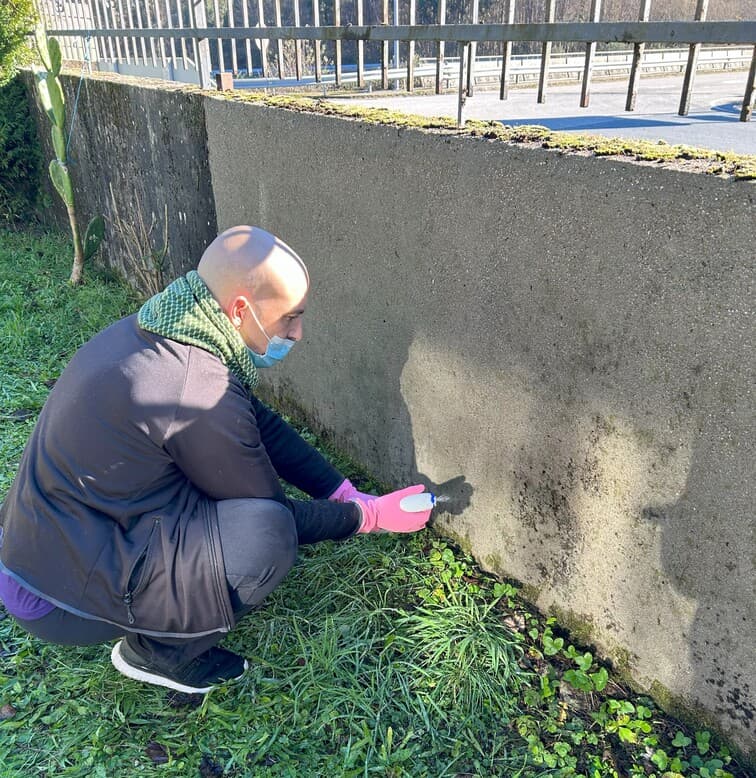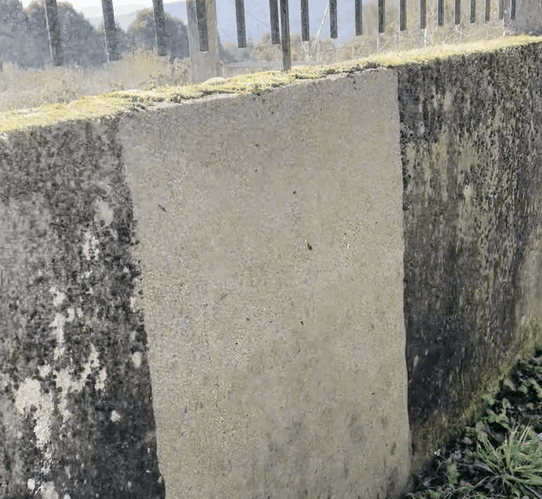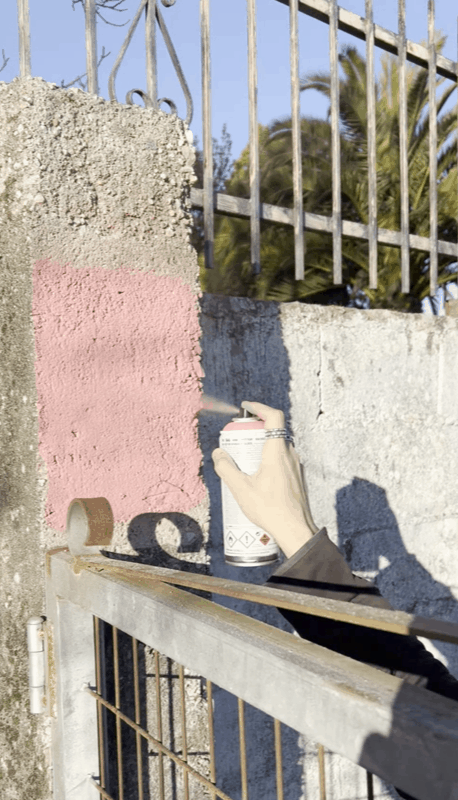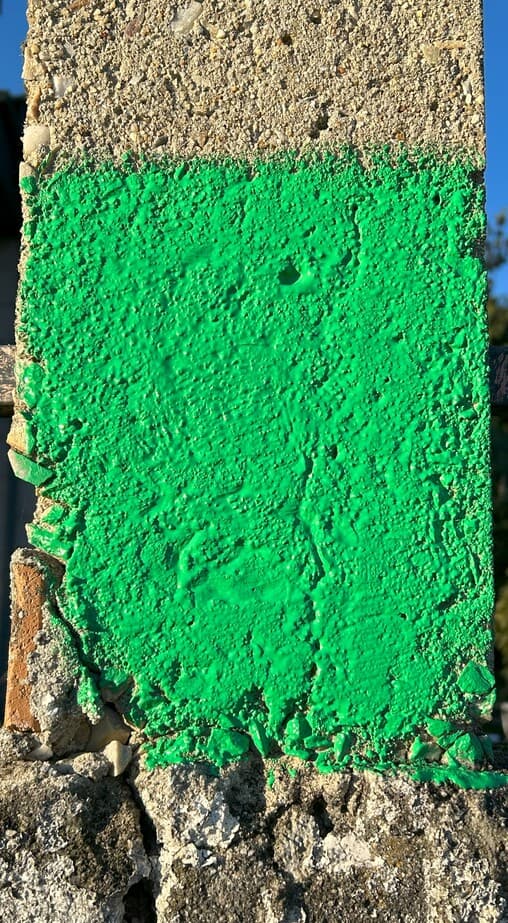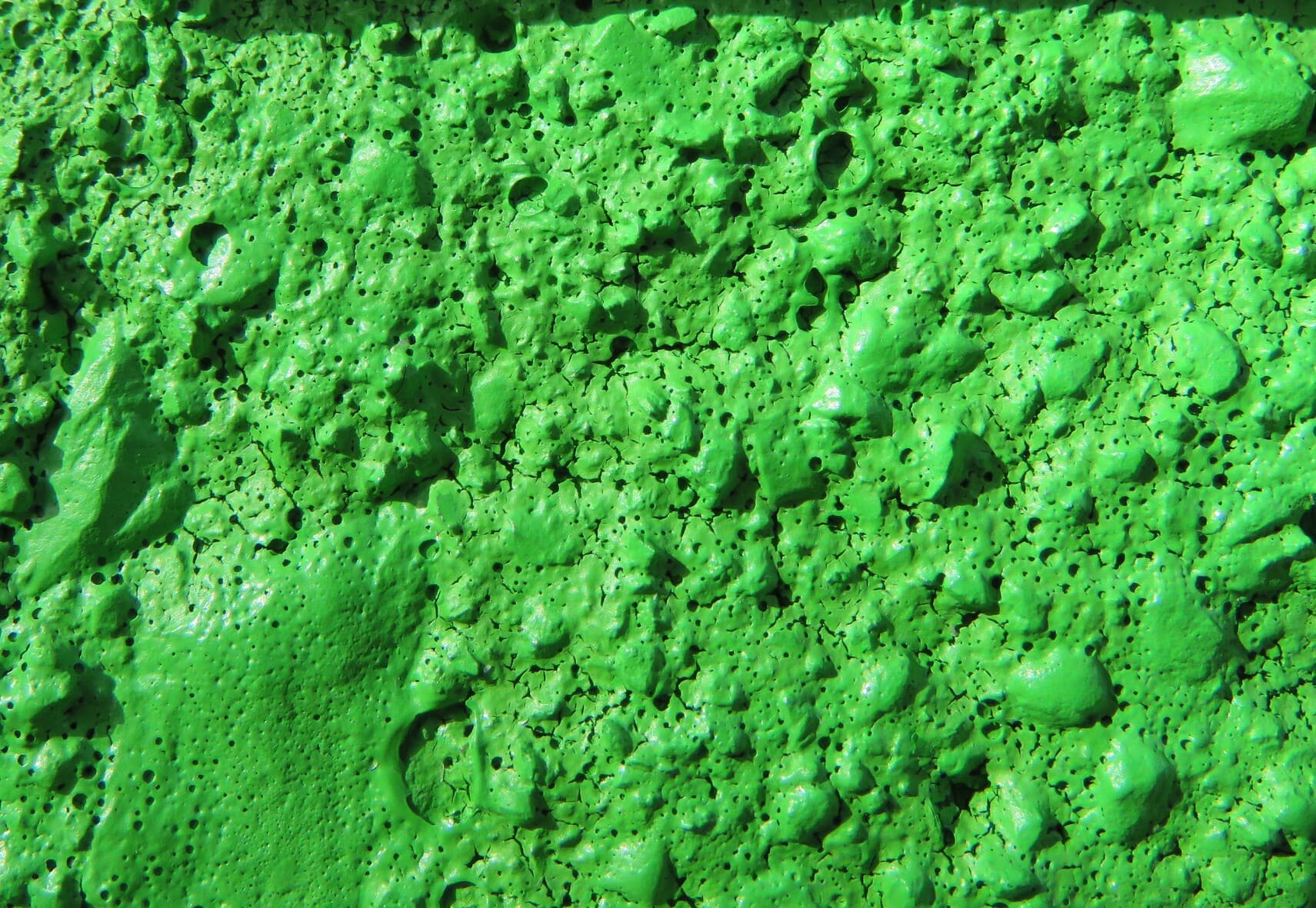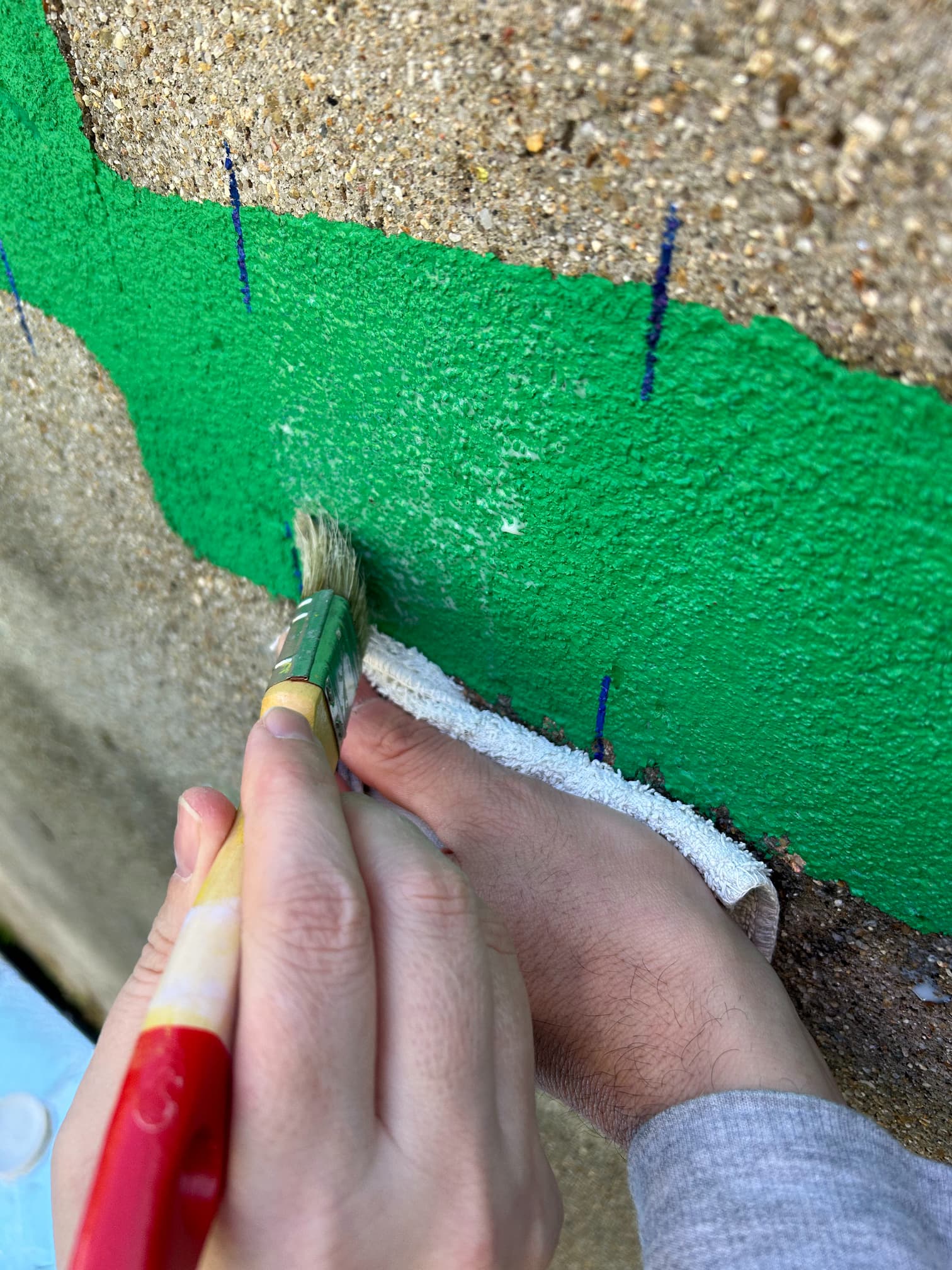

Mock-ups preparation
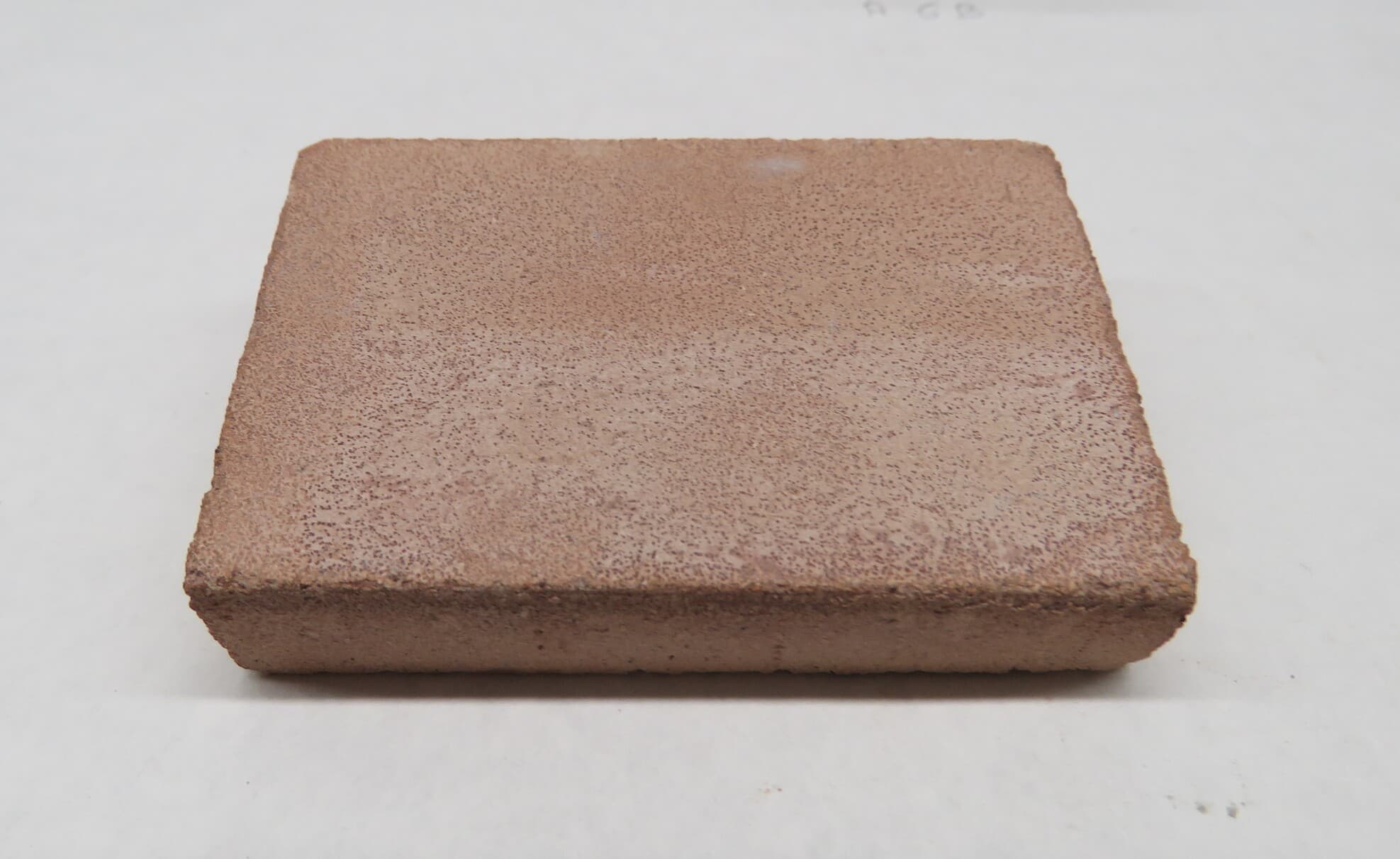
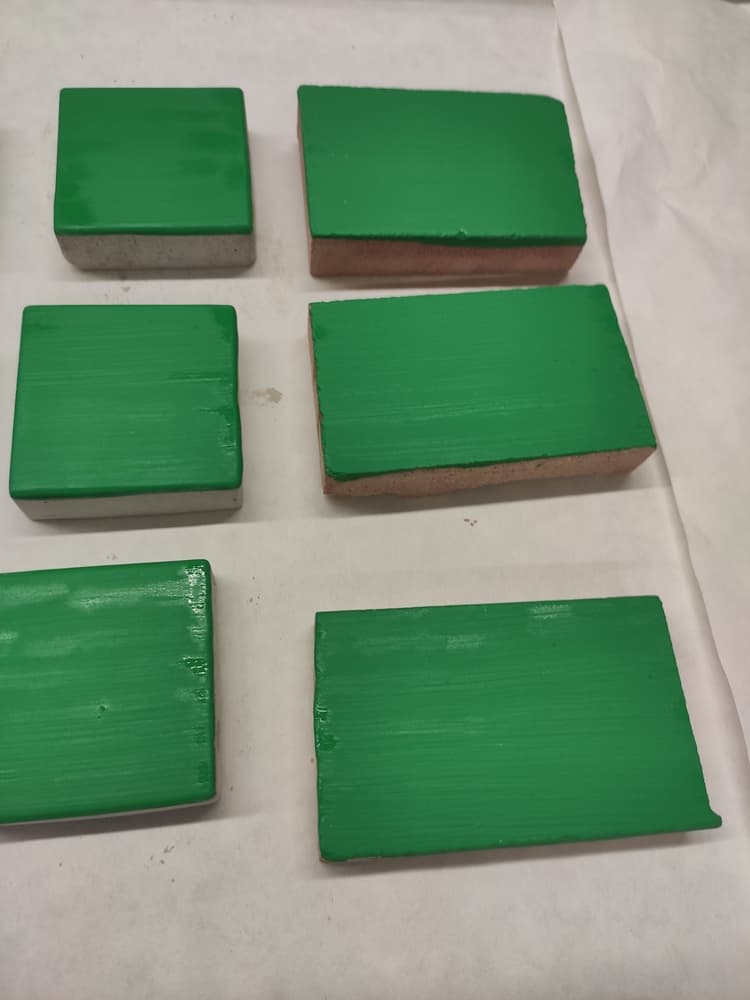
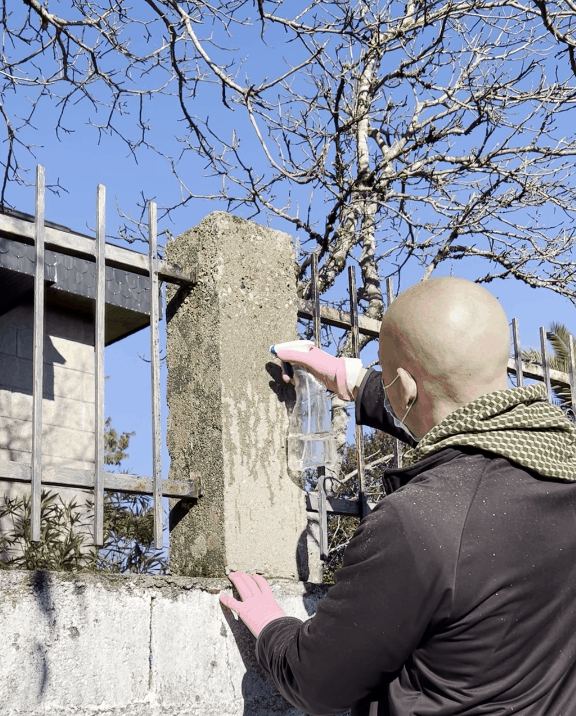
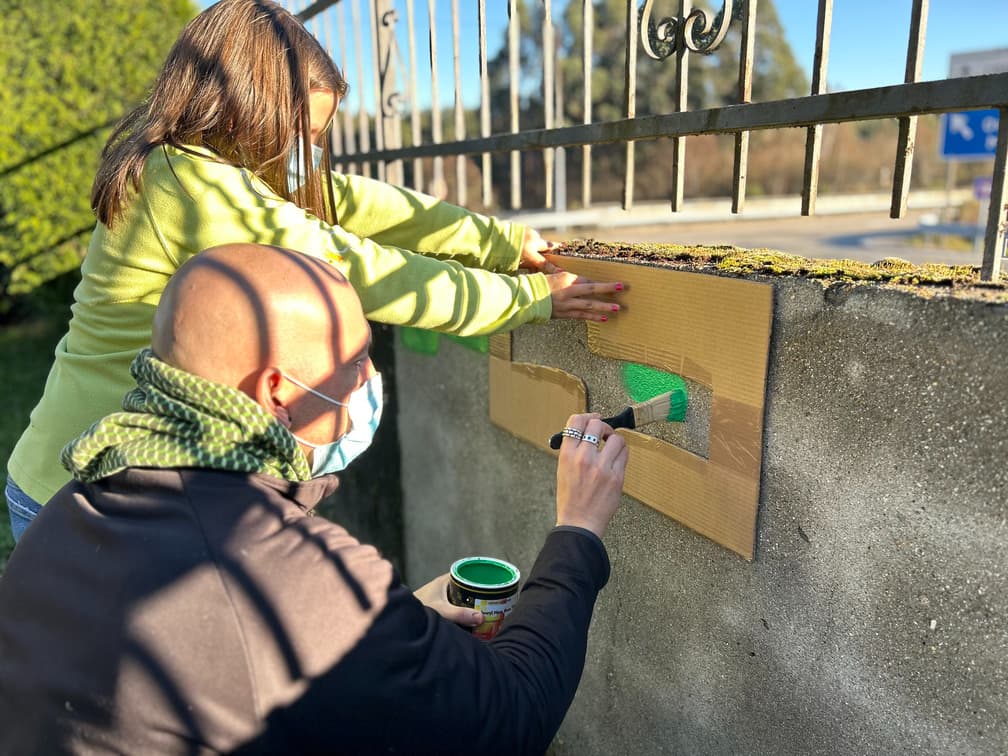
Materials and mock-ups preparation
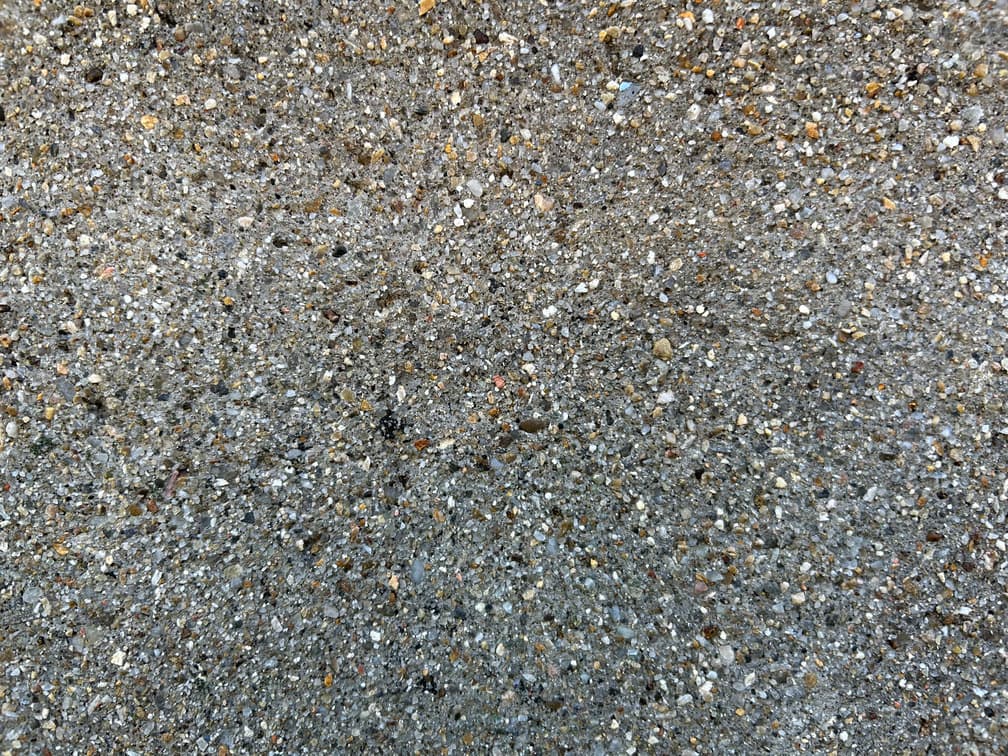
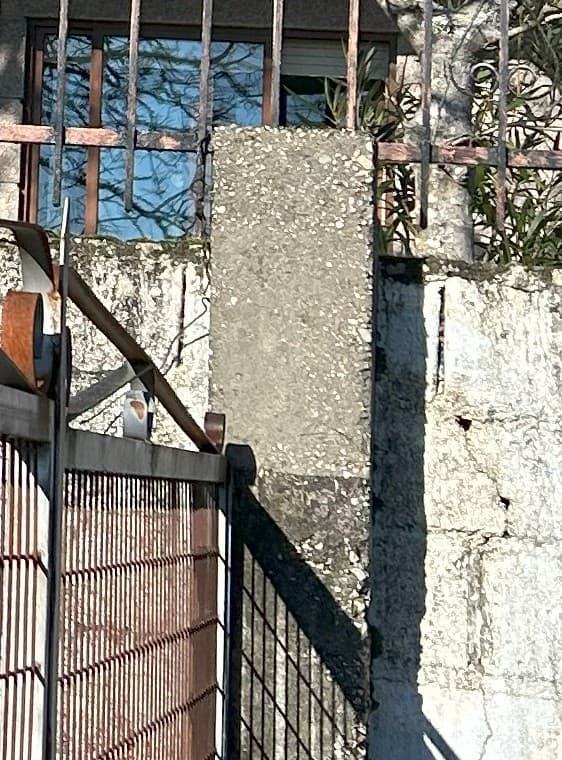
Substrates
Cleaning effectiveness
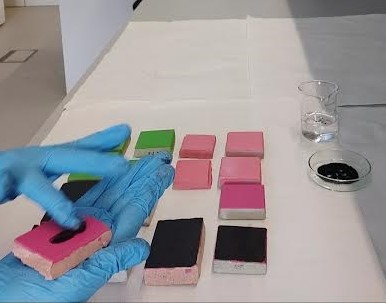
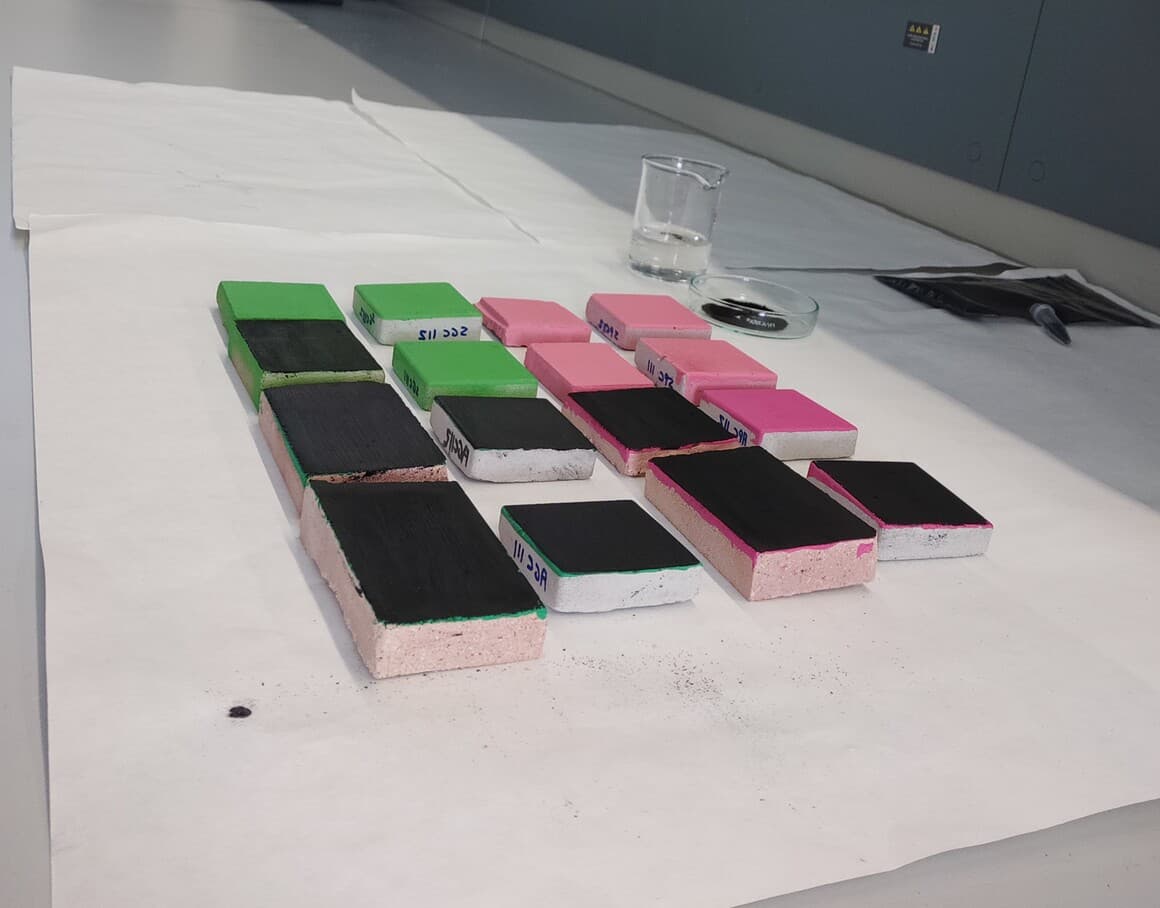
Soiling process and artificially aging of the mock-ups
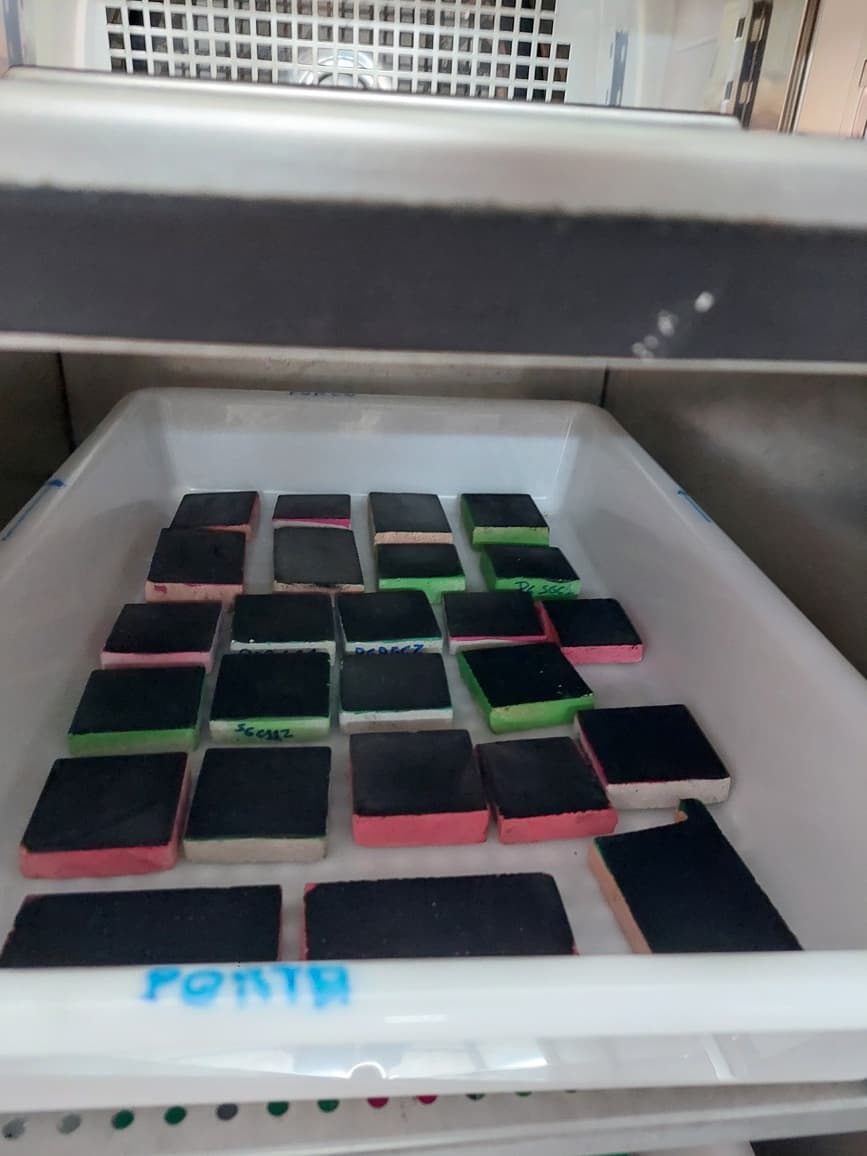
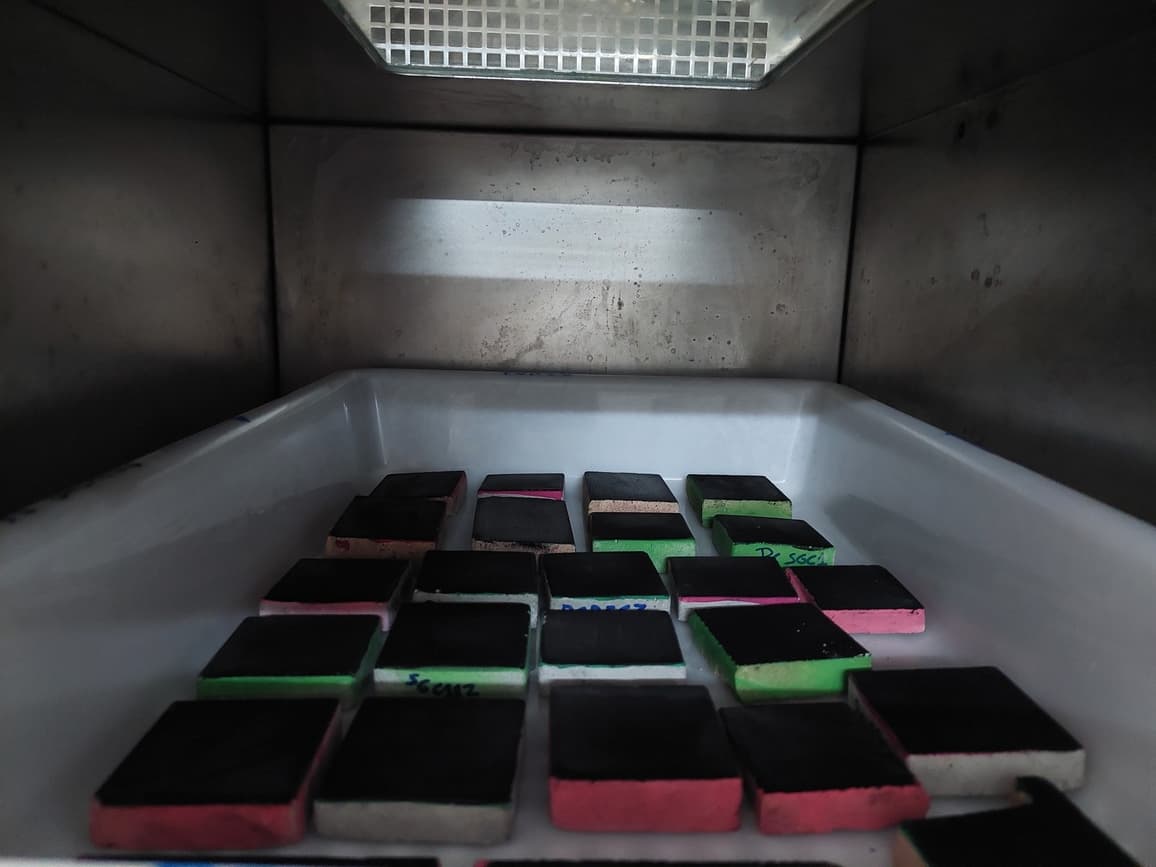
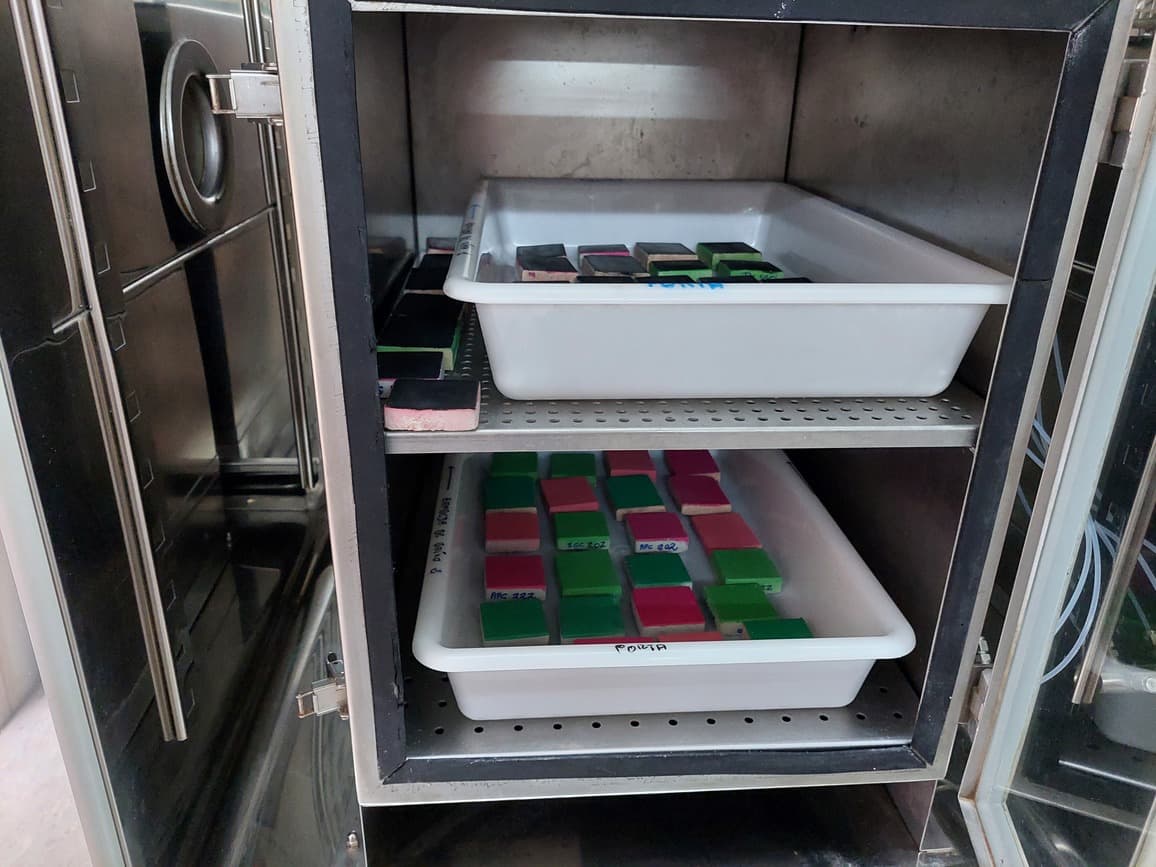
Using a climatic chamber with gases exposure at the University of Lisboa
Climatic Chamber Fitoclima 300EDTU (ARALAB) with SO2 exposure.
Conditions:
- Relative humidity: 80%.
- Temperature: 18°C.
- [SO2]: 200ppm.
- Duration: 40 days.
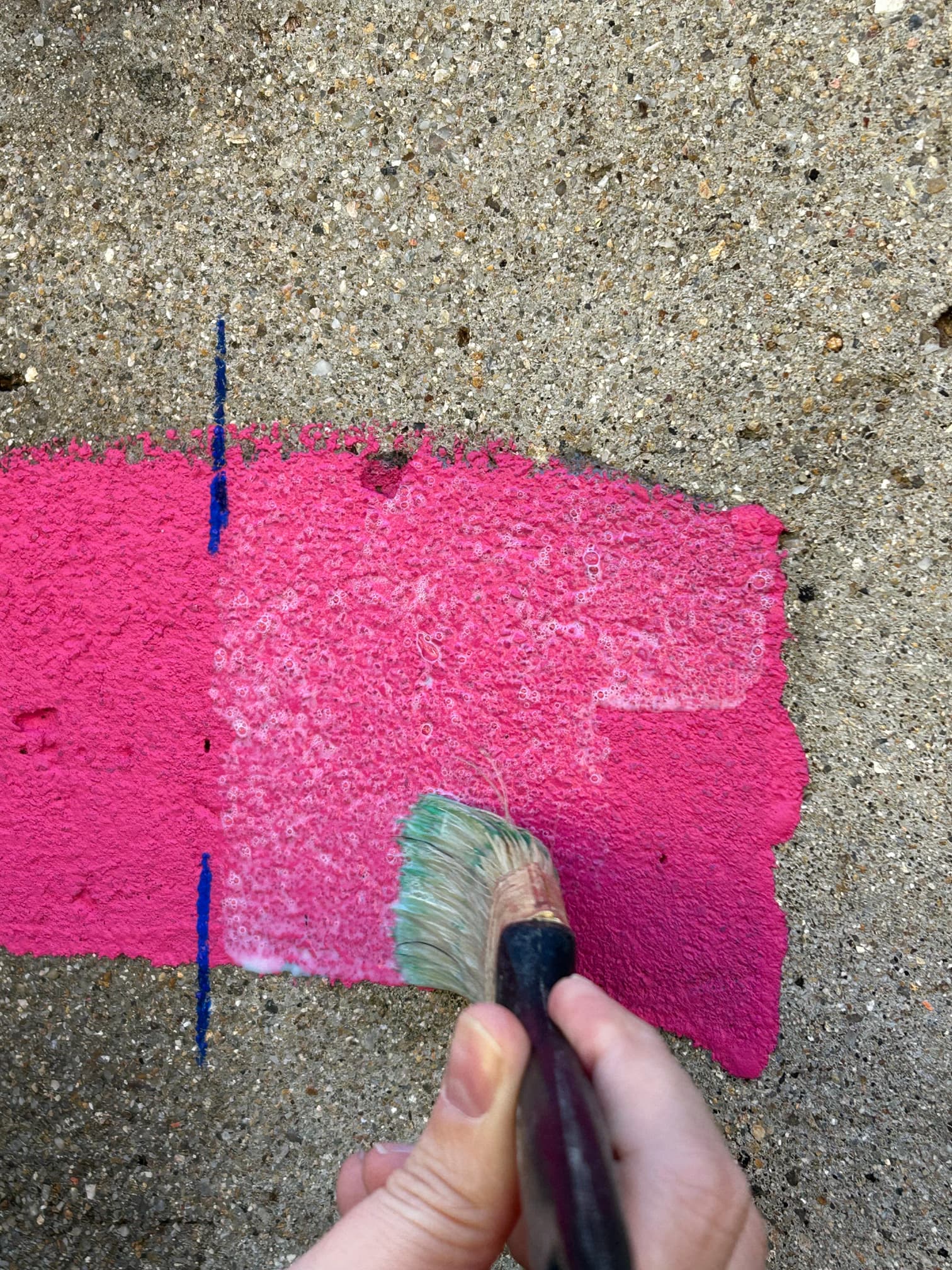
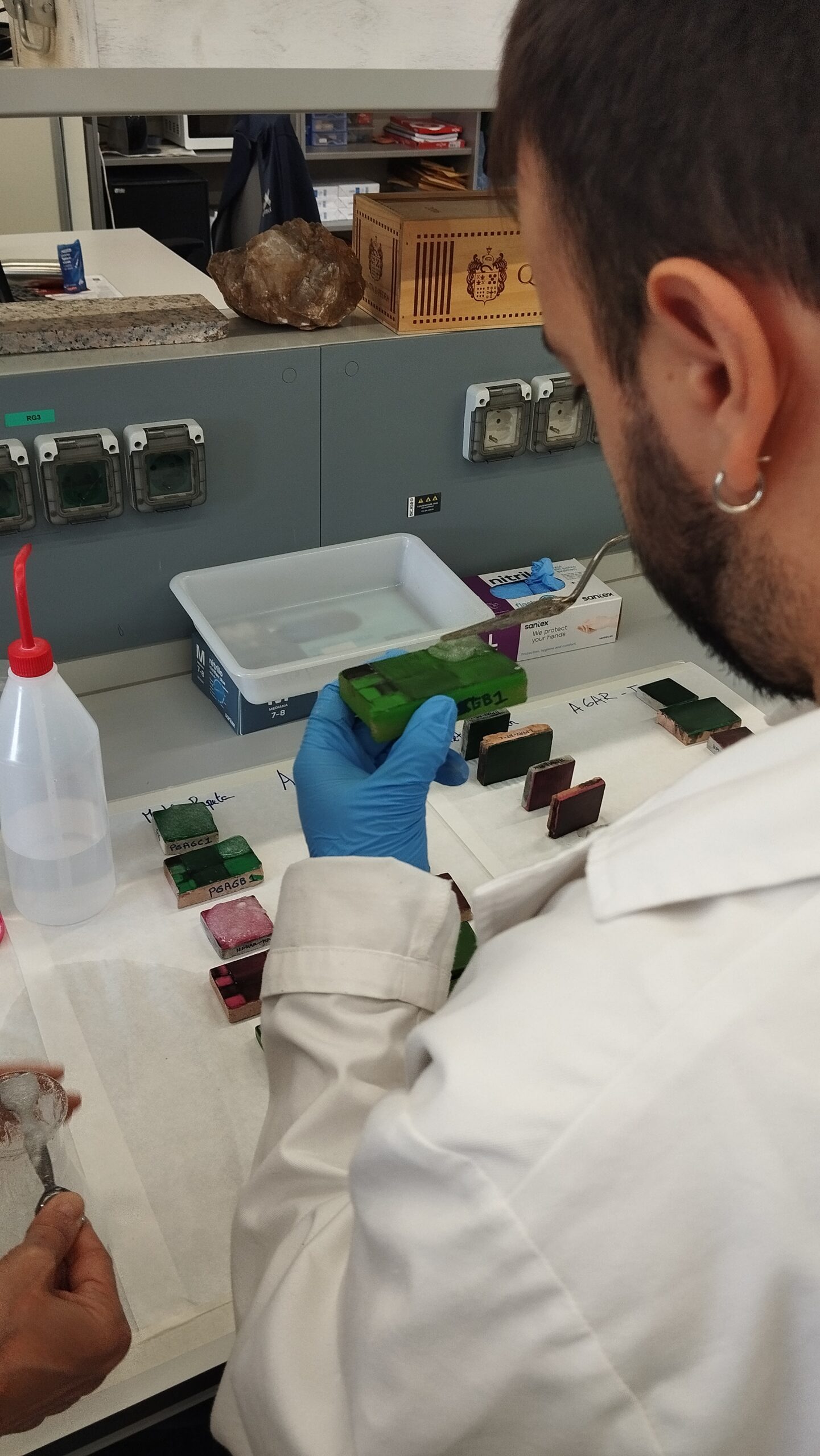
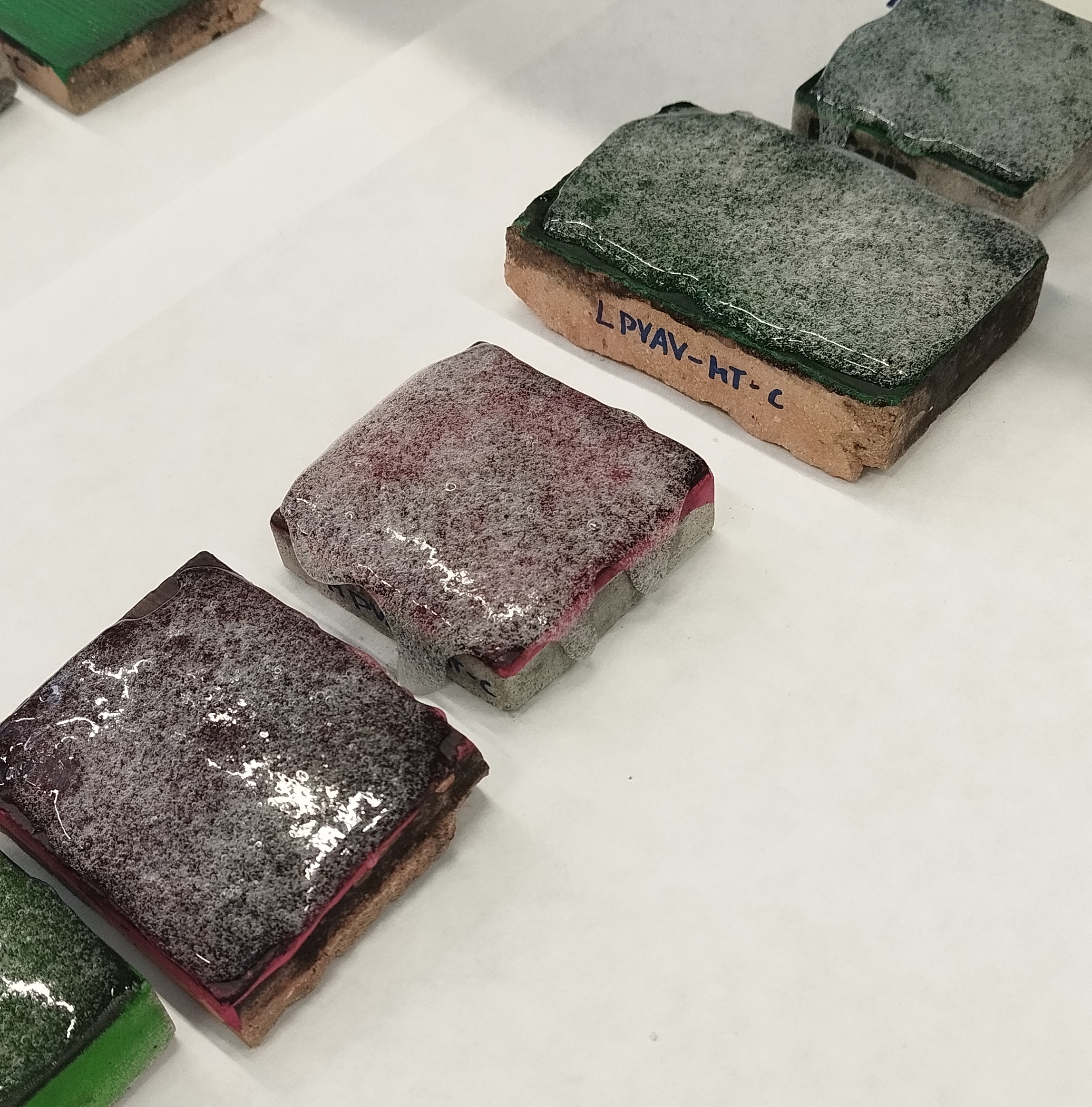
Mock-ups with soot and previously subjected to a climatic chamber with temperature and humidity controlled for 40 days were cleaned using different cleaning agents (Tween 20 and a modified Papetta AB57) and cleaning vehicles (methylcellulose and agar-agar). Therefore, four cleaning methods were considered:
- Tween 20 in agar-agar
- Tween 20 in methylcellulose
- Modified Papetta AB57 in methylcellulose
- Modified Papetta AB57 in agar-agar
Antigraffiti protection
Antigraffiti application and artificial aging of the mock-ups
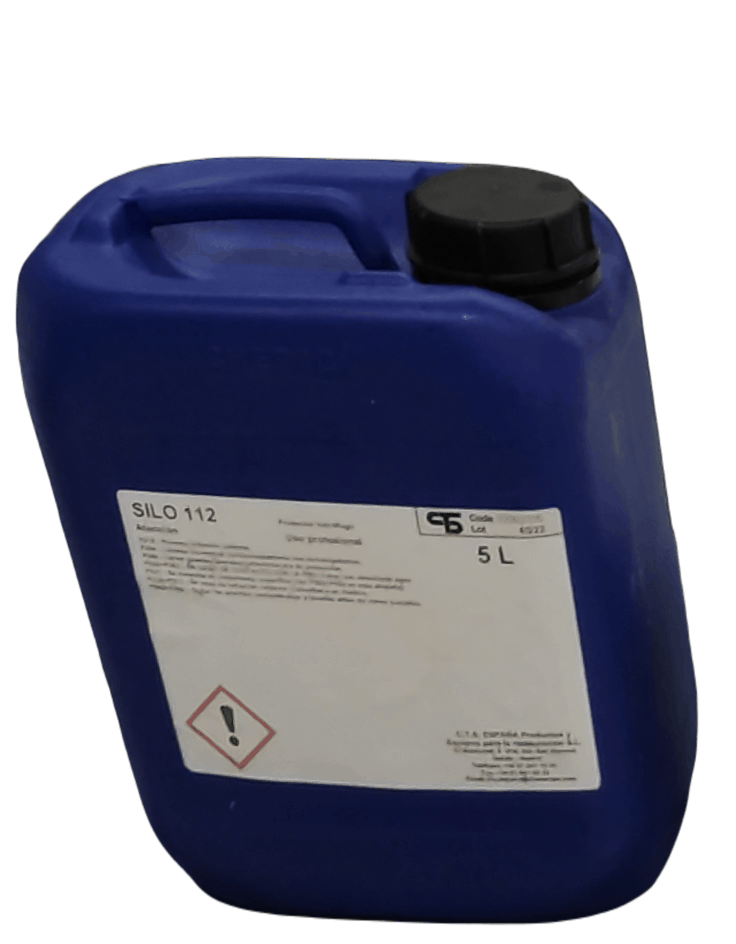
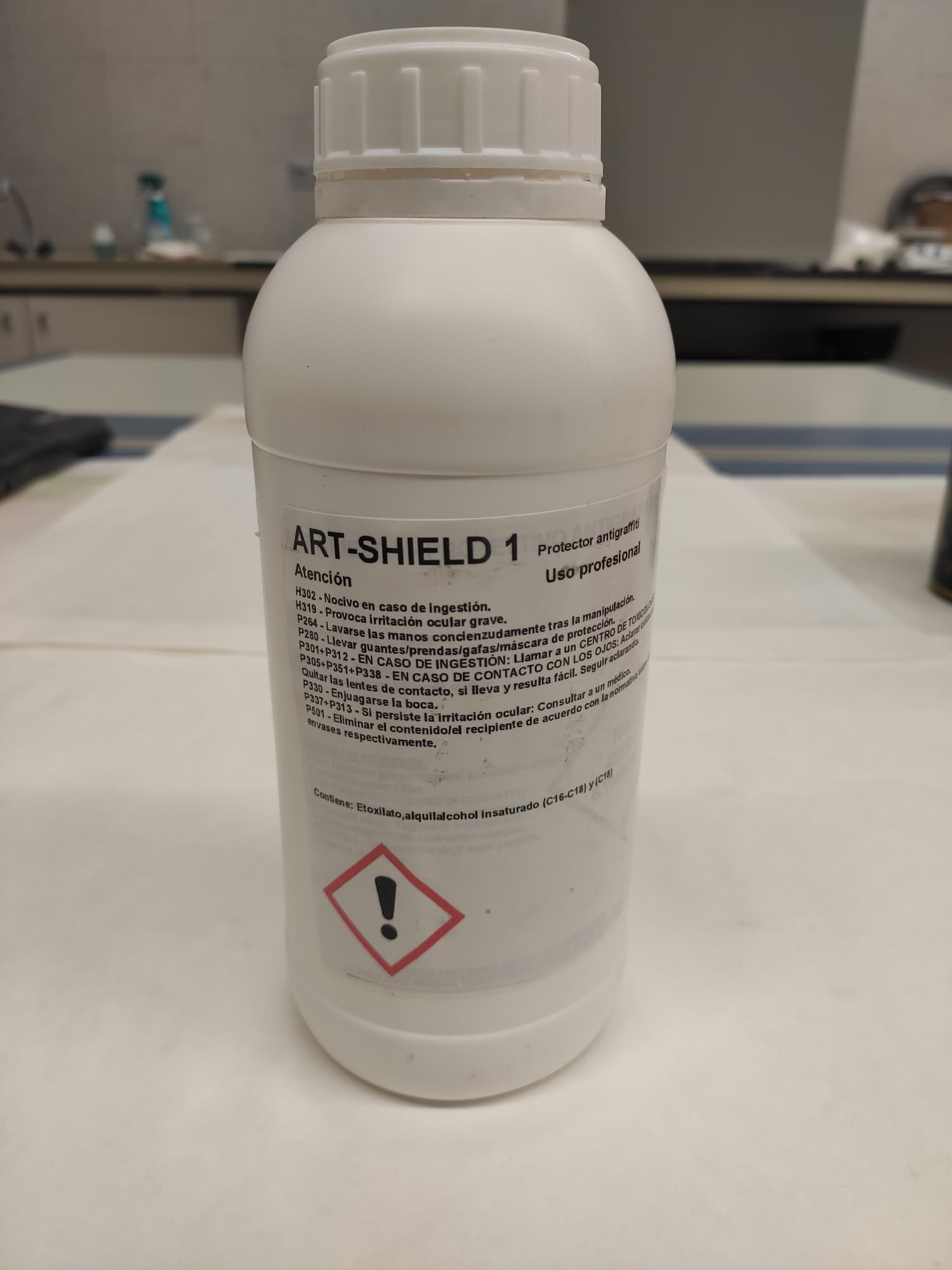
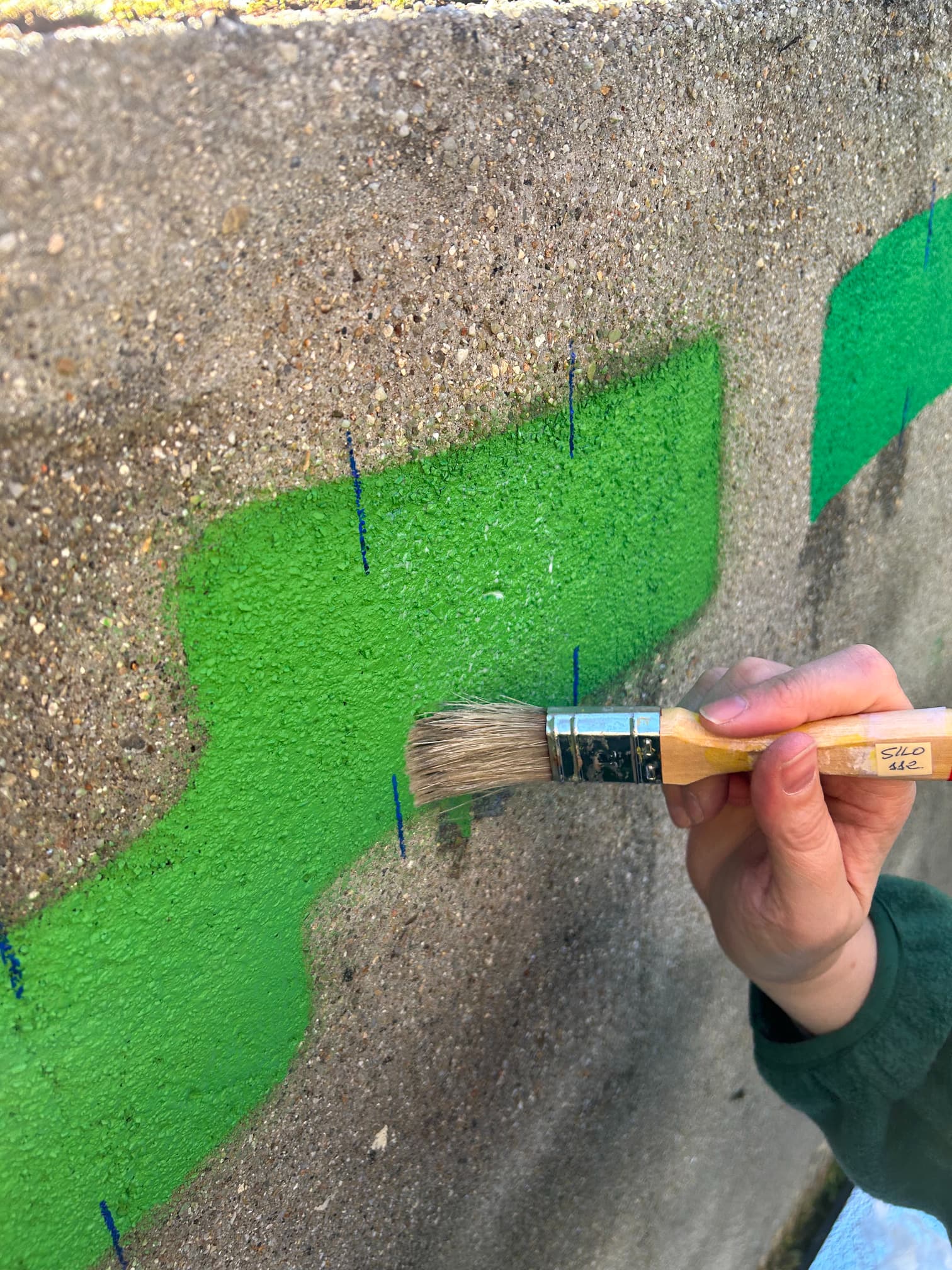
Two antigraffiti protectors will be use: Silo 112 (permanent protector) and Art-Shield 1 (sacrificial protector)
Two antigraffiti protectors will be use: Silo 112 (permanent protector) and Art-Shield 1 (sacrificial protector)
Using a controlled atmosphere chamber at the University of Lisboa
Controlled atmosphere chamber 300EDTU (ARALAB) with SO2 exposure.
Conditions:
- Relative humidity: 80%.
- Temperature: 18°C.
- [SO2]: 200ppm.
- Duration: 40 days.
Mock-ups previously protected with sacrificial antigraffiti (Art–Shield 1) will be cleaned with hot air at 80ºC using a hot air gun.
Solar protection
Solar protector application and artificial aging of the mock-ups
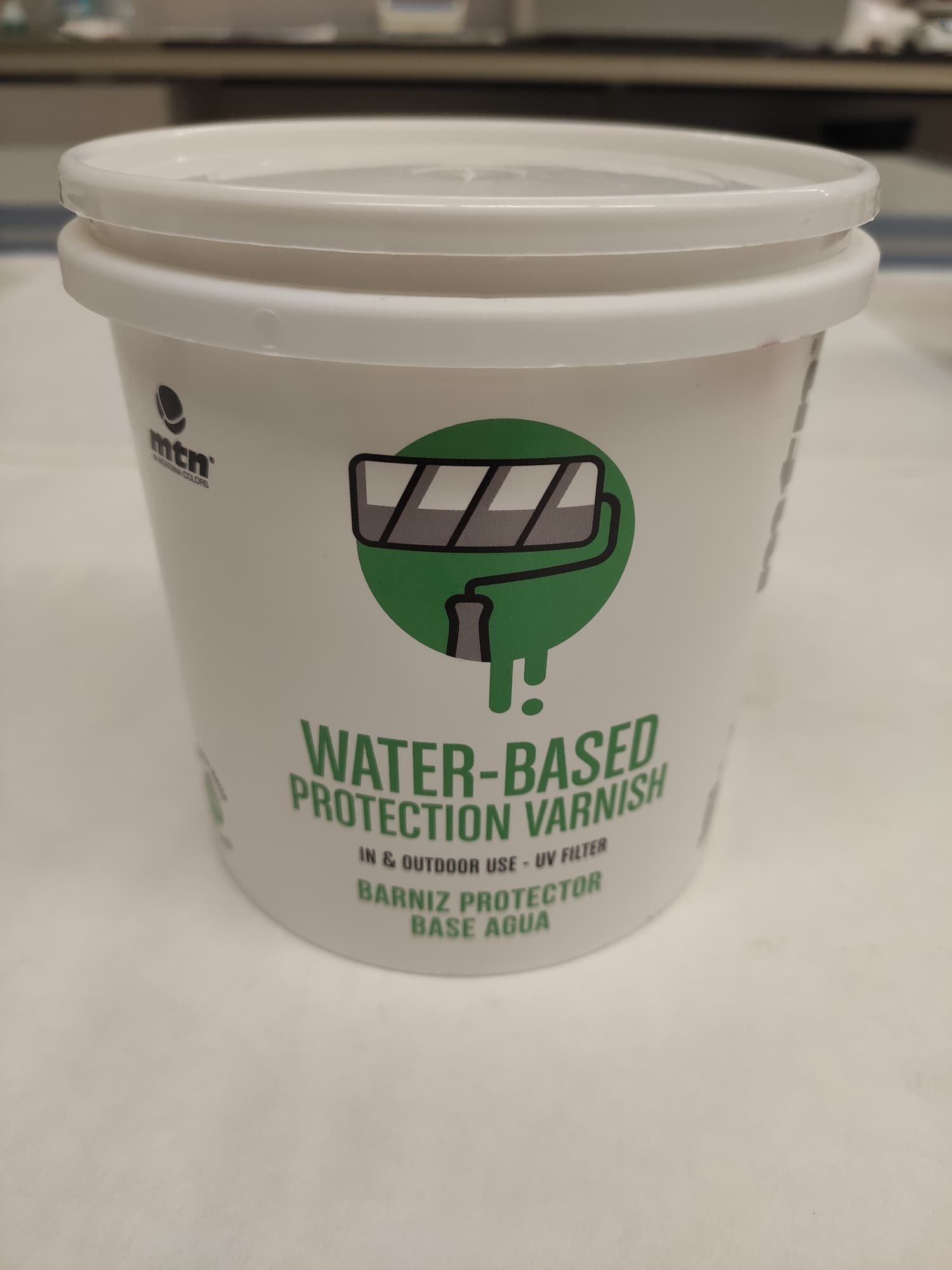
Two solar protectors will be used: Montana water based matte UV protector and Montana water based gloss UV protector.
Outdoor conditions assessment
Assessing paints and protectors in outdoor conditions
North-facing wall
Before Cleaning
North-facing wall
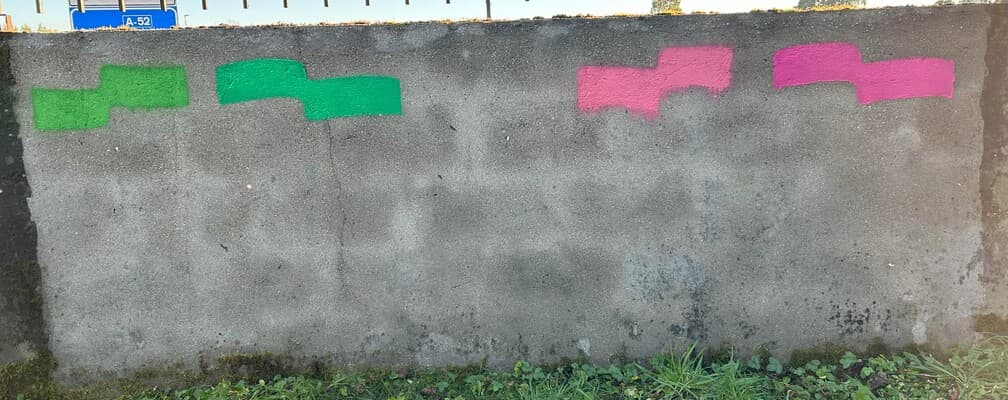
North-facing wall paintings
South-facing wall
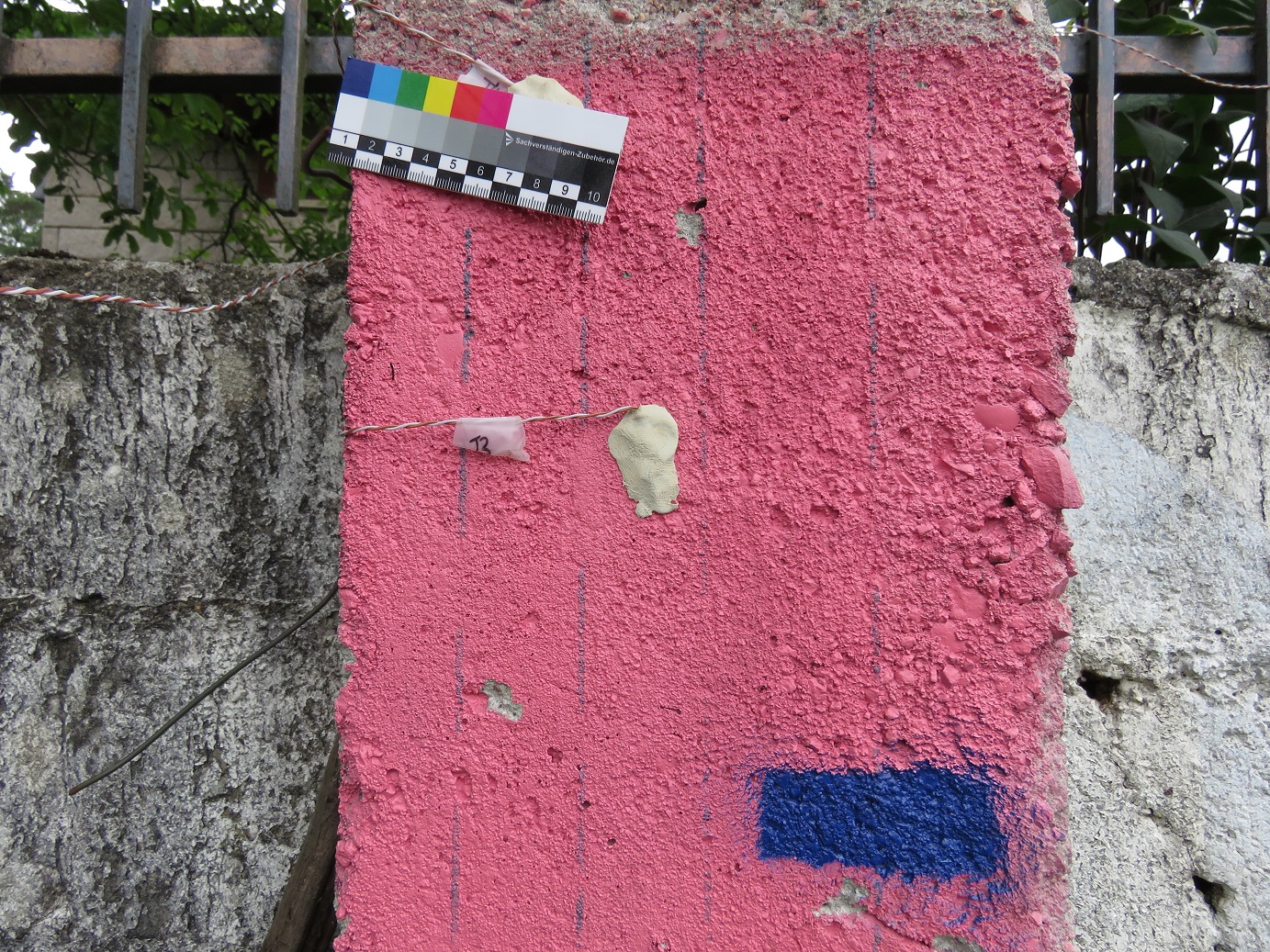
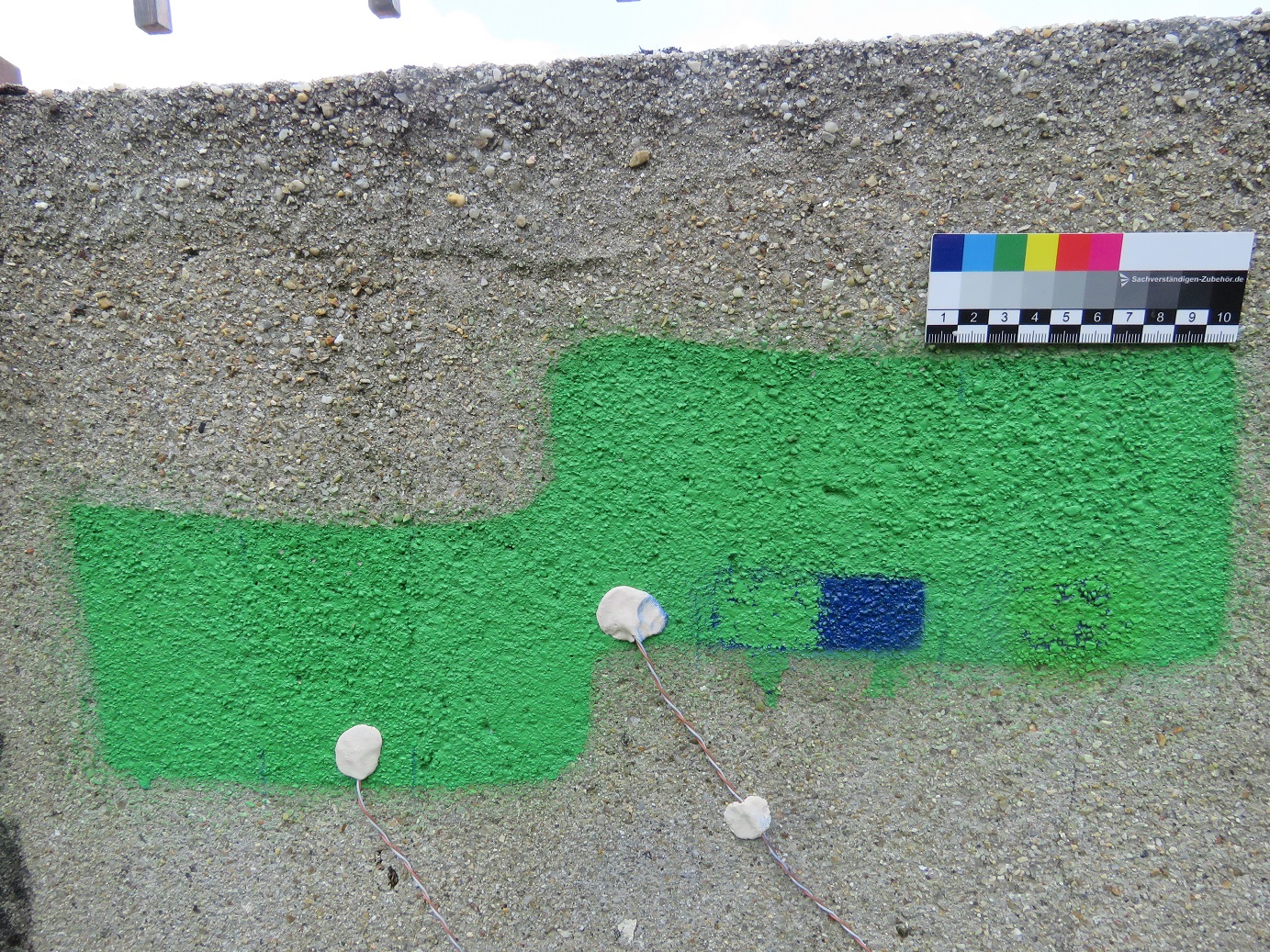
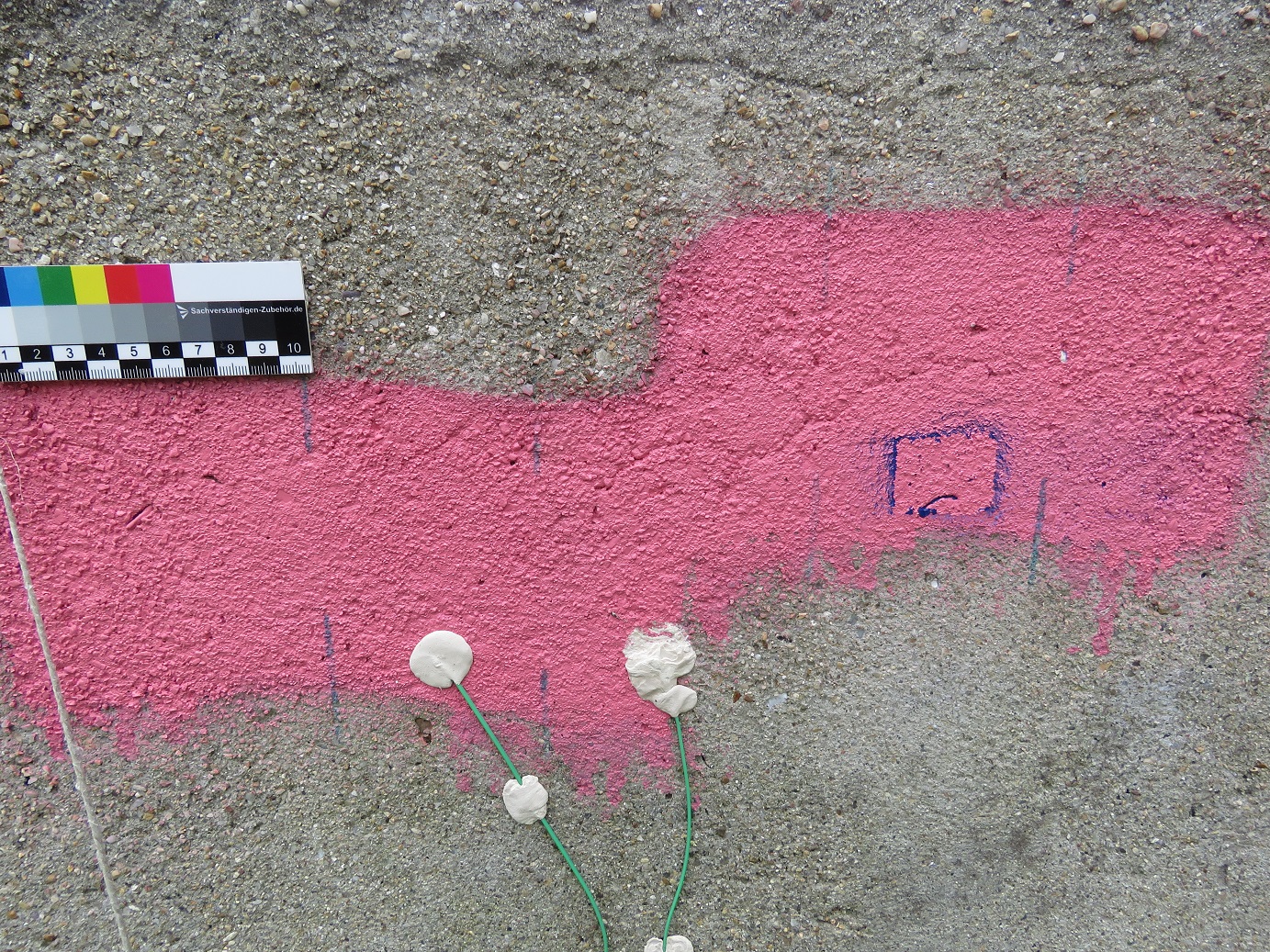
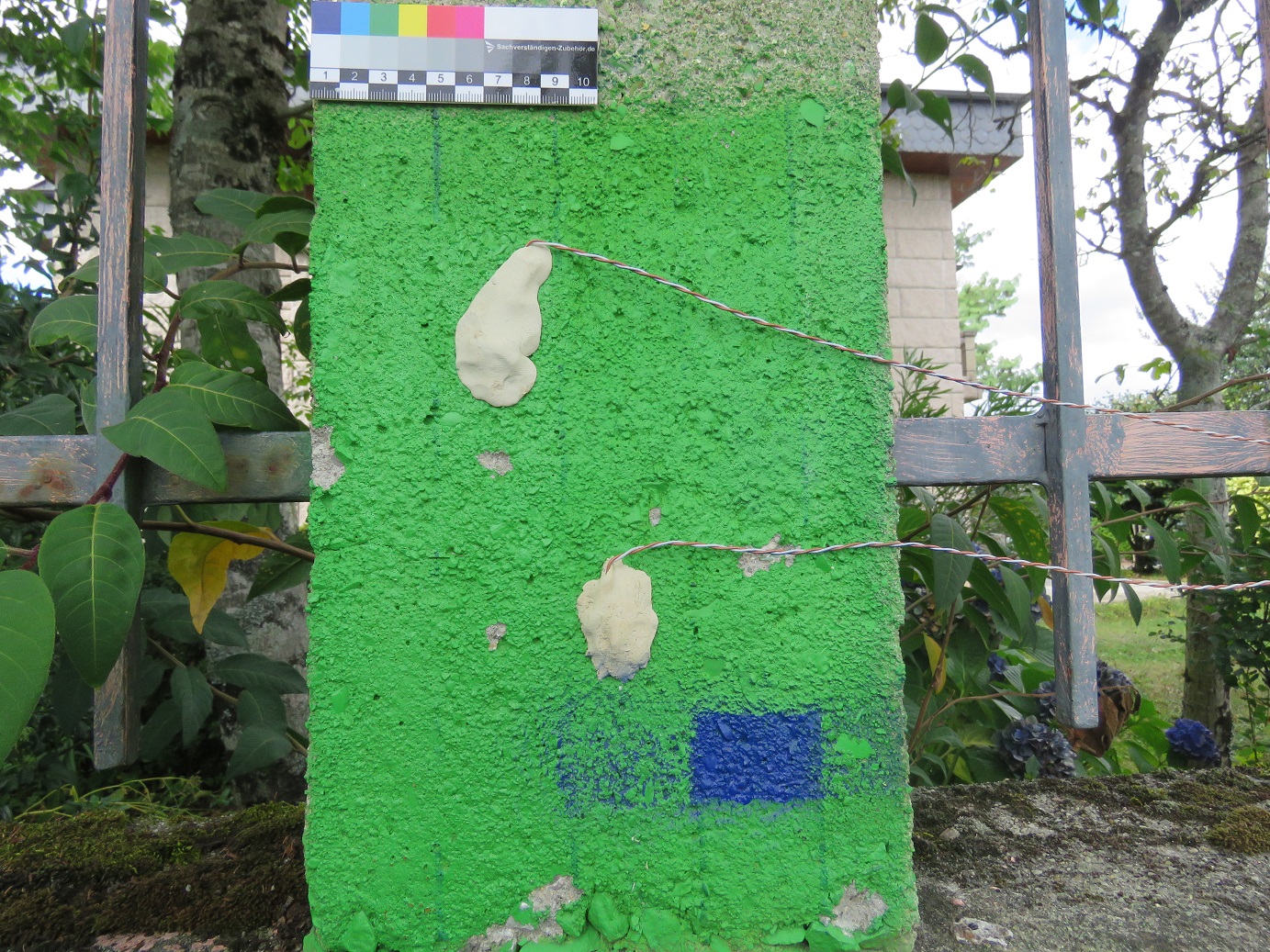
As well as in the lab, two antigraffiti protectors and two solar protectors will be applied in the north and south facing wall.
Antigraffiti protectors (sacrificial or permanent)
Solar protectors (matte or gloss)
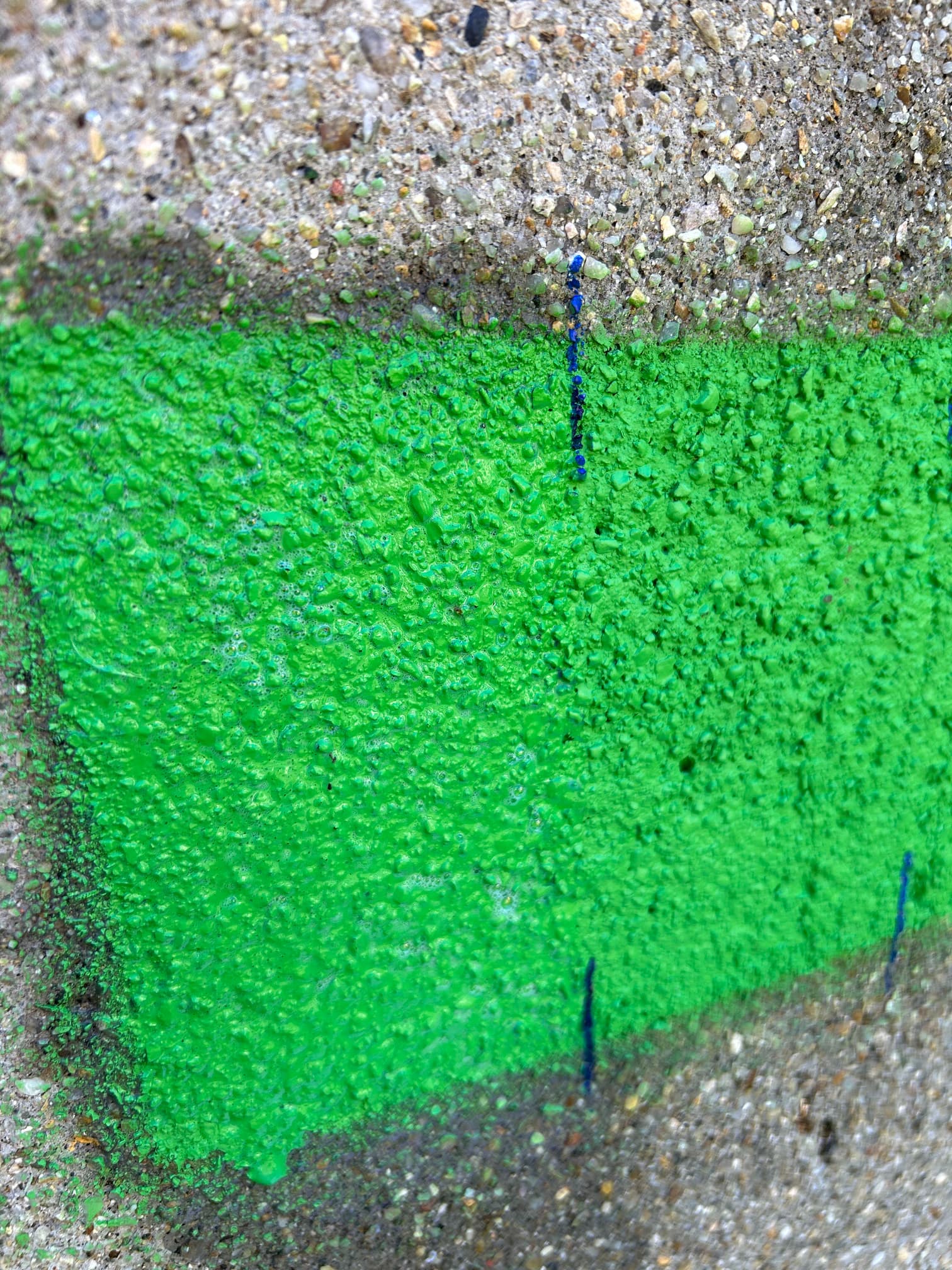
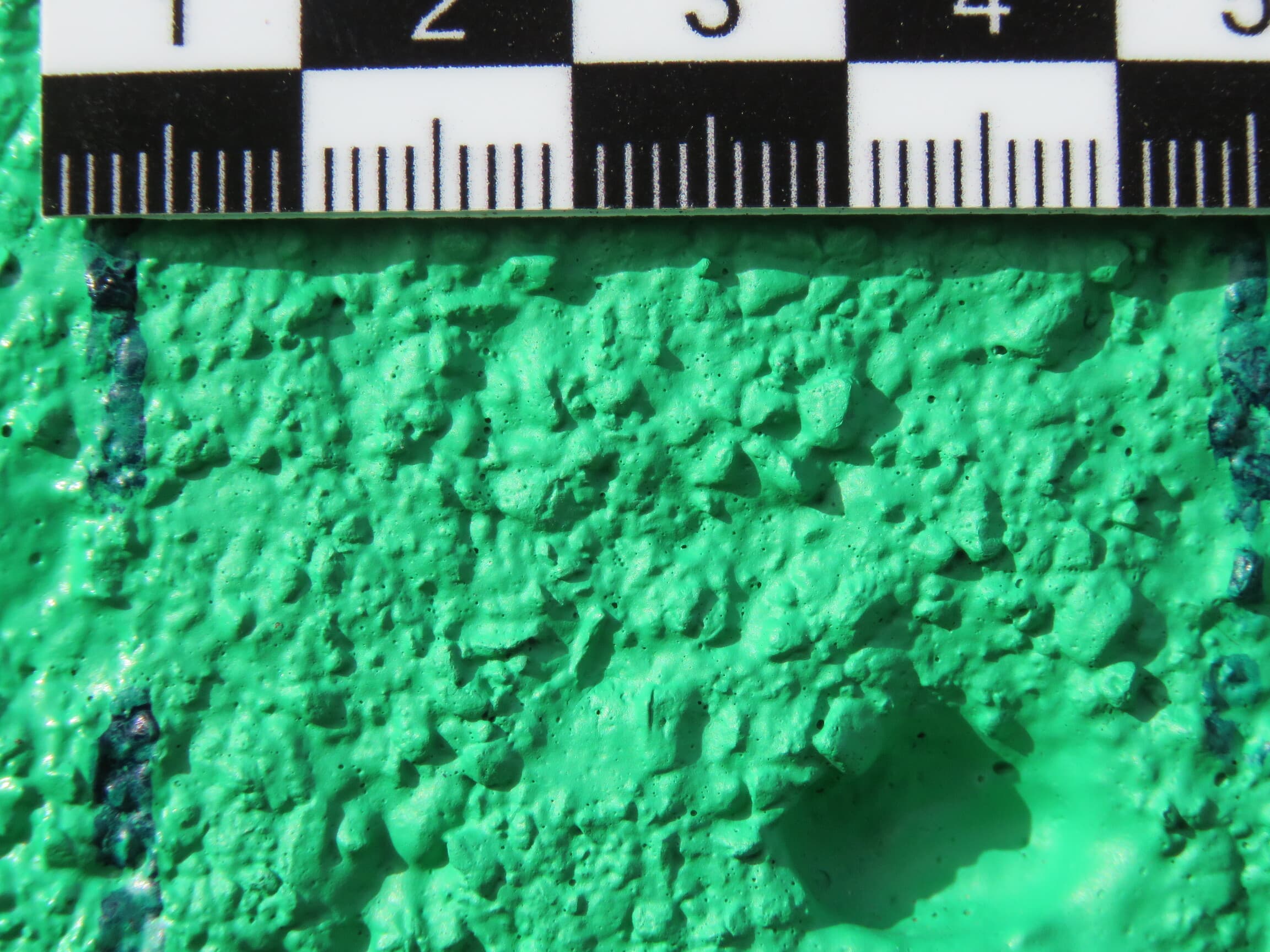
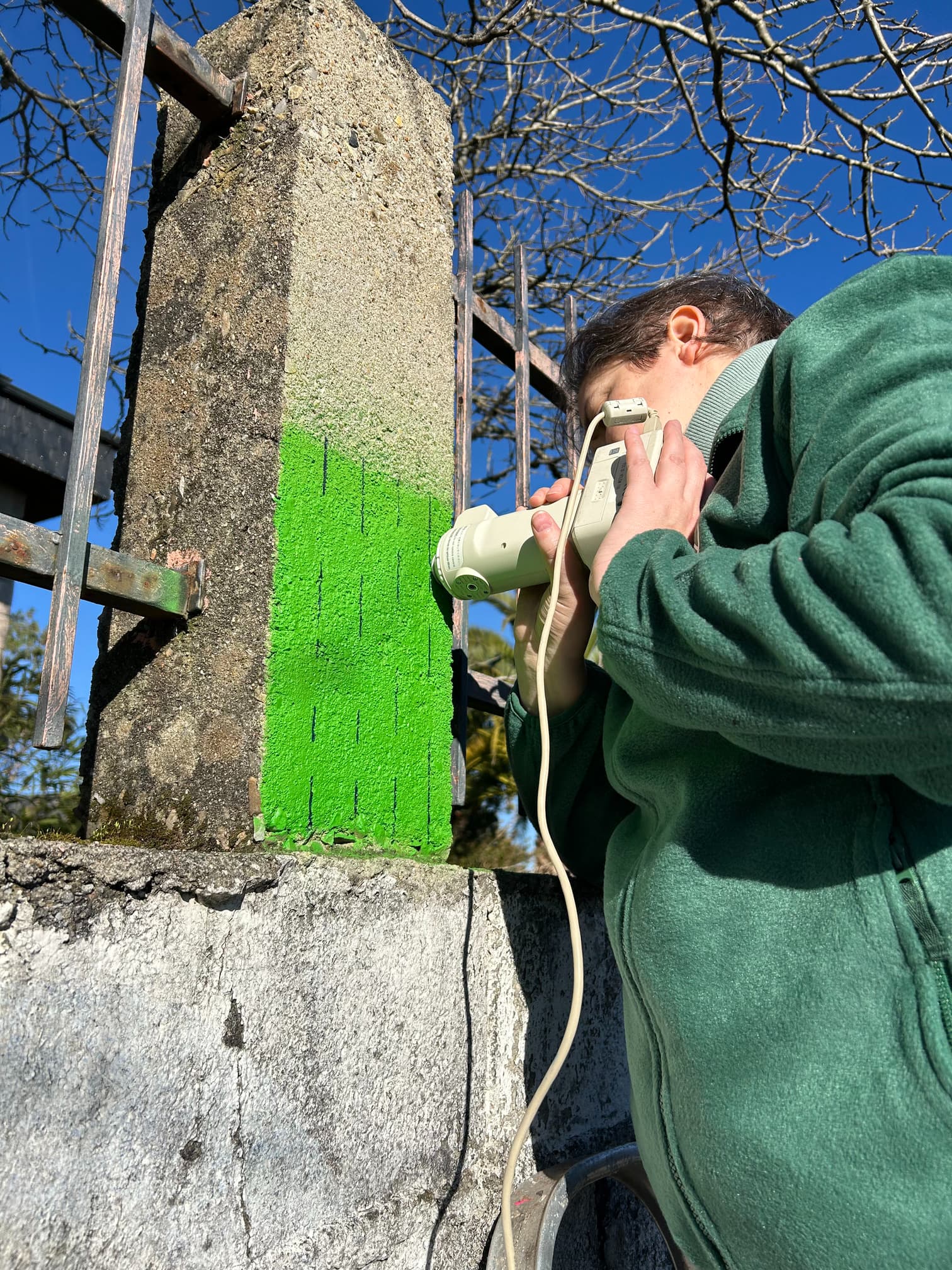
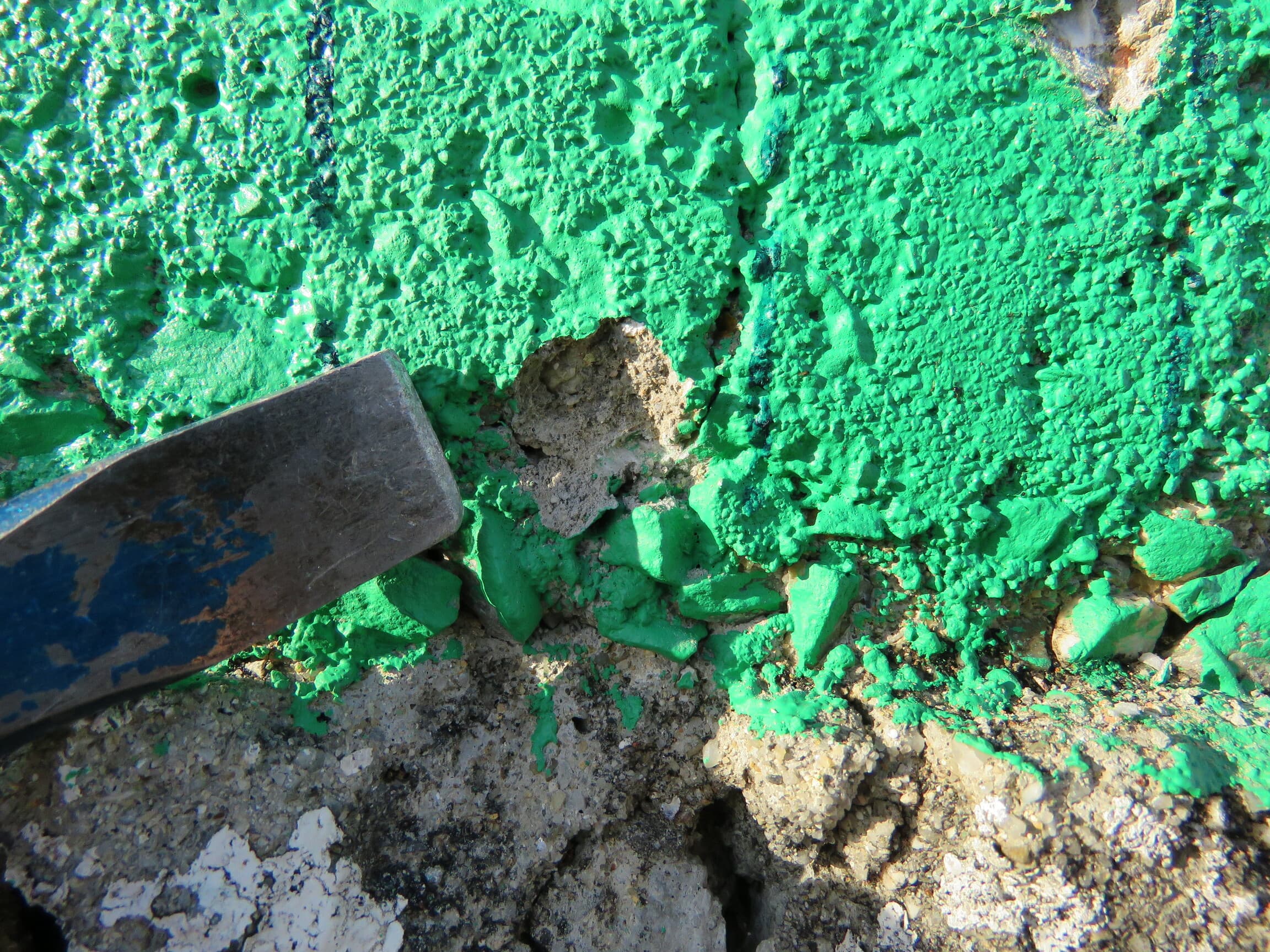
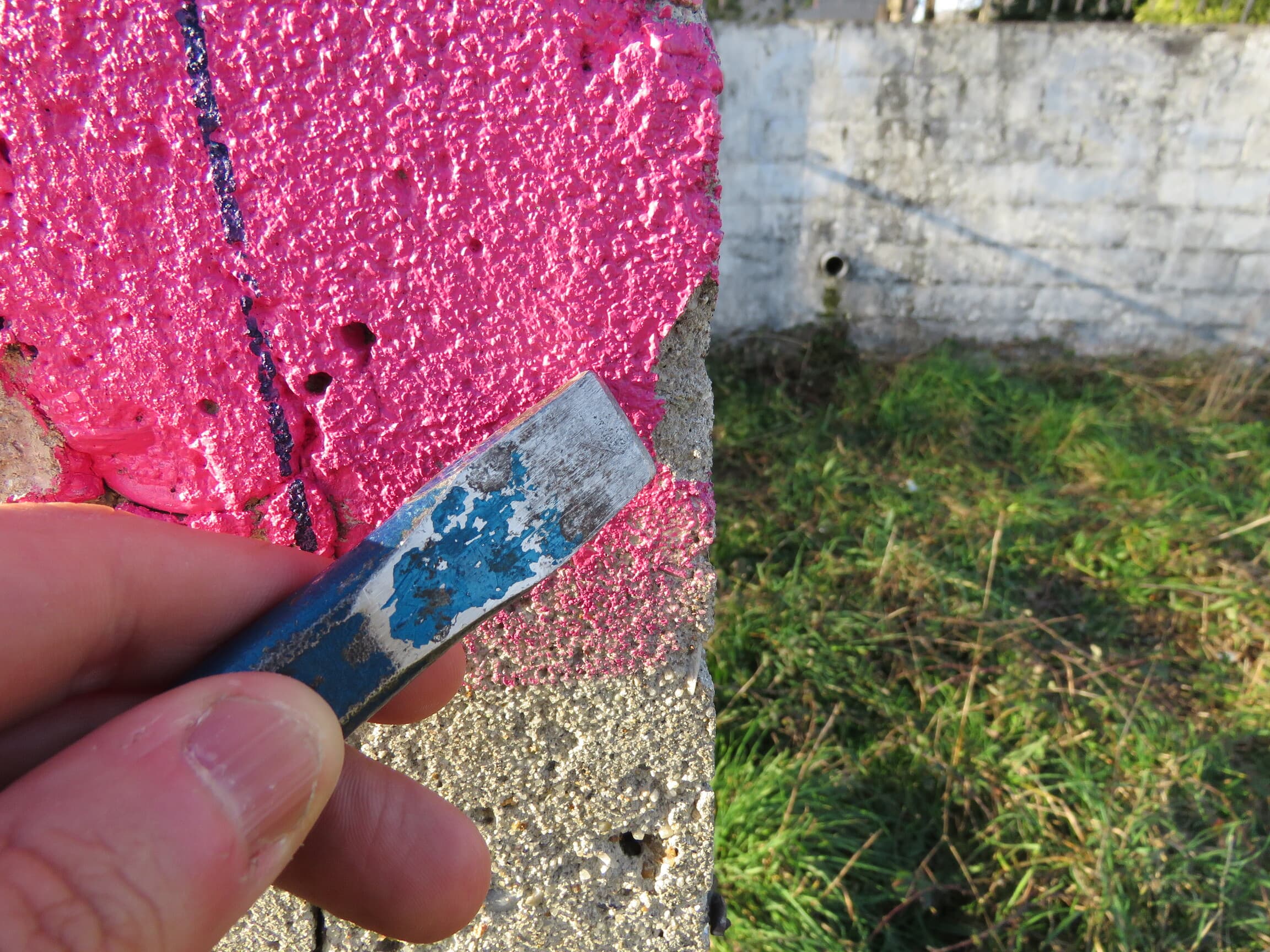
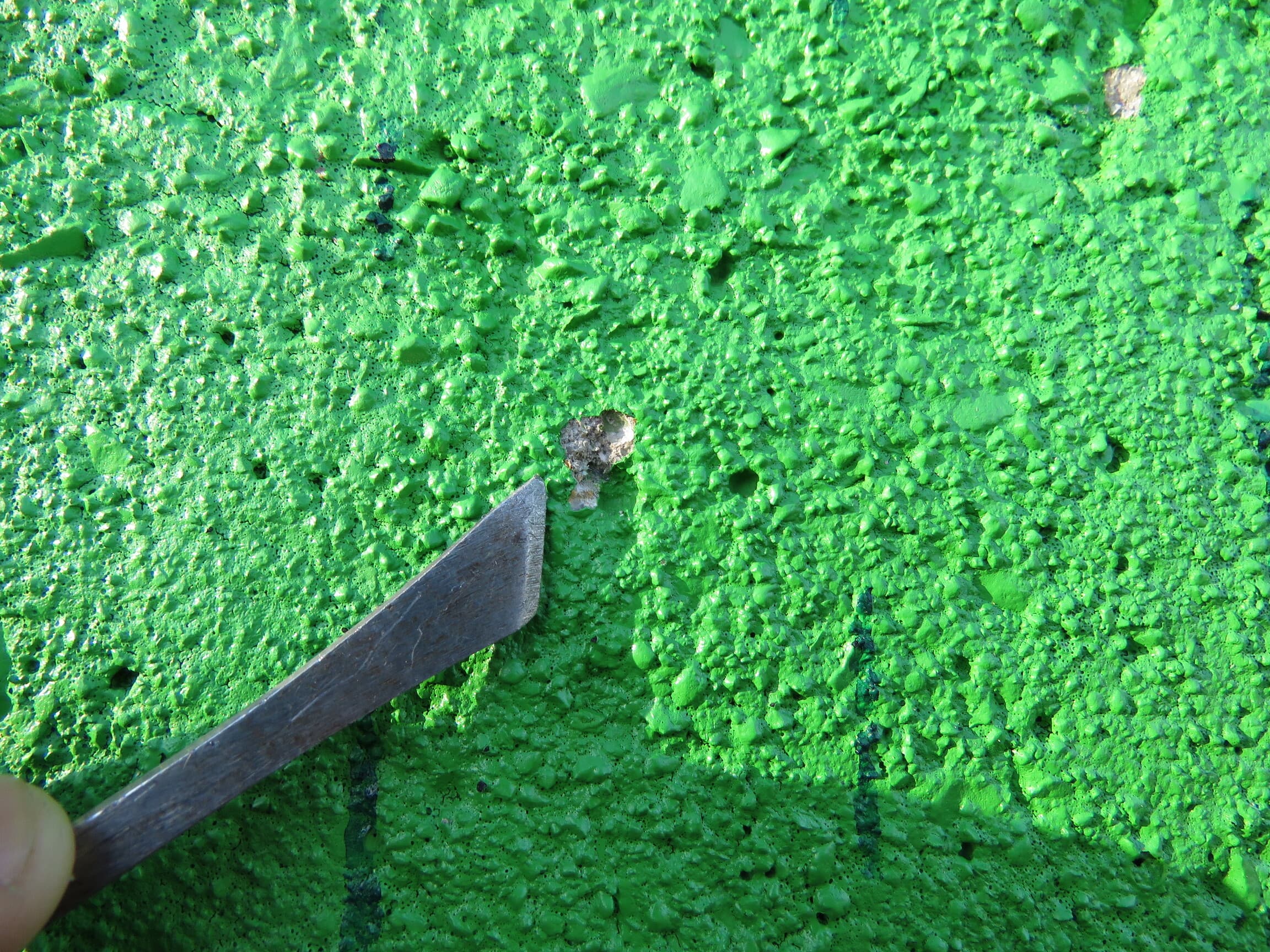
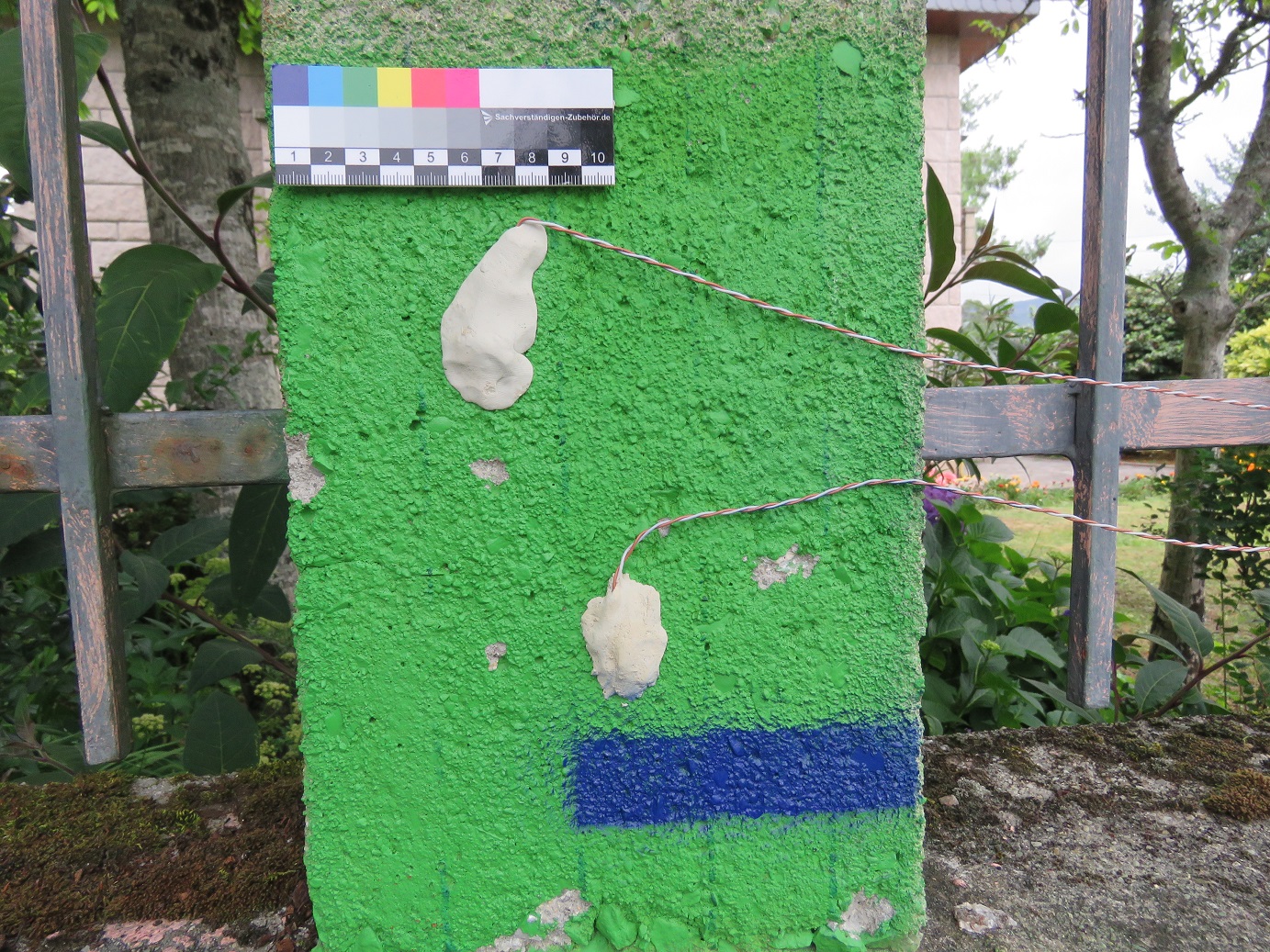
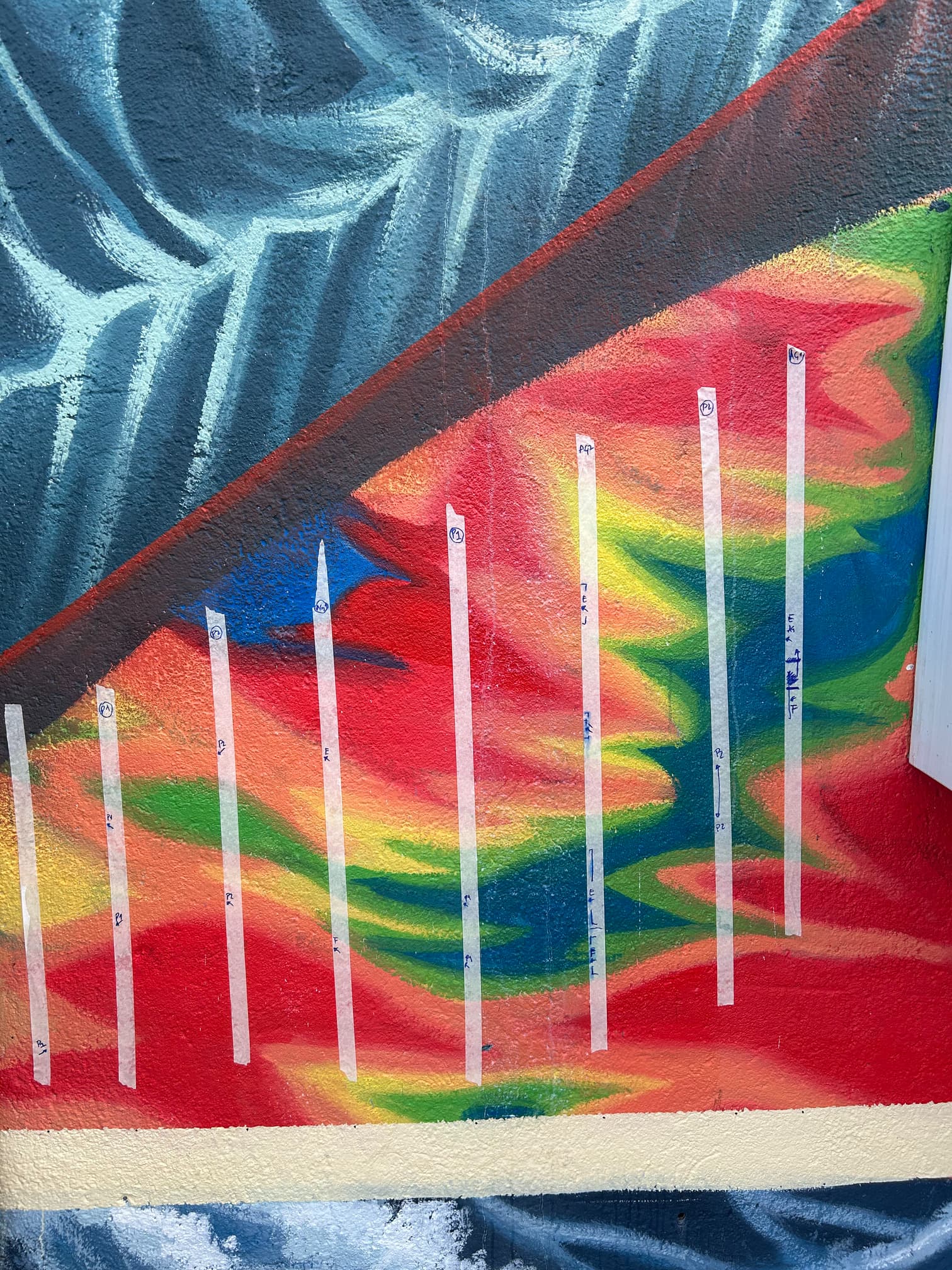
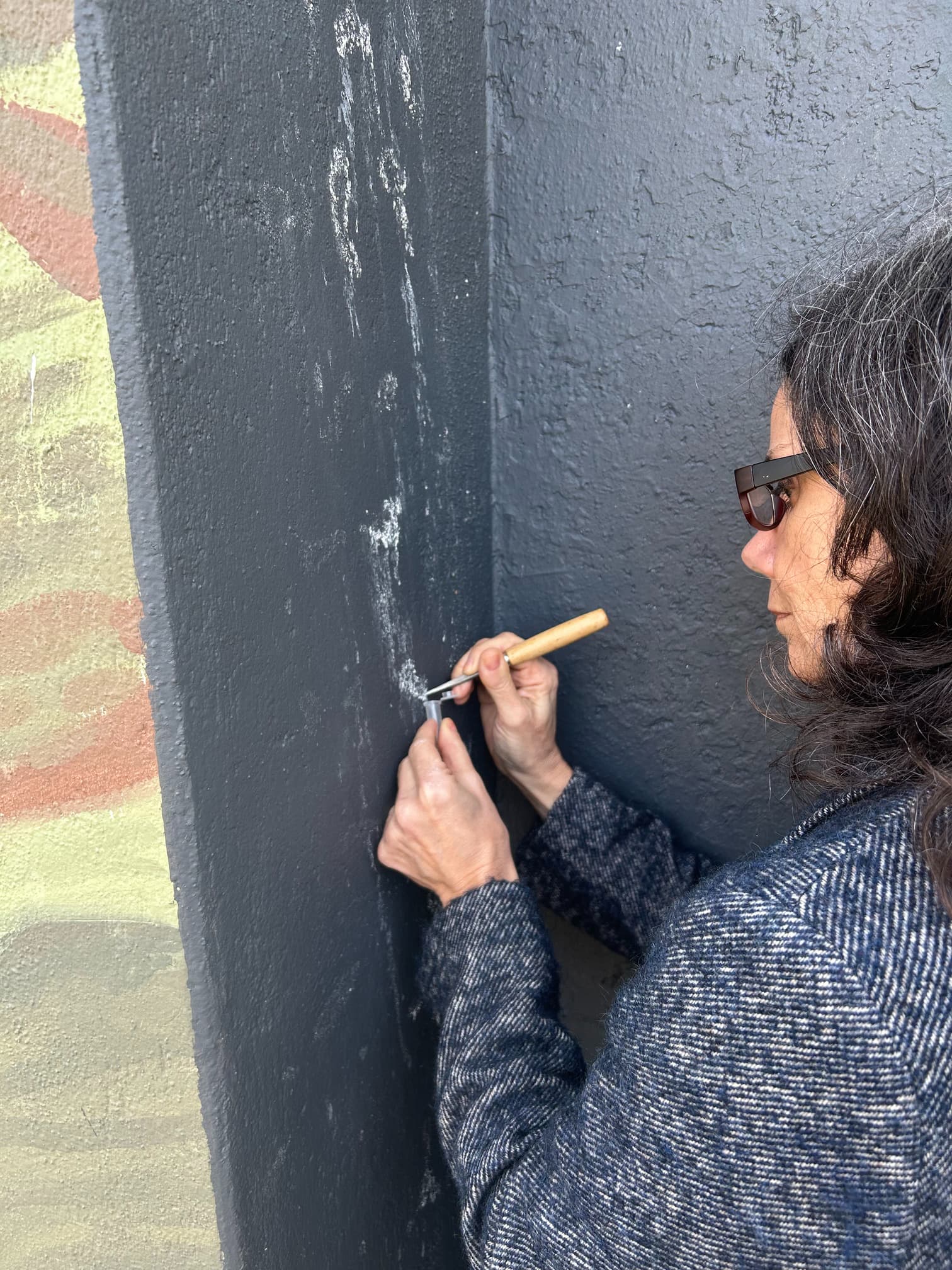
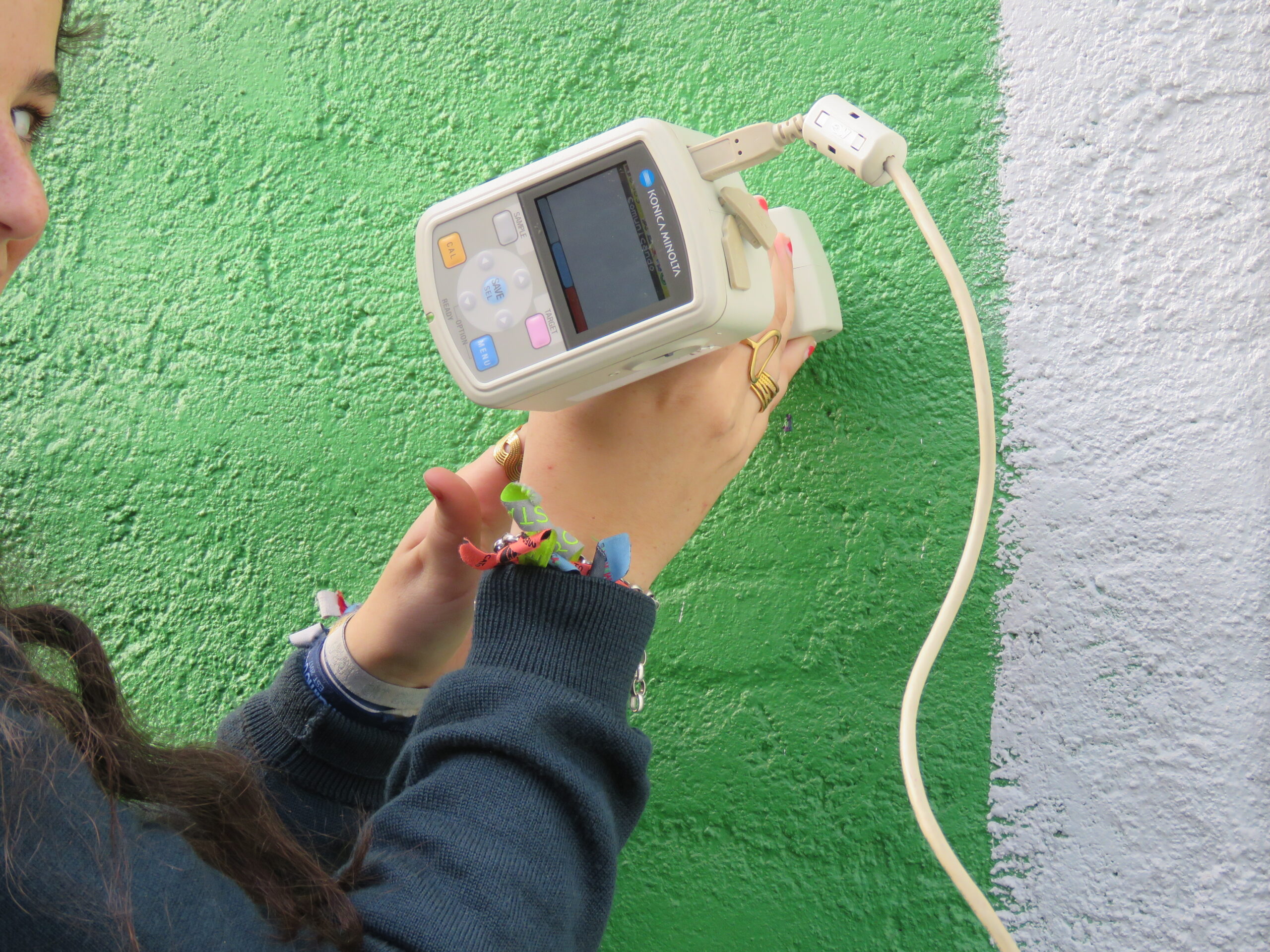
Pictures taken from the protected paints prior to colour measurement, which will be repeated every 40 days. Notches were also taken to be analysed by SEM.
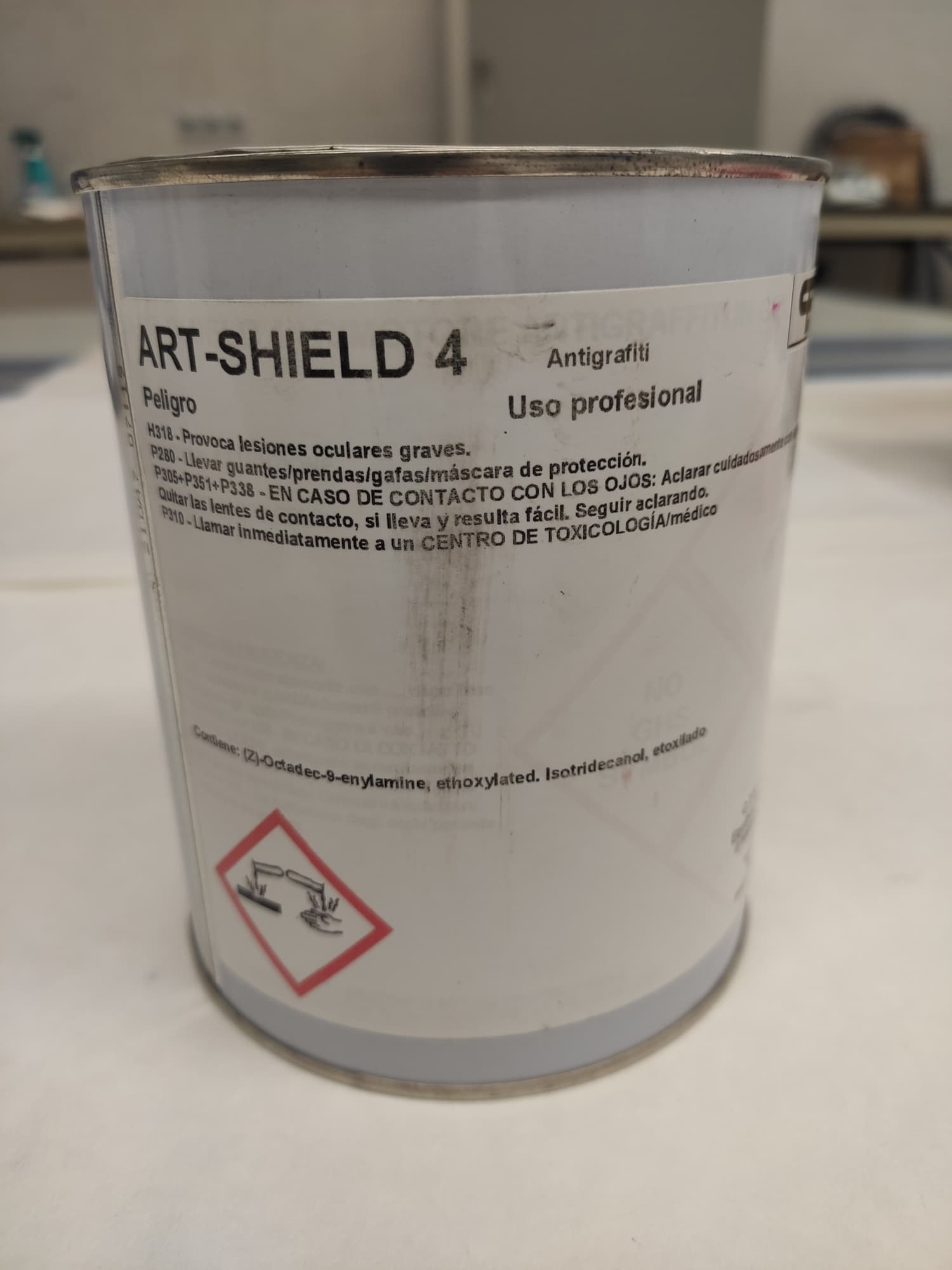
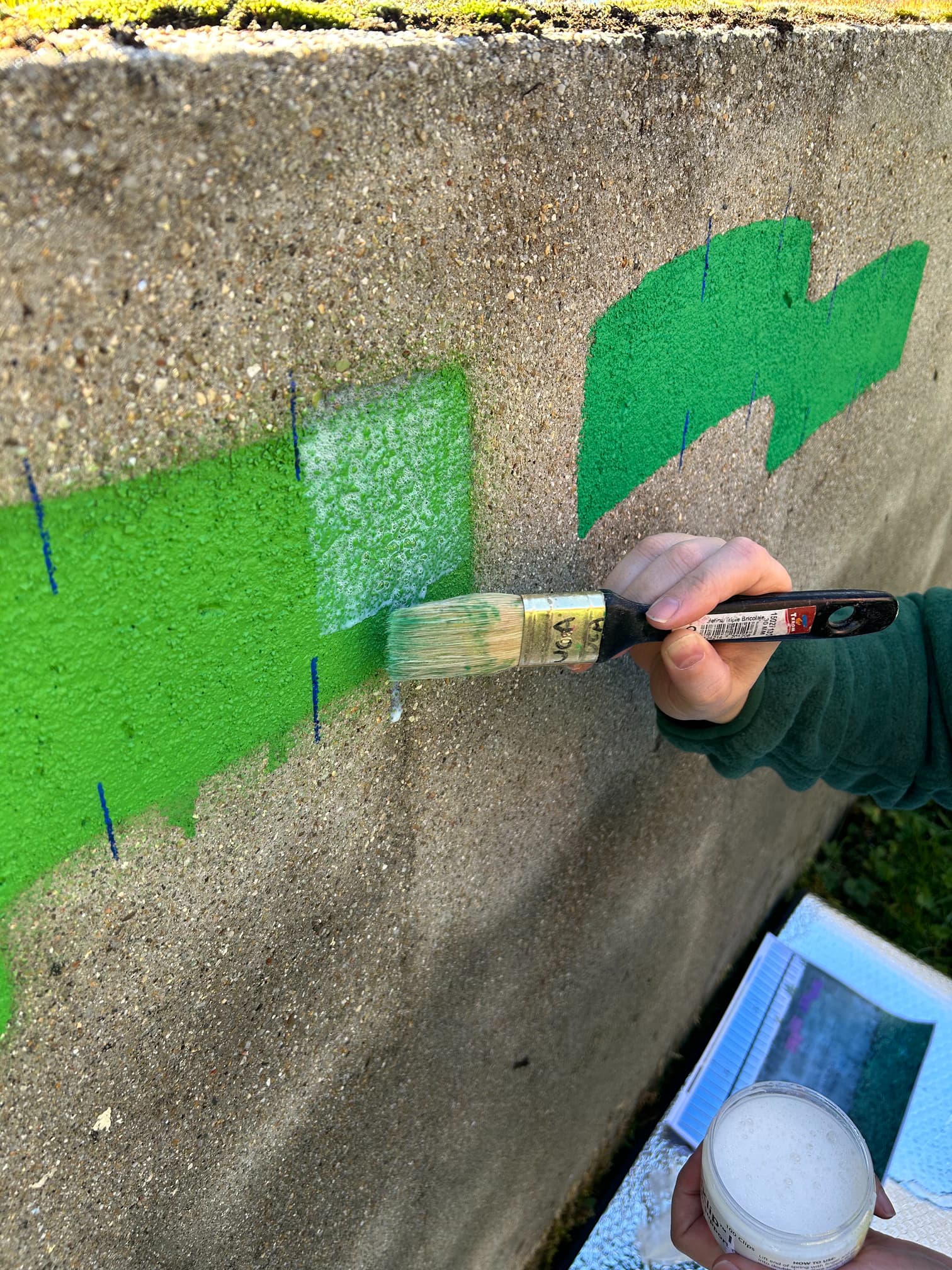
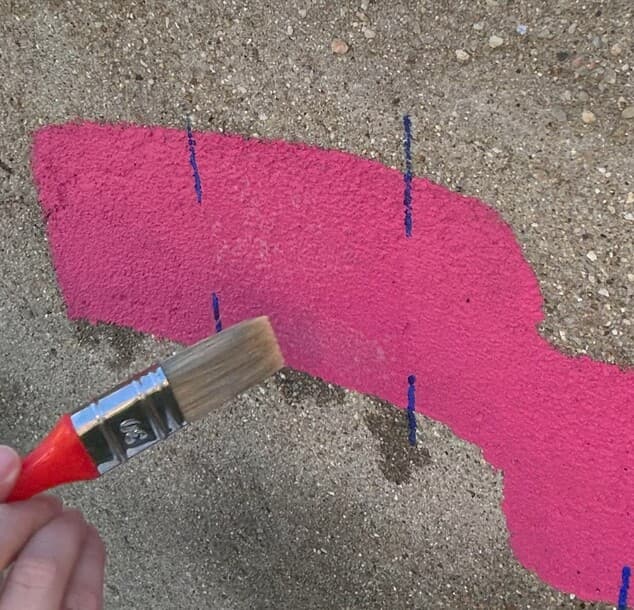
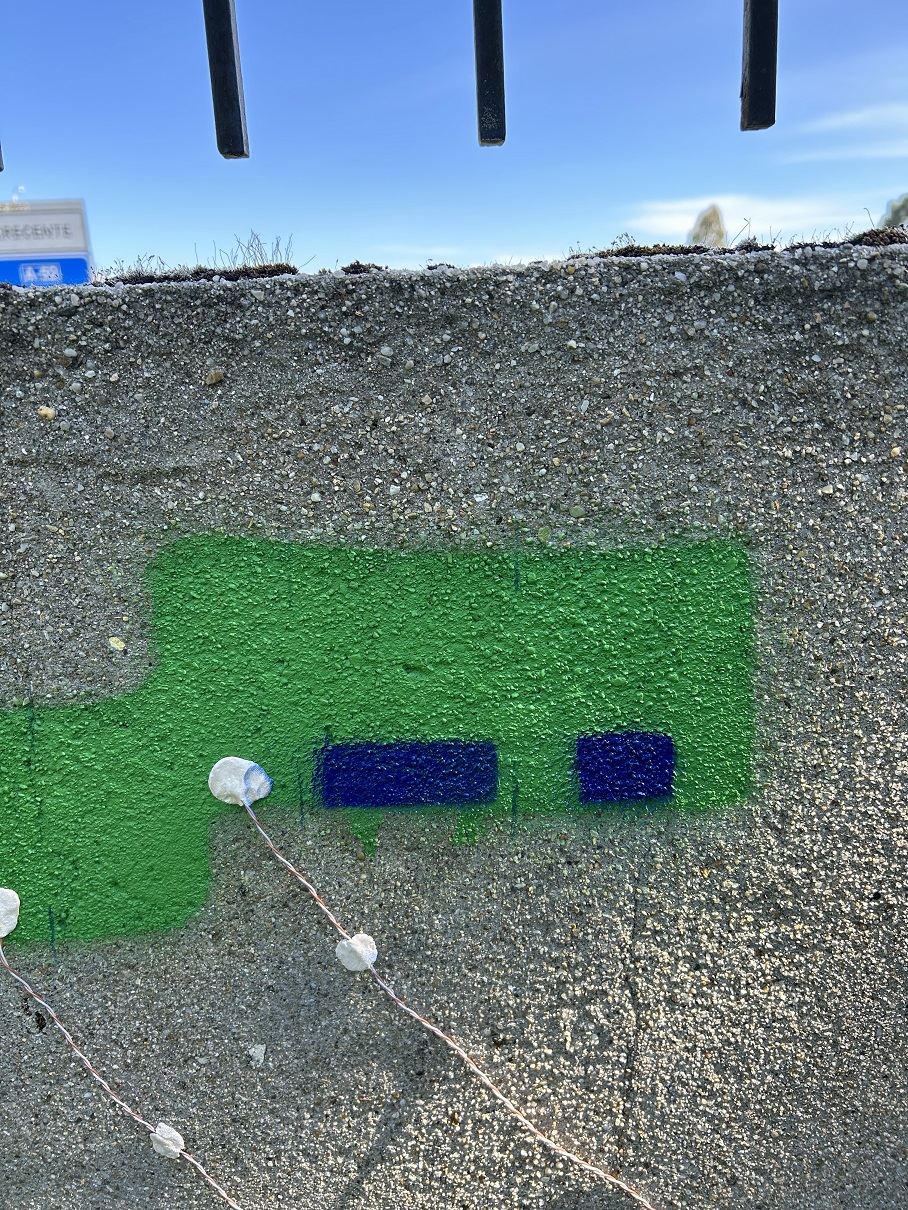
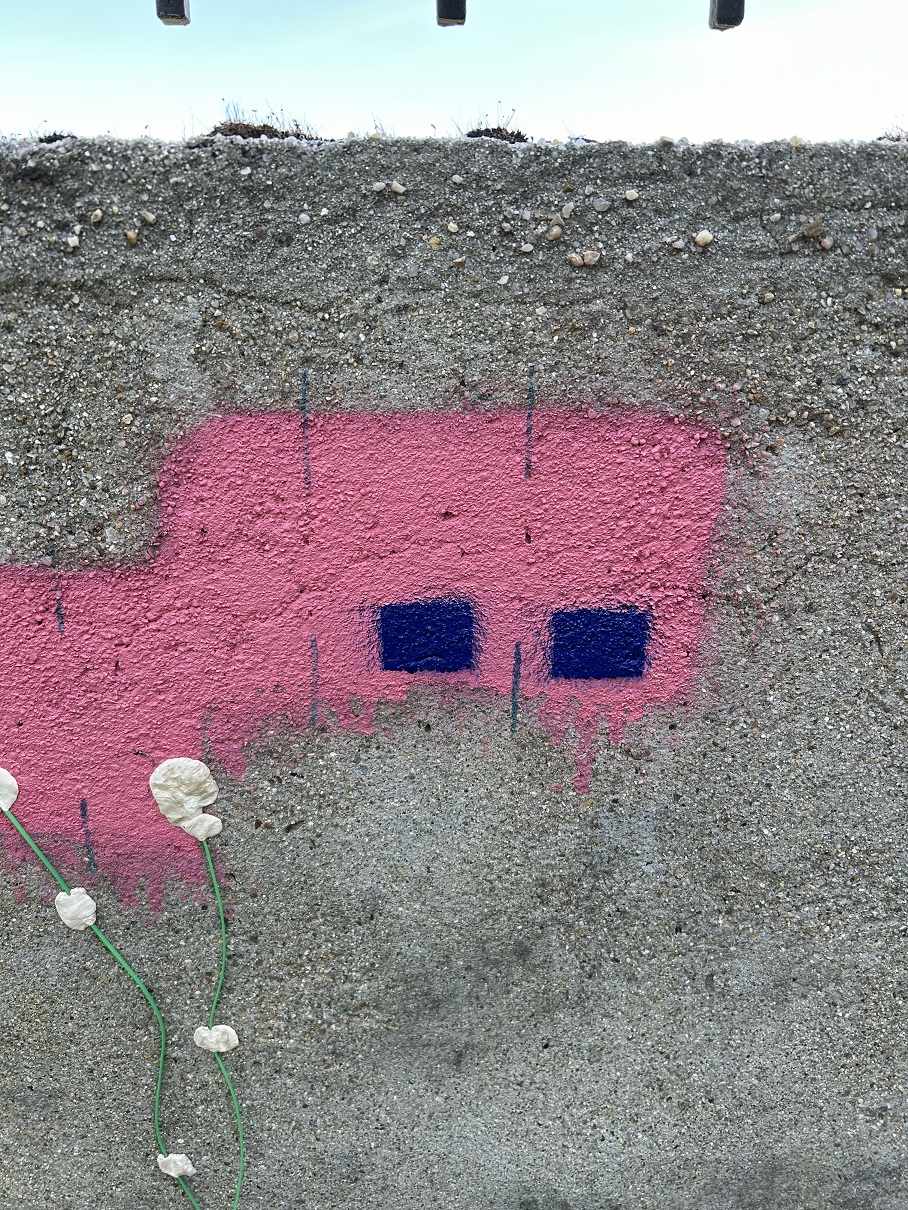
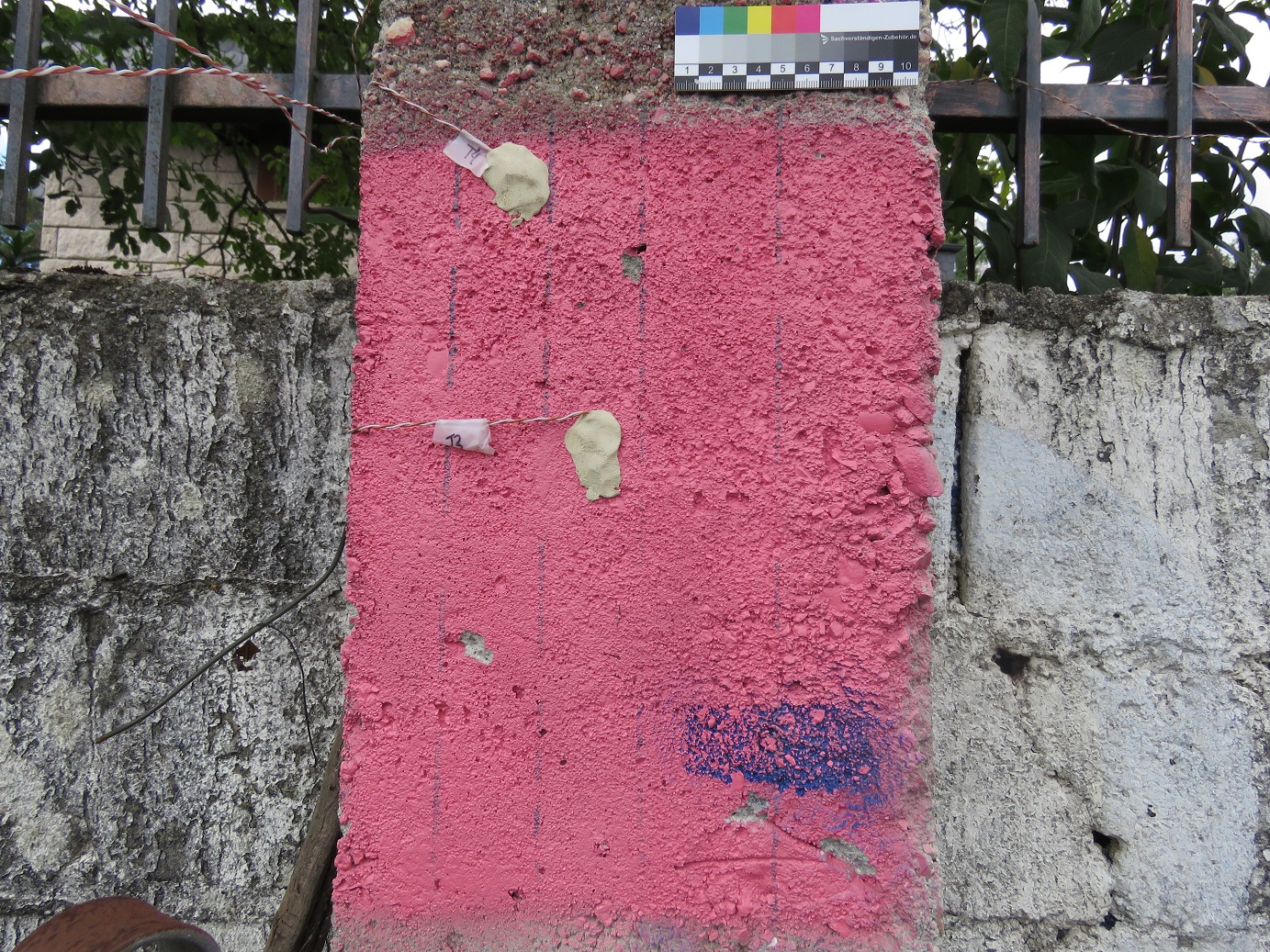
Paints were vandalised with ultramarine blue acrylic paint. For cleaning tasks, paintings protected with permanent antigraffiti (Silo112) were cleaned using a commercial product (Art-Shield 4) with a brush, whereas painting protected with sacrificial antigraffiti (Art-Shield 1) were cleaned with hot air at 80ºC using a hot air gun
Real art work
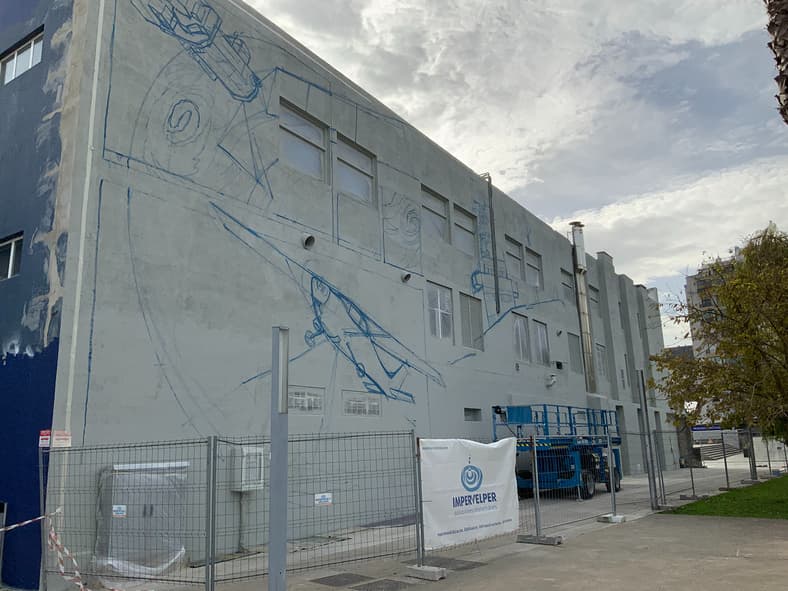
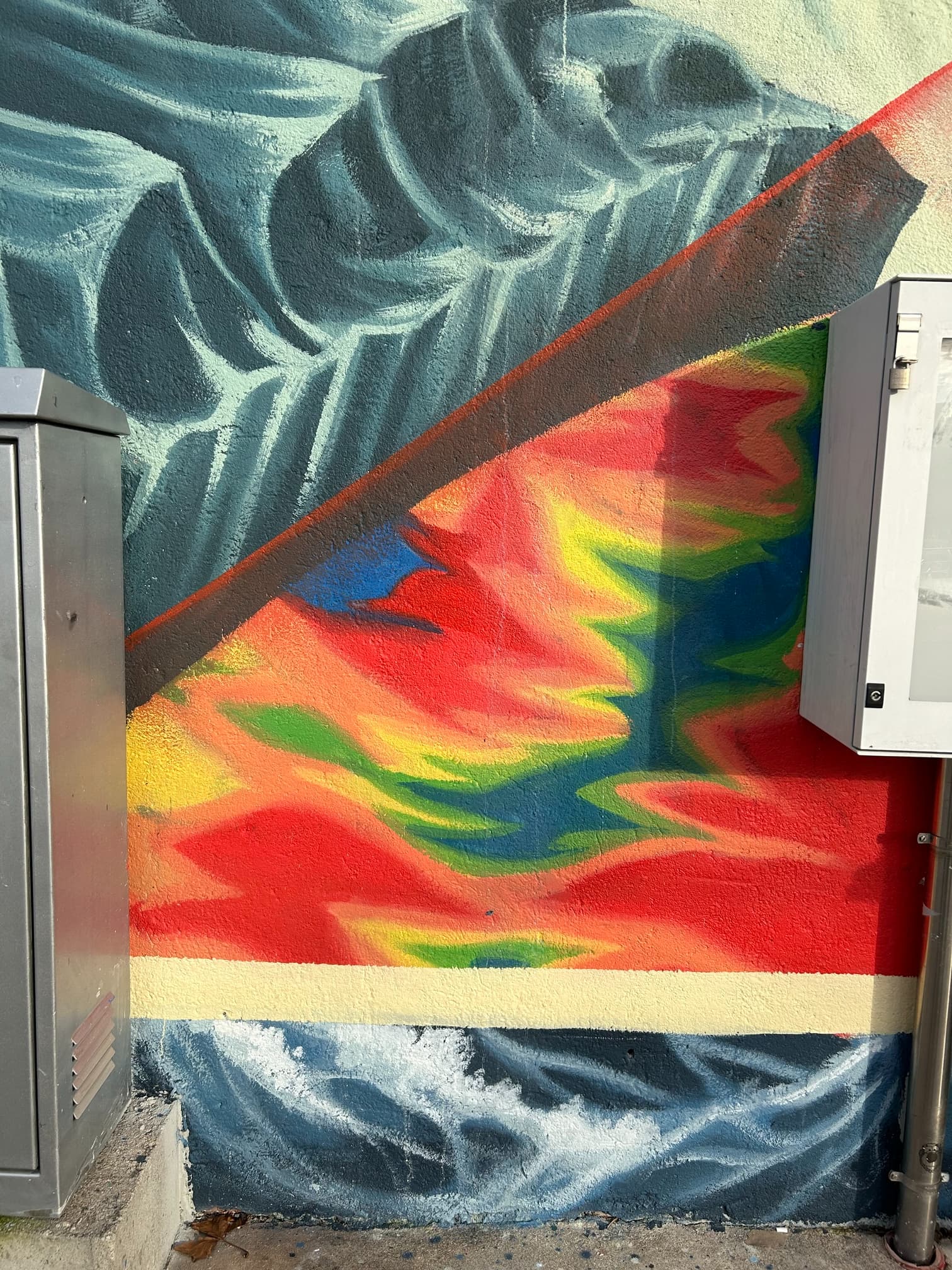
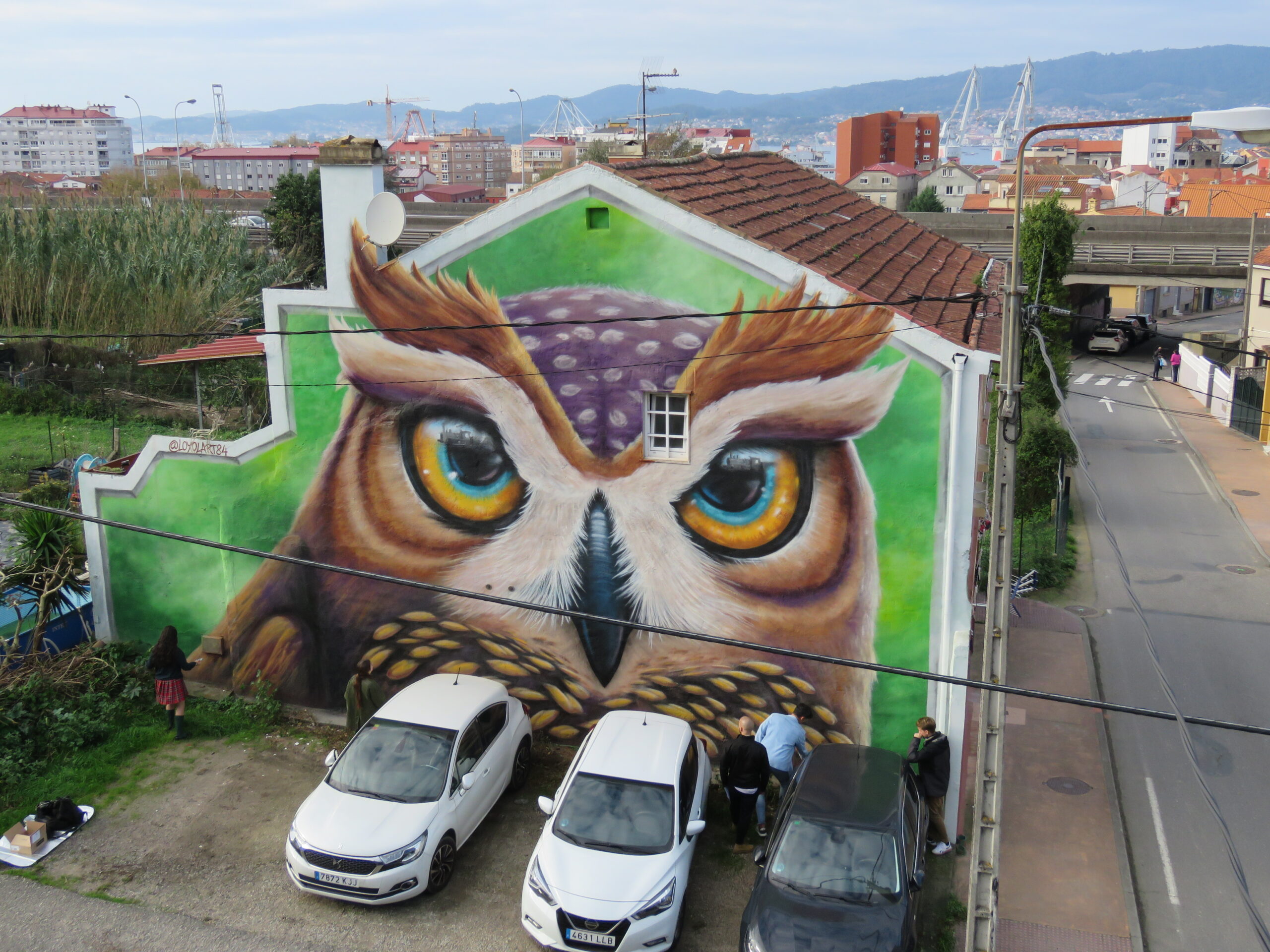
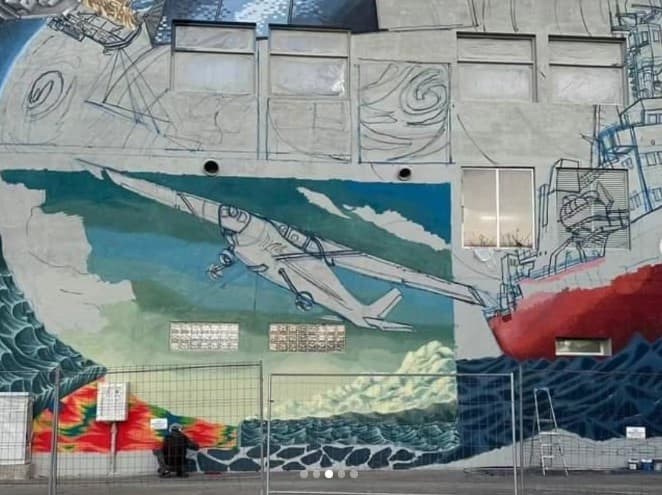
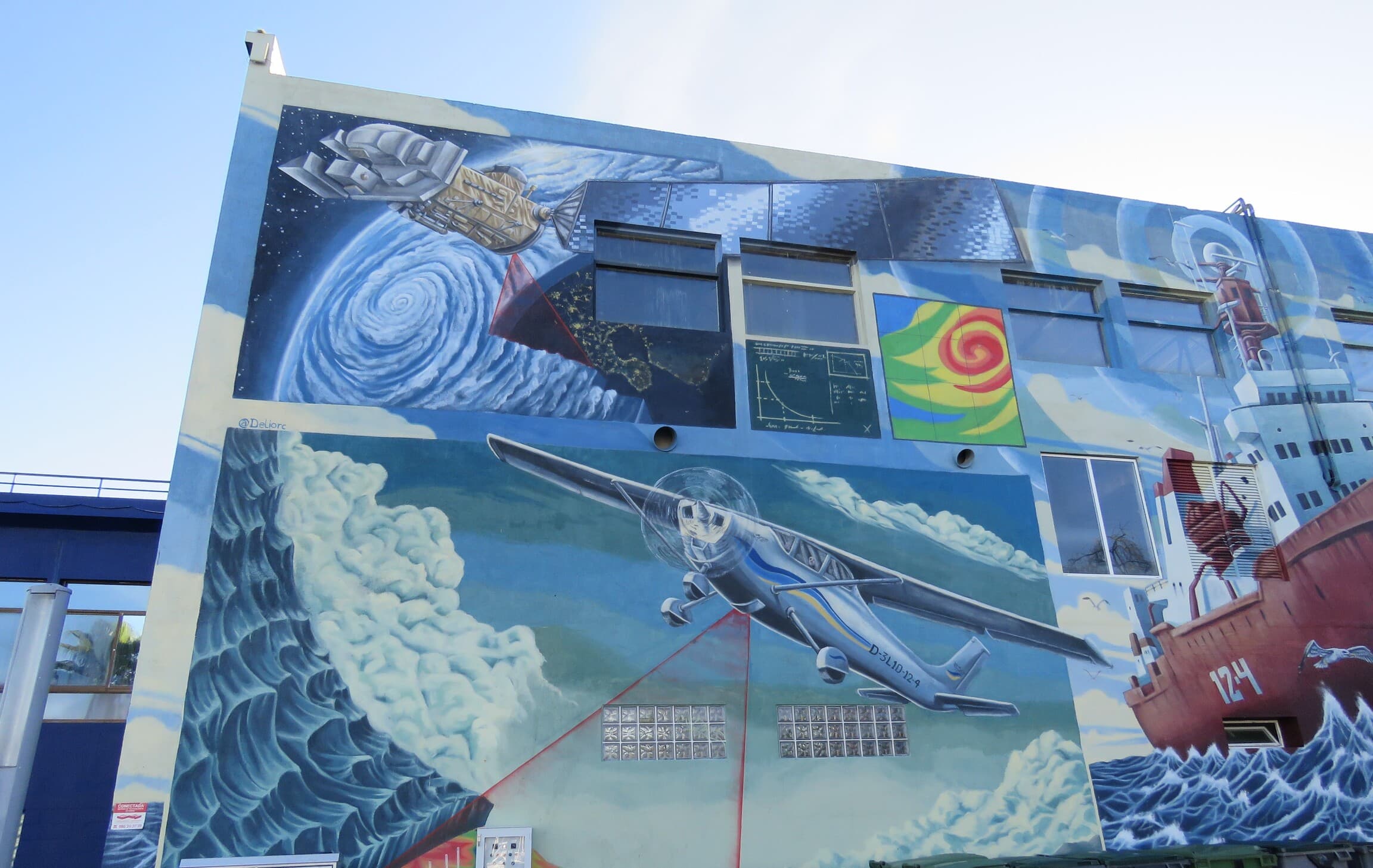
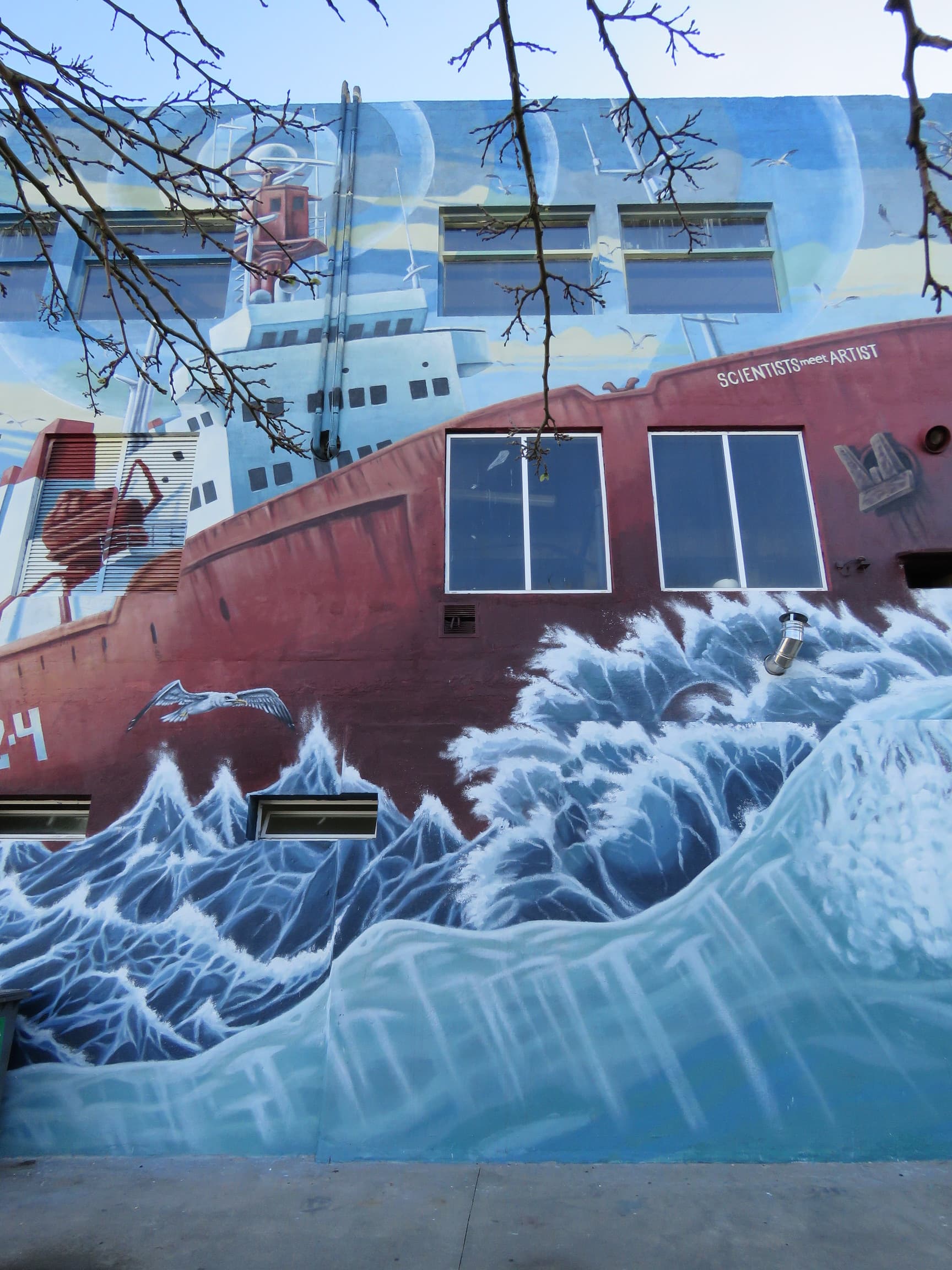
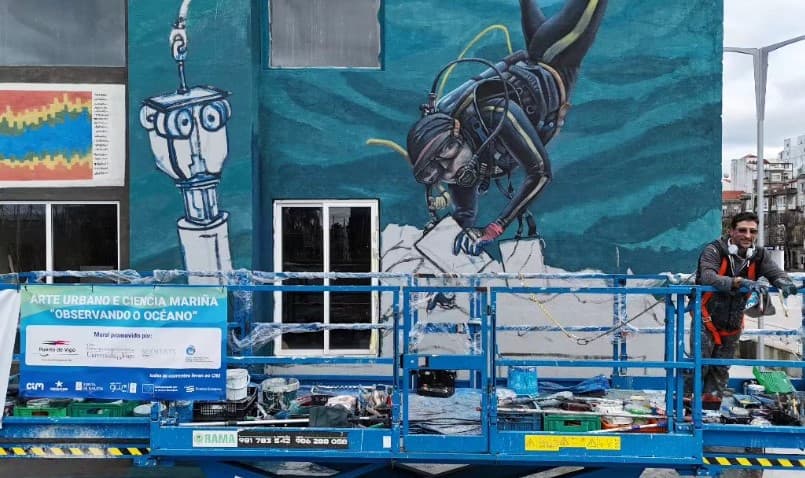
The mural:” Observing the Ocean” by Delio Rodríguez created within the program “Scientist meet artist” on the side of the building of the Real Club Náutico de Vigo was selected to take part in the study.
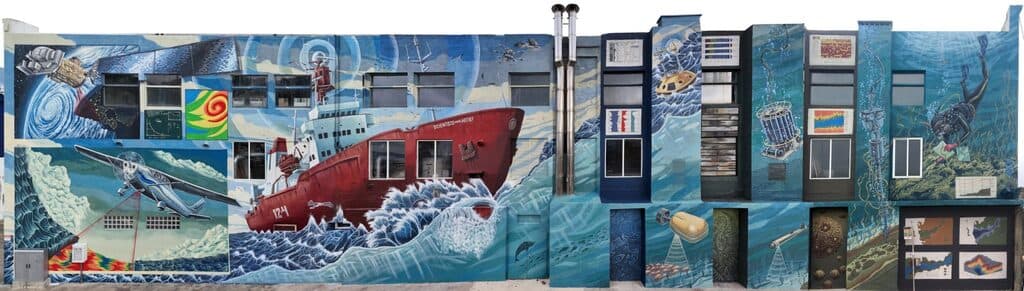
Observing the Ocean by Delio Rodríguez
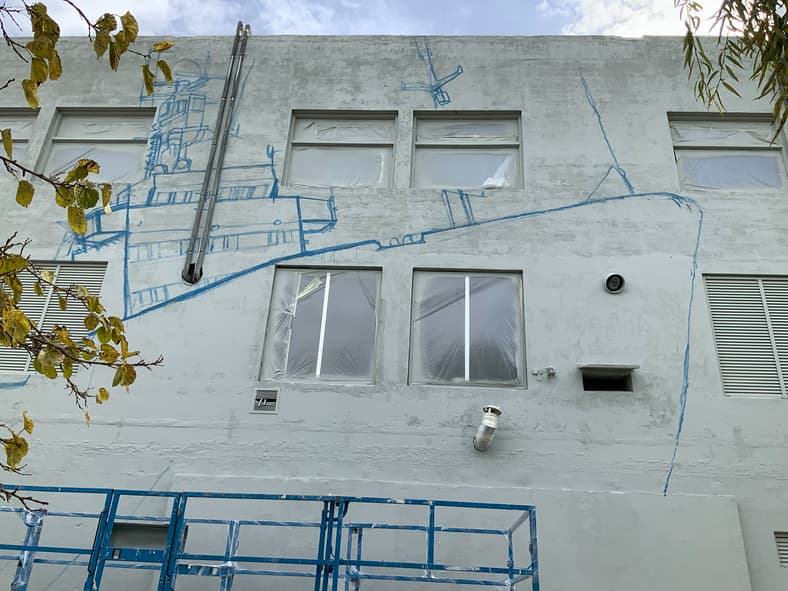
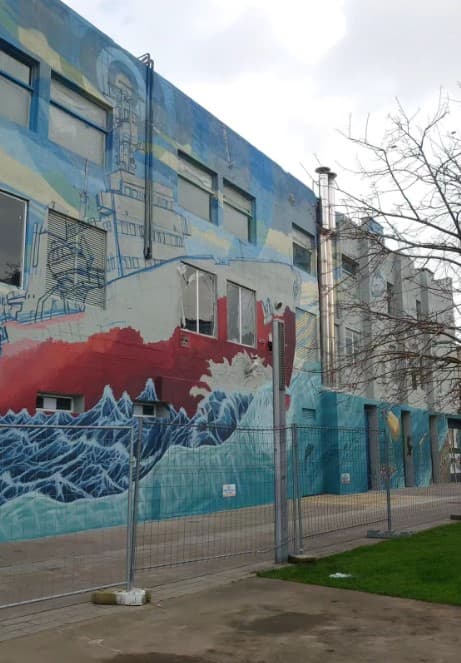
Creating the mural
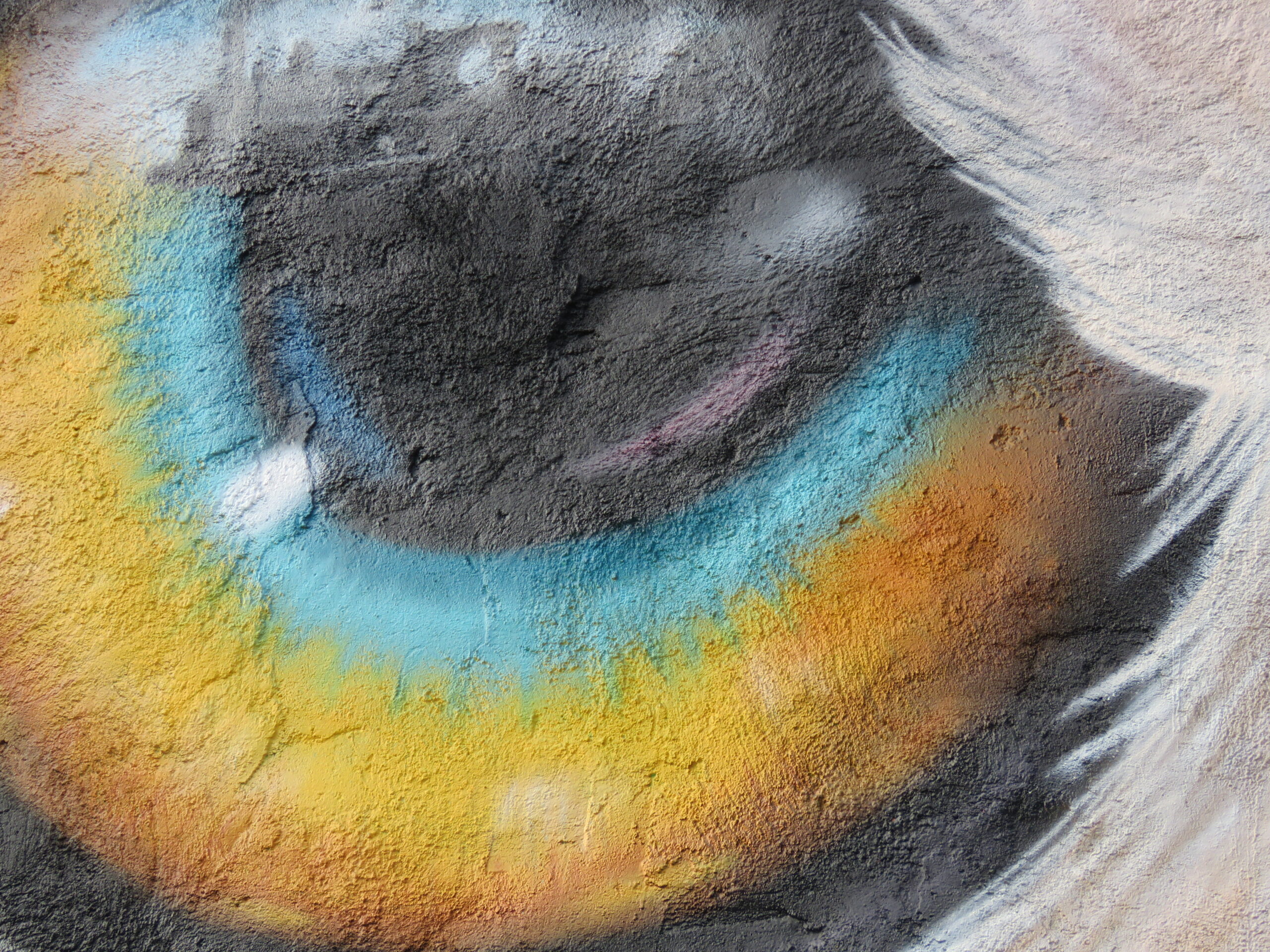
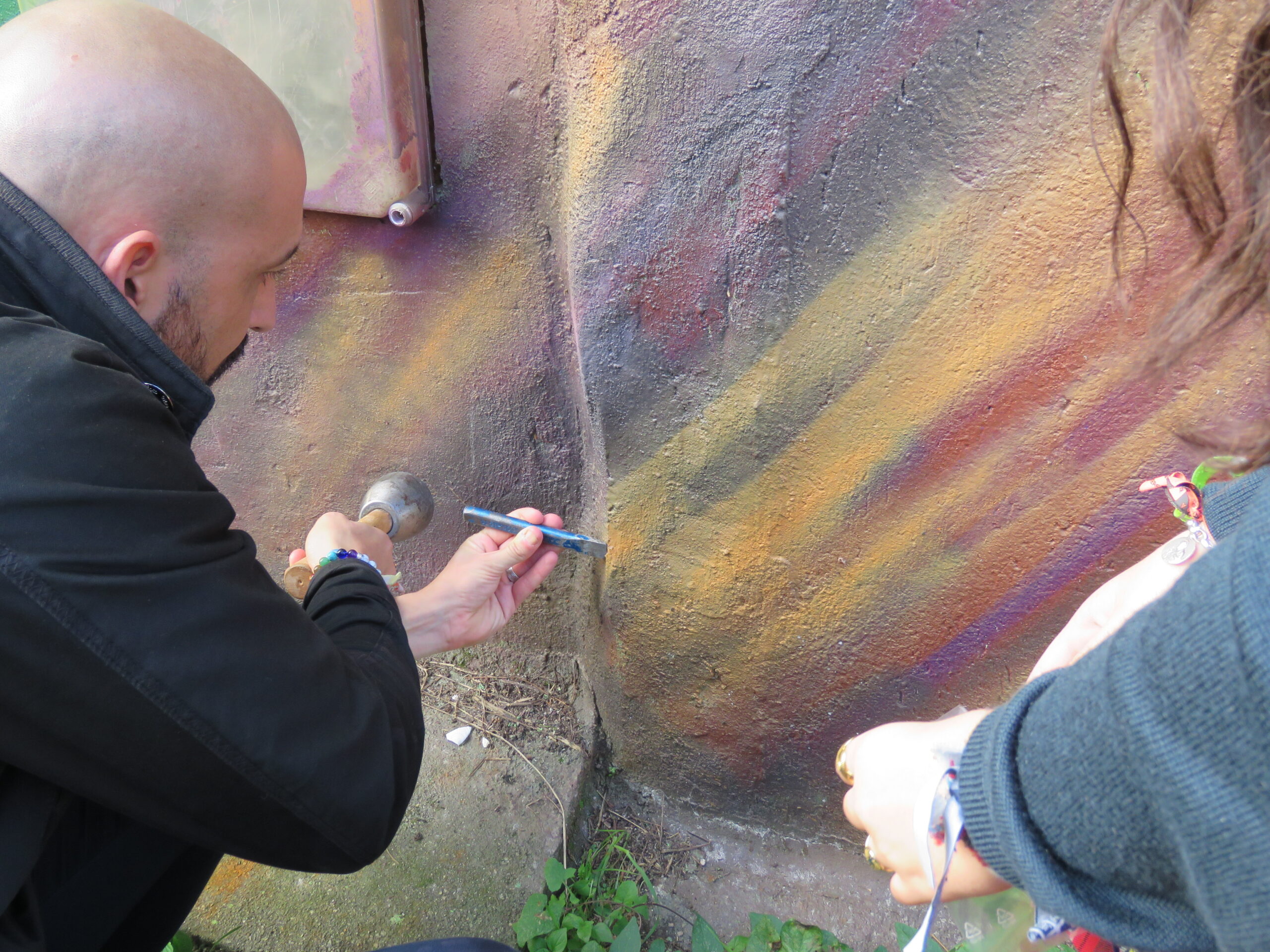
Painting process
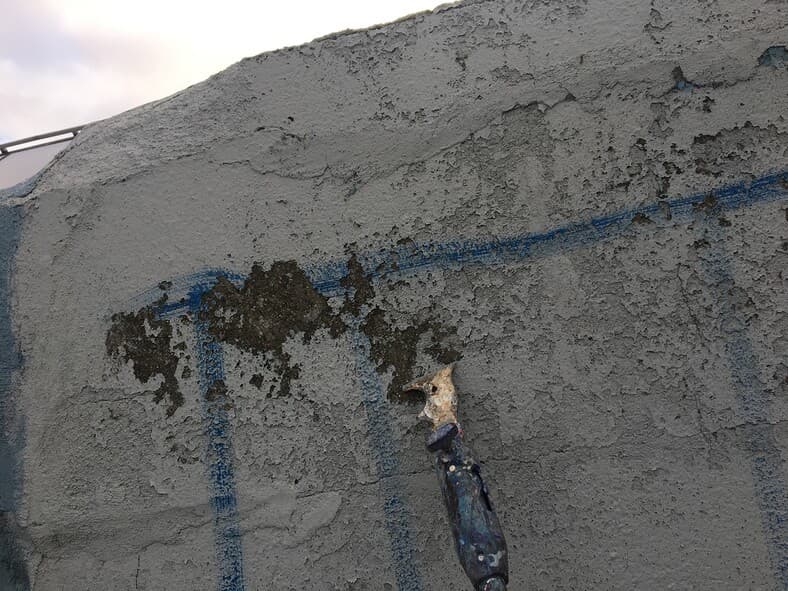

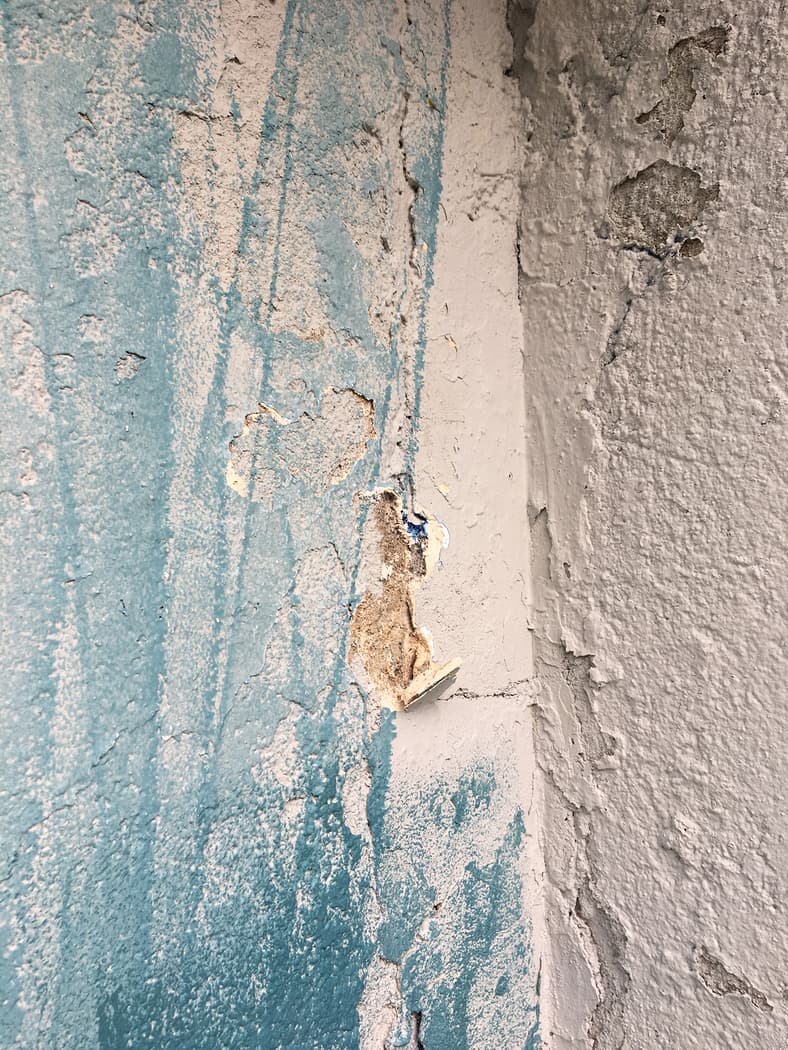
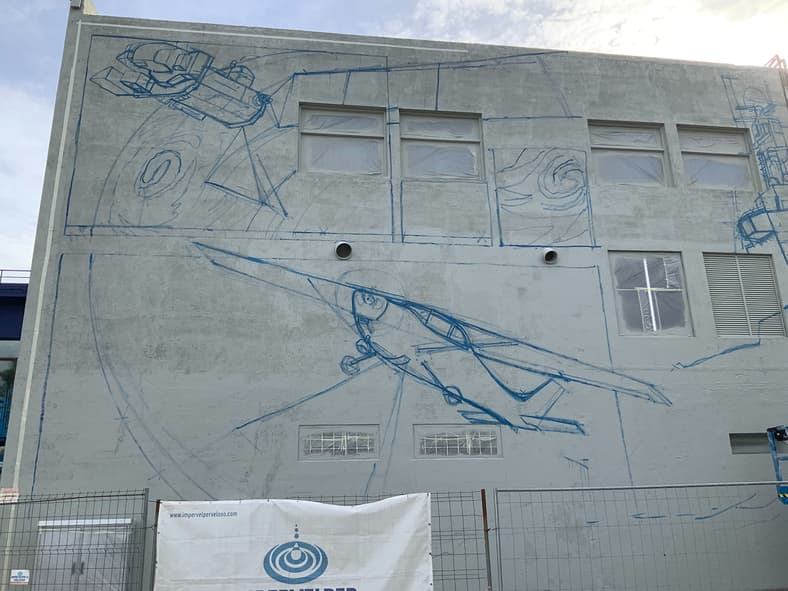

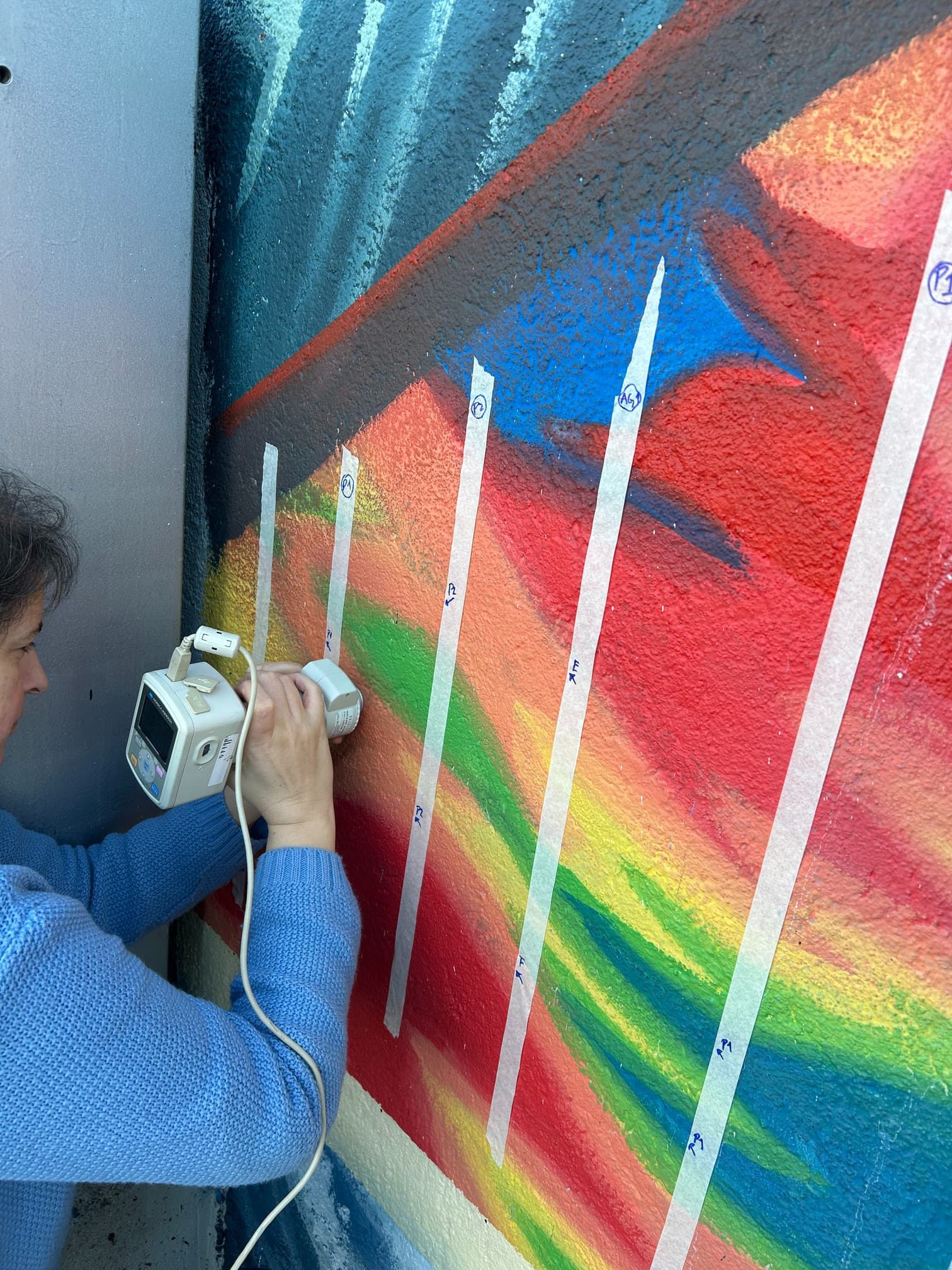
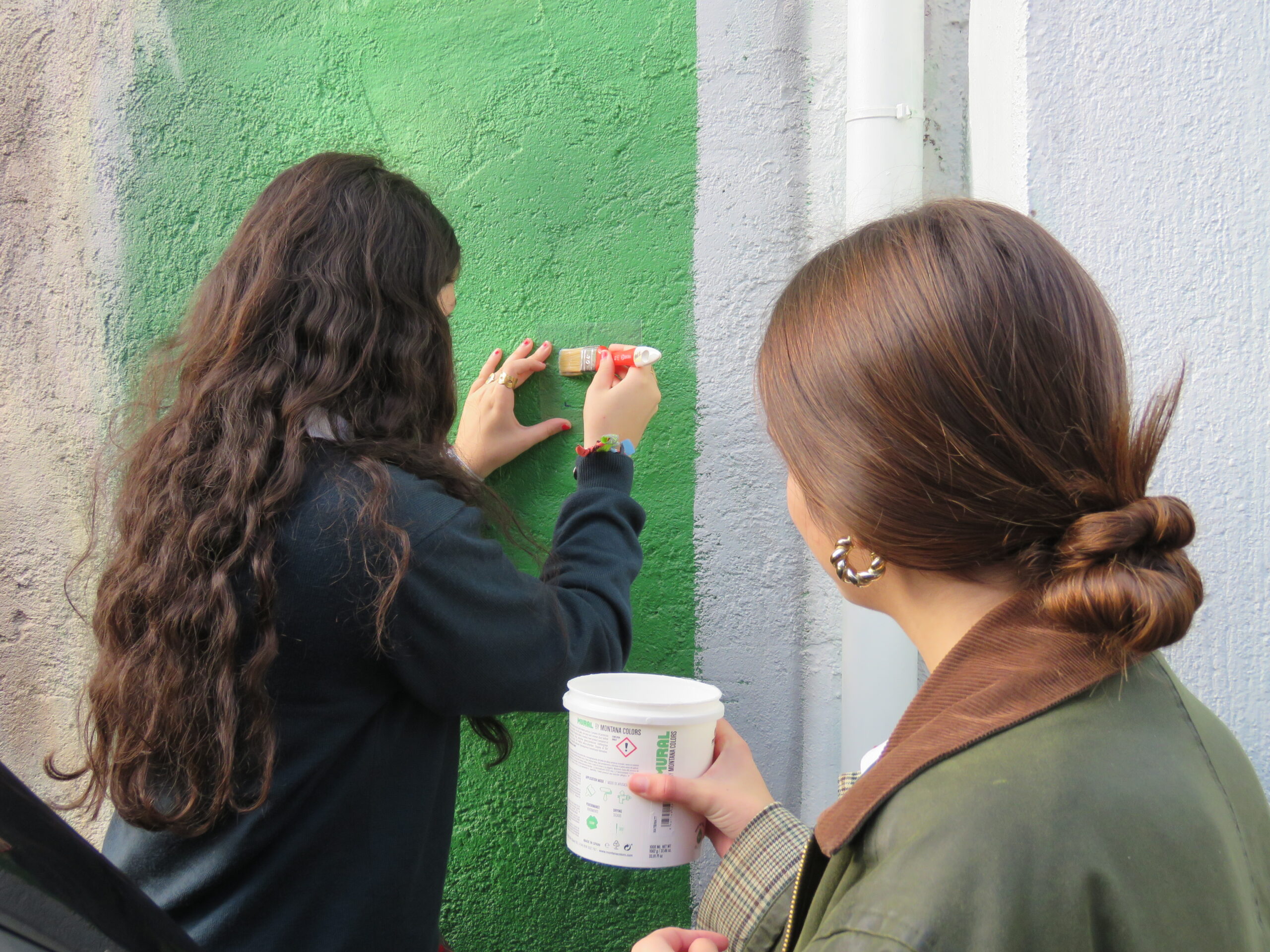
Protectors application and in situ characterization
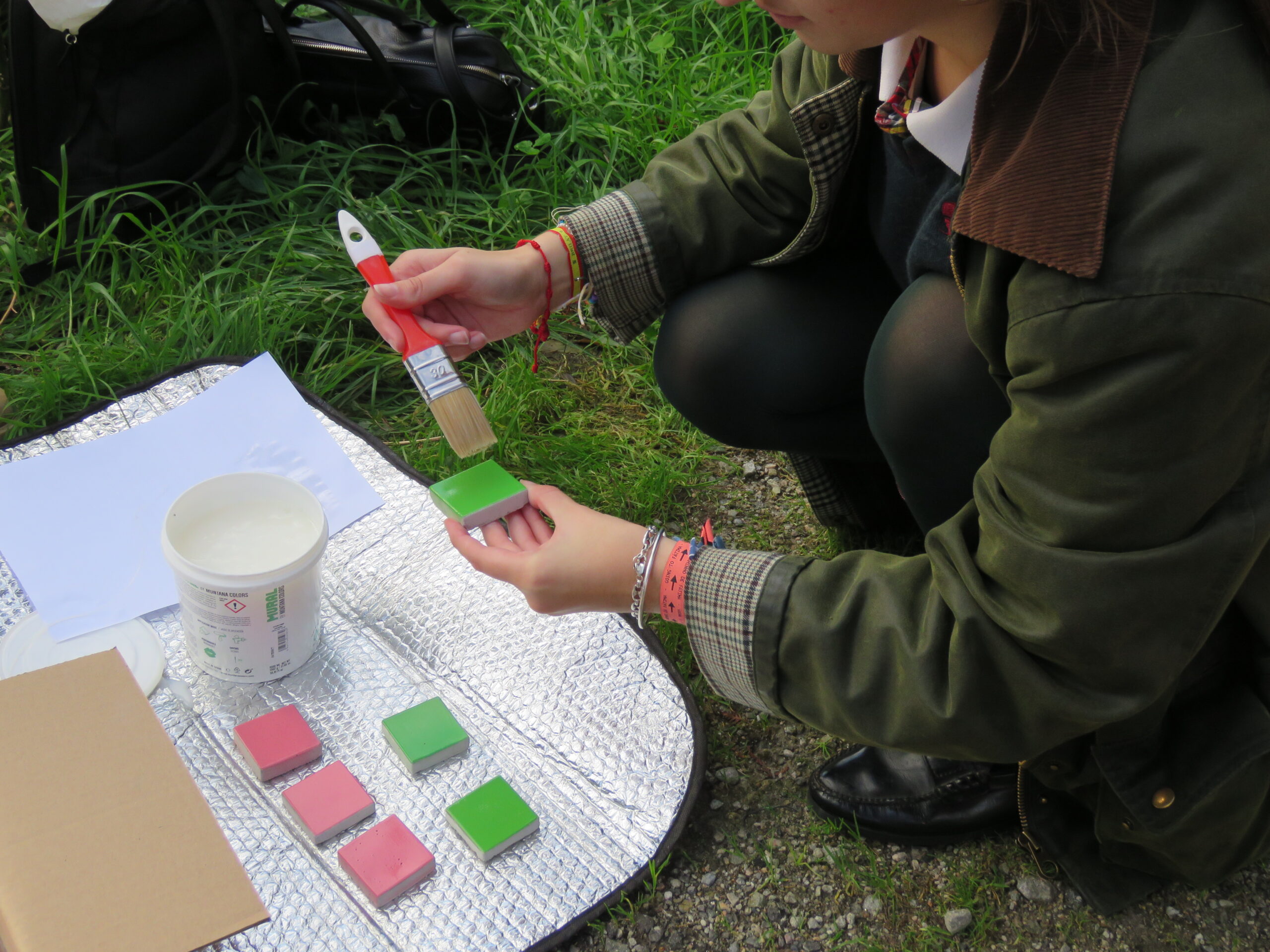
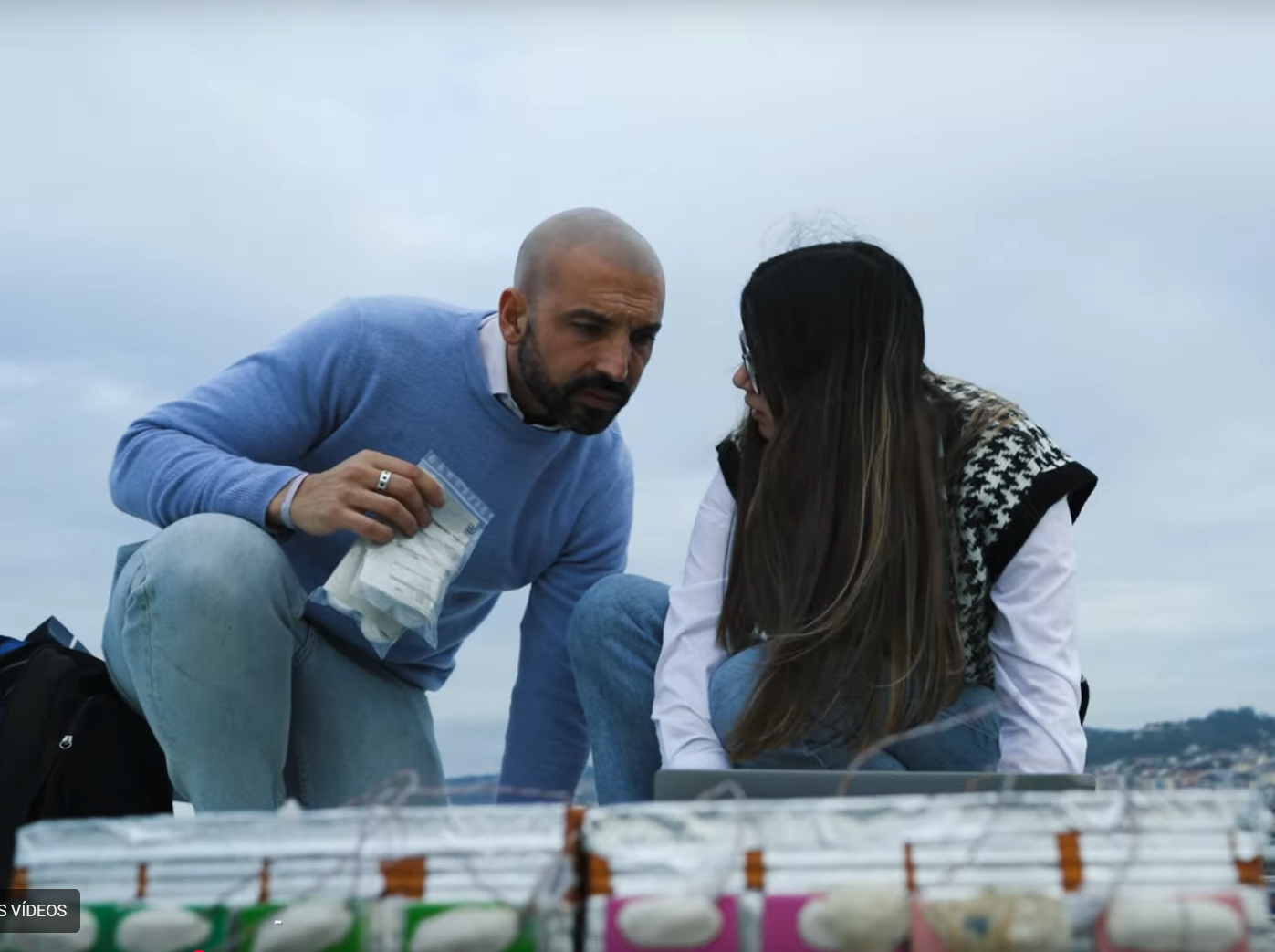
As well as in the lab, two antigraffiti protectors (permanent and sacrificial) and two solar protectors (matte and gloss) will be applied on blue and pink paints. Colour will be also monitored over time.
Vandalism and cleaning
Montana RV-5002 ultramarine blue acrylic paint was used to vandalised the mural at 4 different spots.
Blue and pink paint protected with permanent antigraffiti (Silo 112) and vandalised with ultramarine blue were cleaned with Art-Shield 4 using a brush.
Blue and pink paint protected with sacrificial antigraffiti (Art-Shield 1) and vandalised with ultramarine blue were cleaned with hot air at 80 ºC using a hot air gun.
Connecting to society
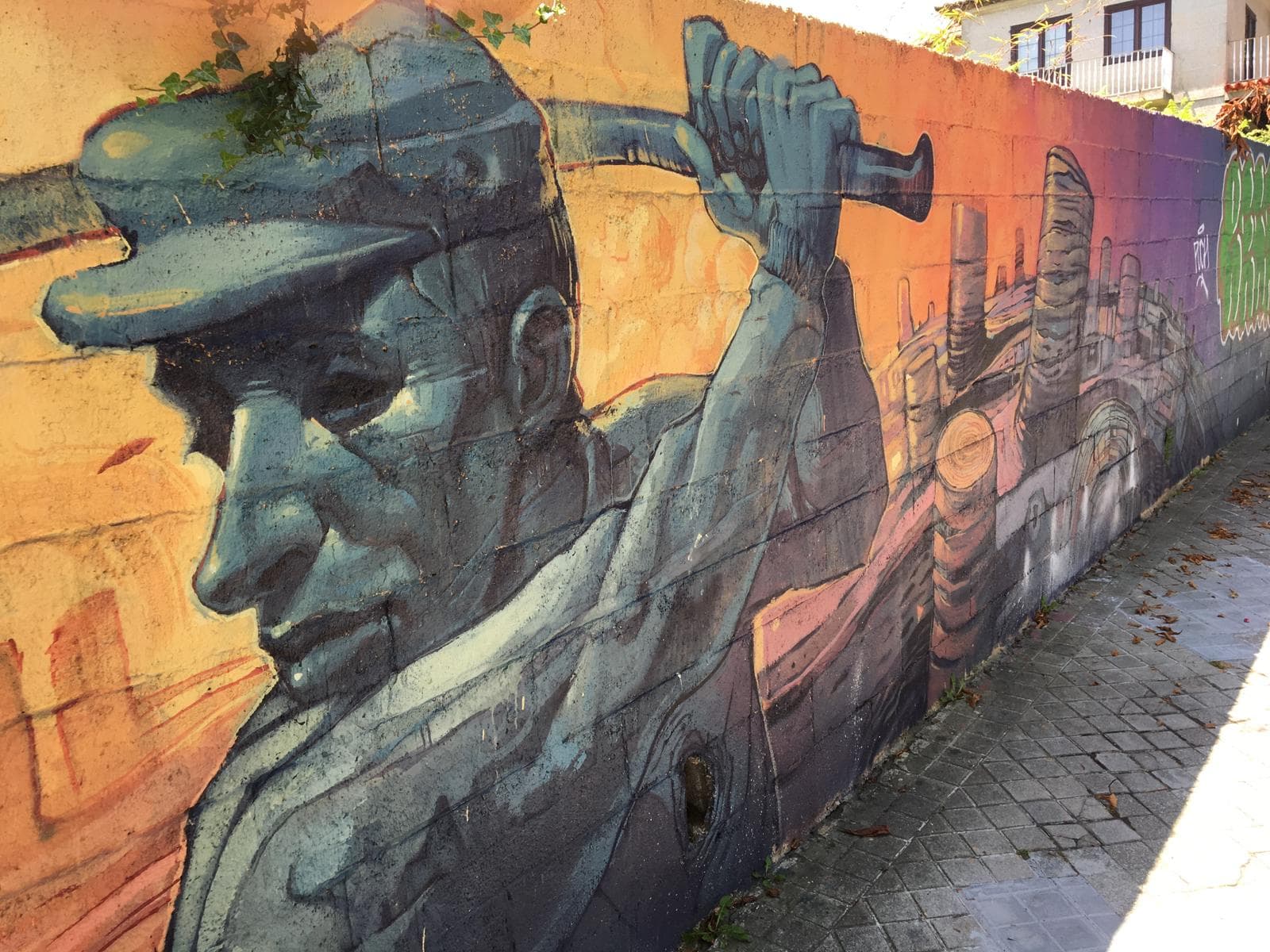
Analysing the conservation state of two urban murals from Vigo and assessing the effectiveness of different solar protectors by high school students.
Murals used in the StemBach Project 2021-2023
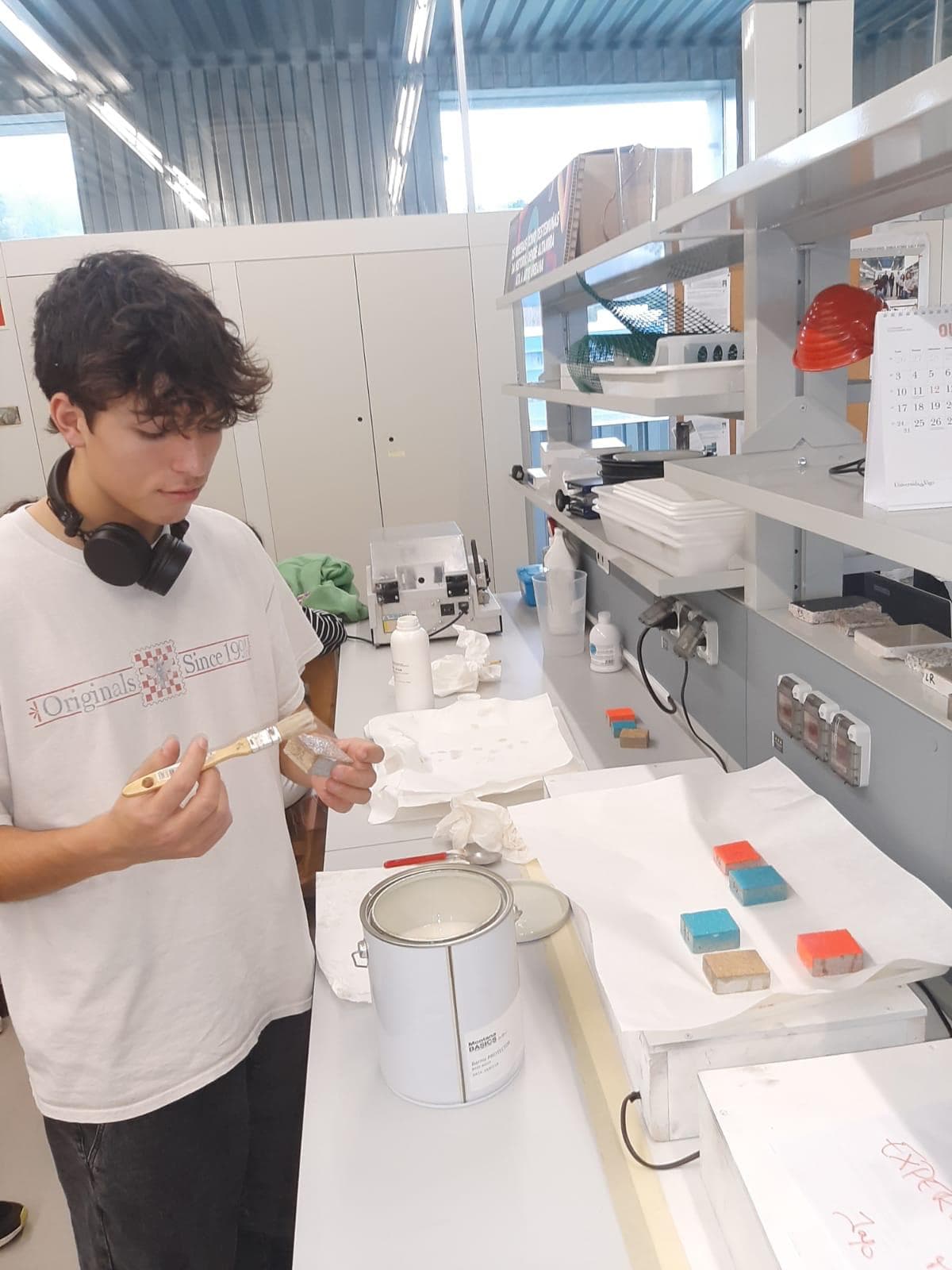
Mock-ups preparation and analysis
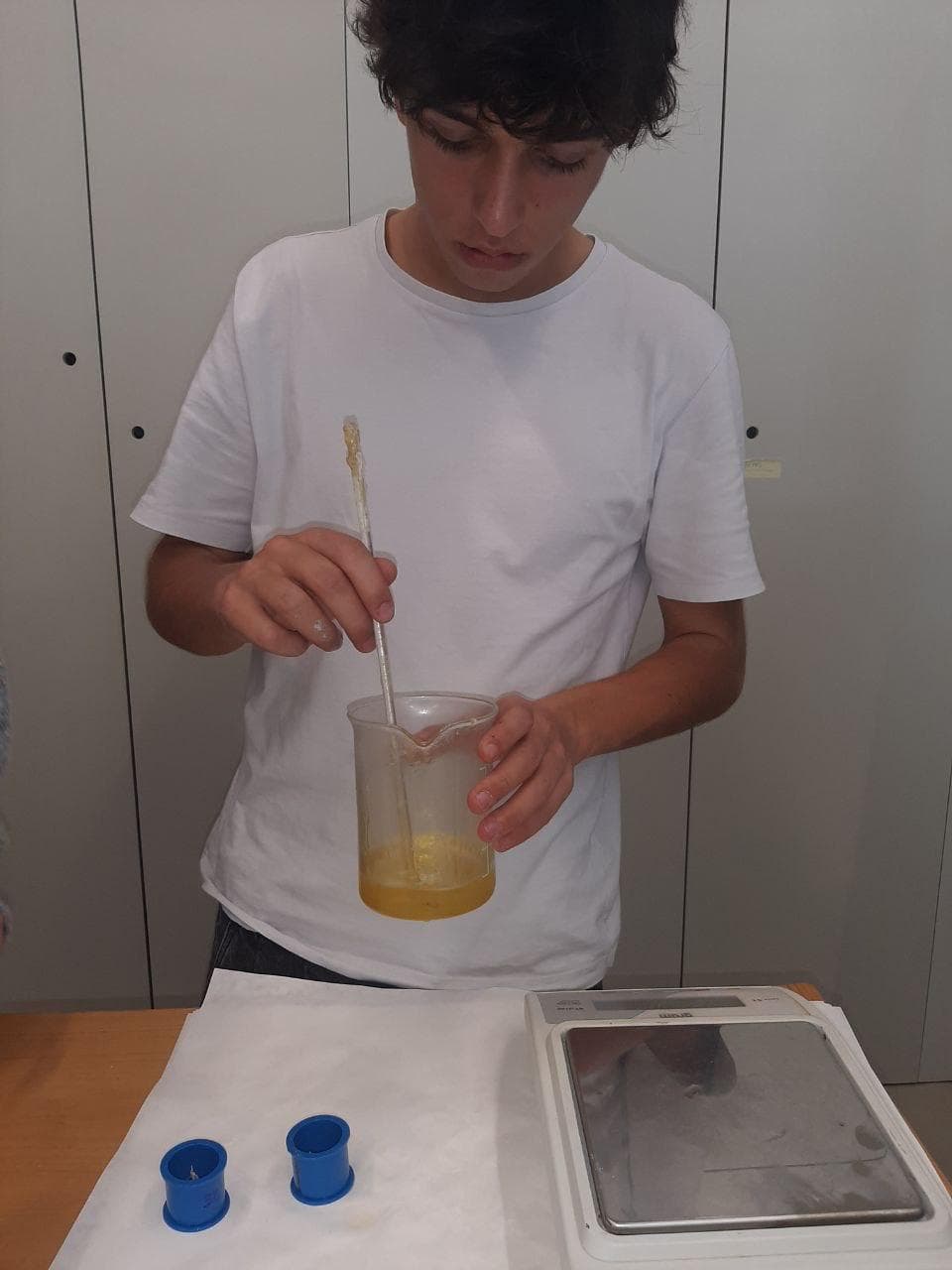
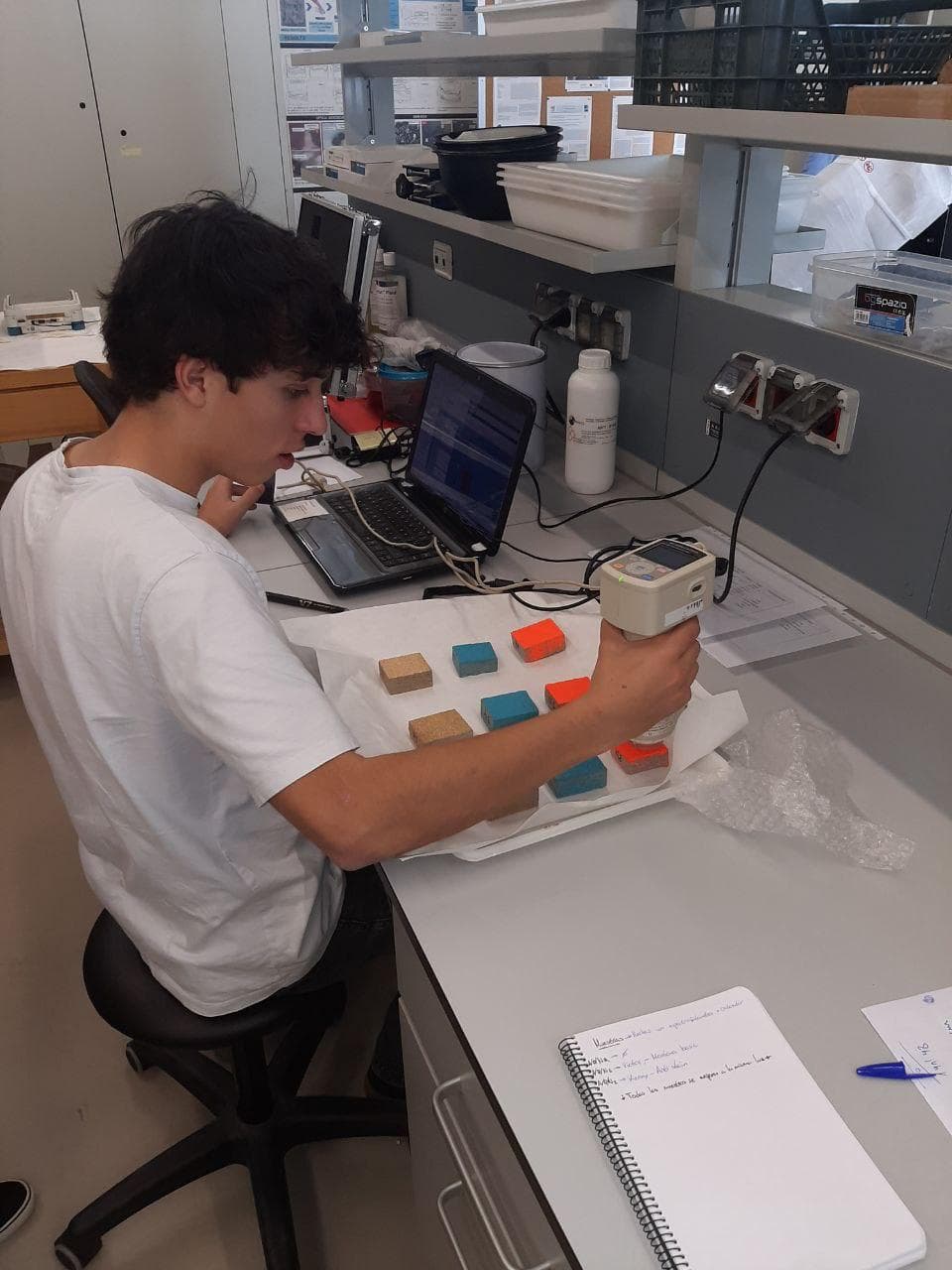
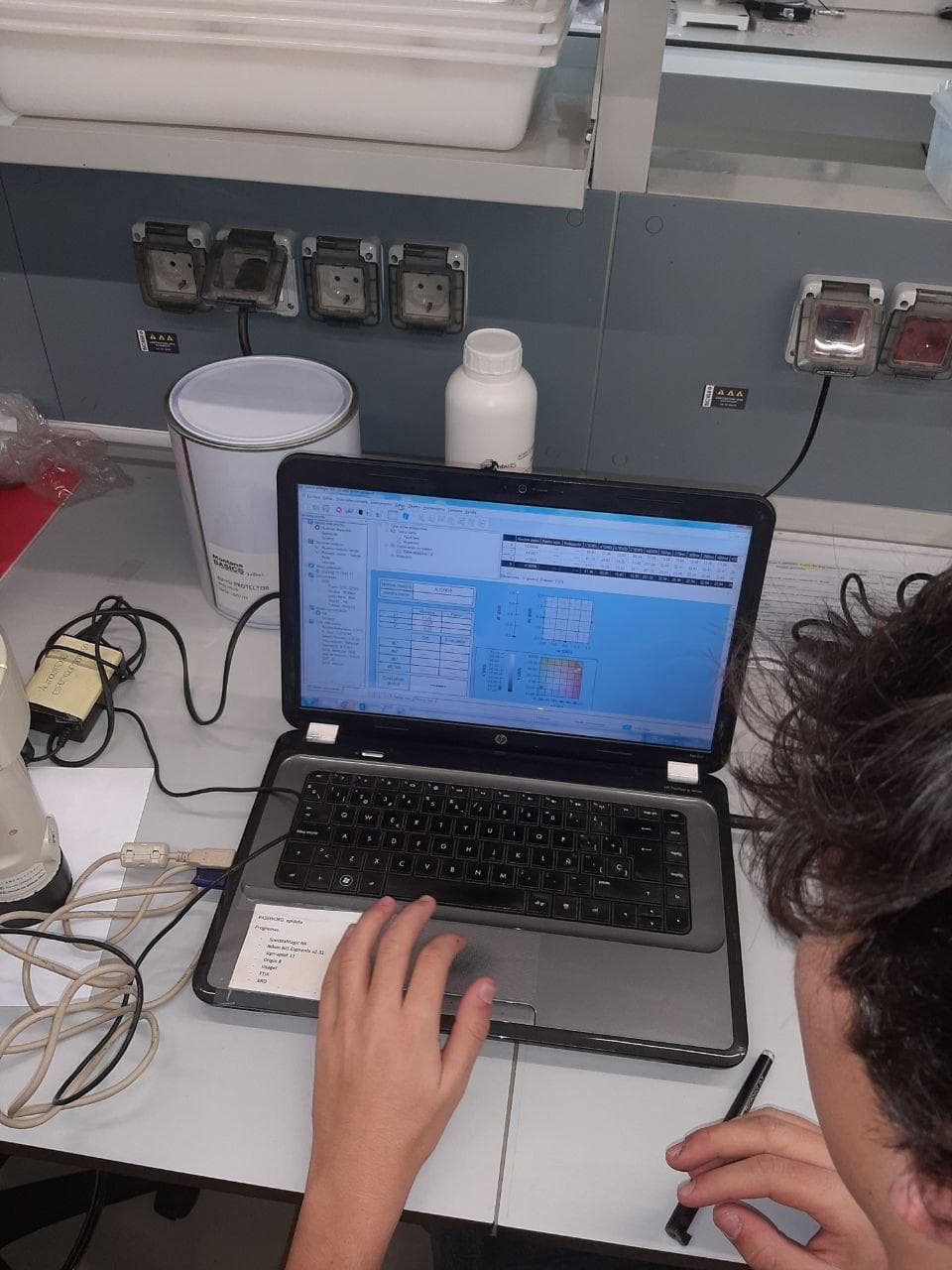
Mock-ups that replicate the murals colours were prepared, protected and analysed by our Stembach student Victor. (Instituto IES Valadares, Vigo).
Discovering Street Art in Your Area
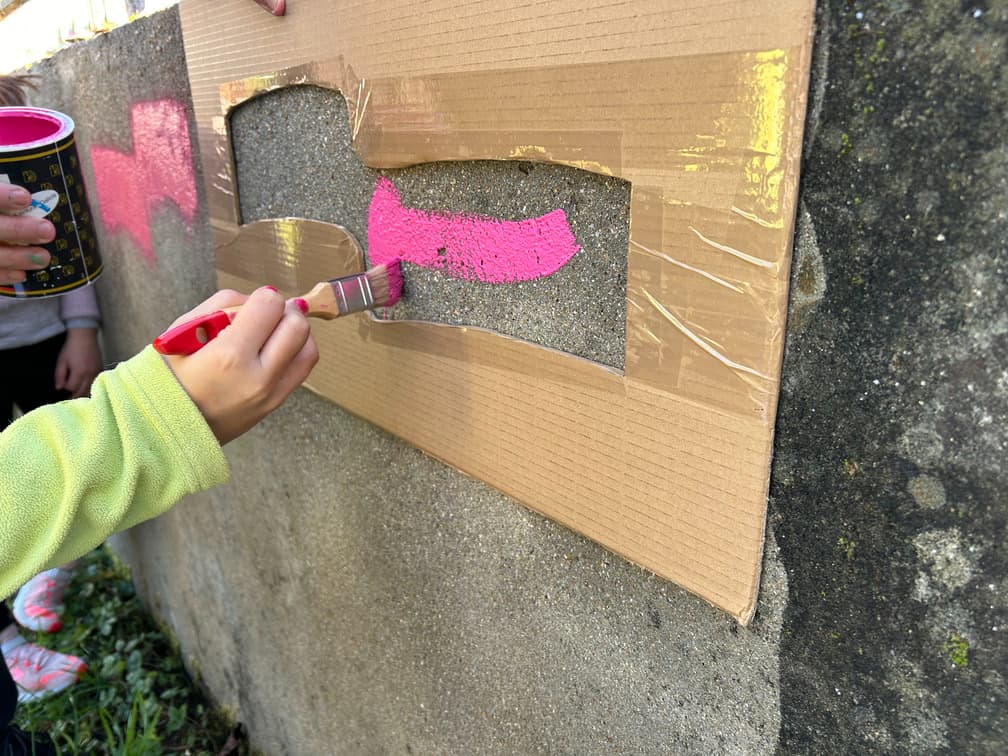
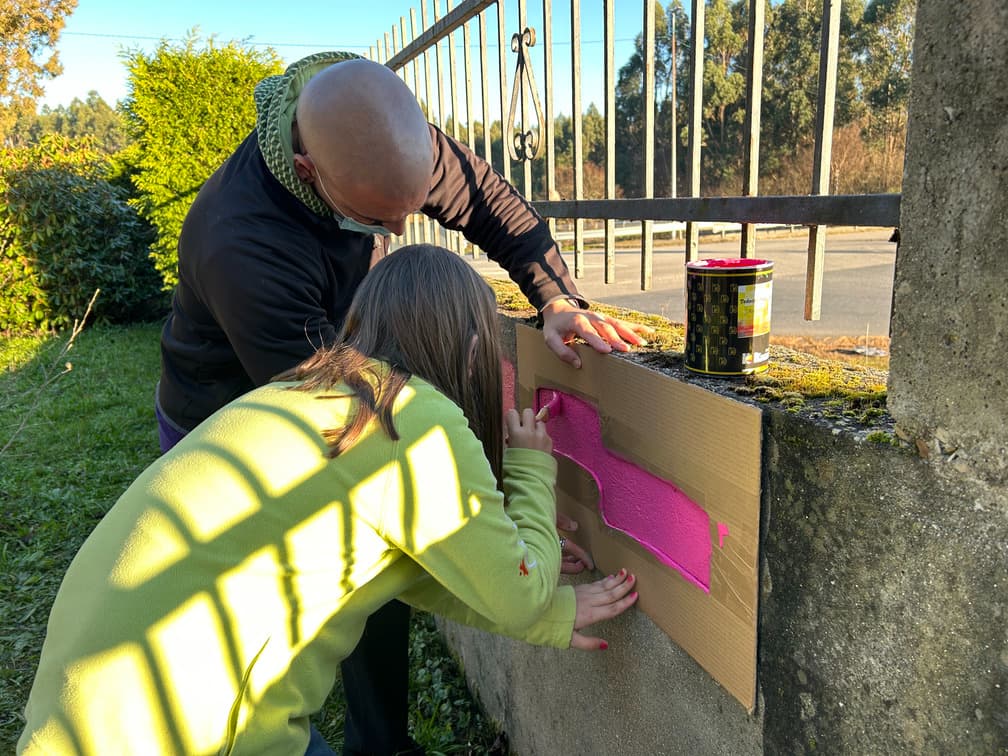
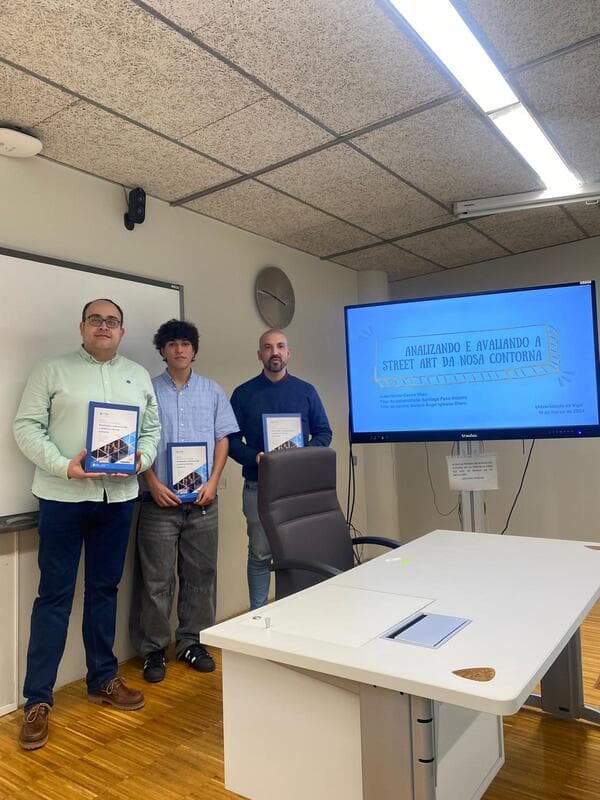
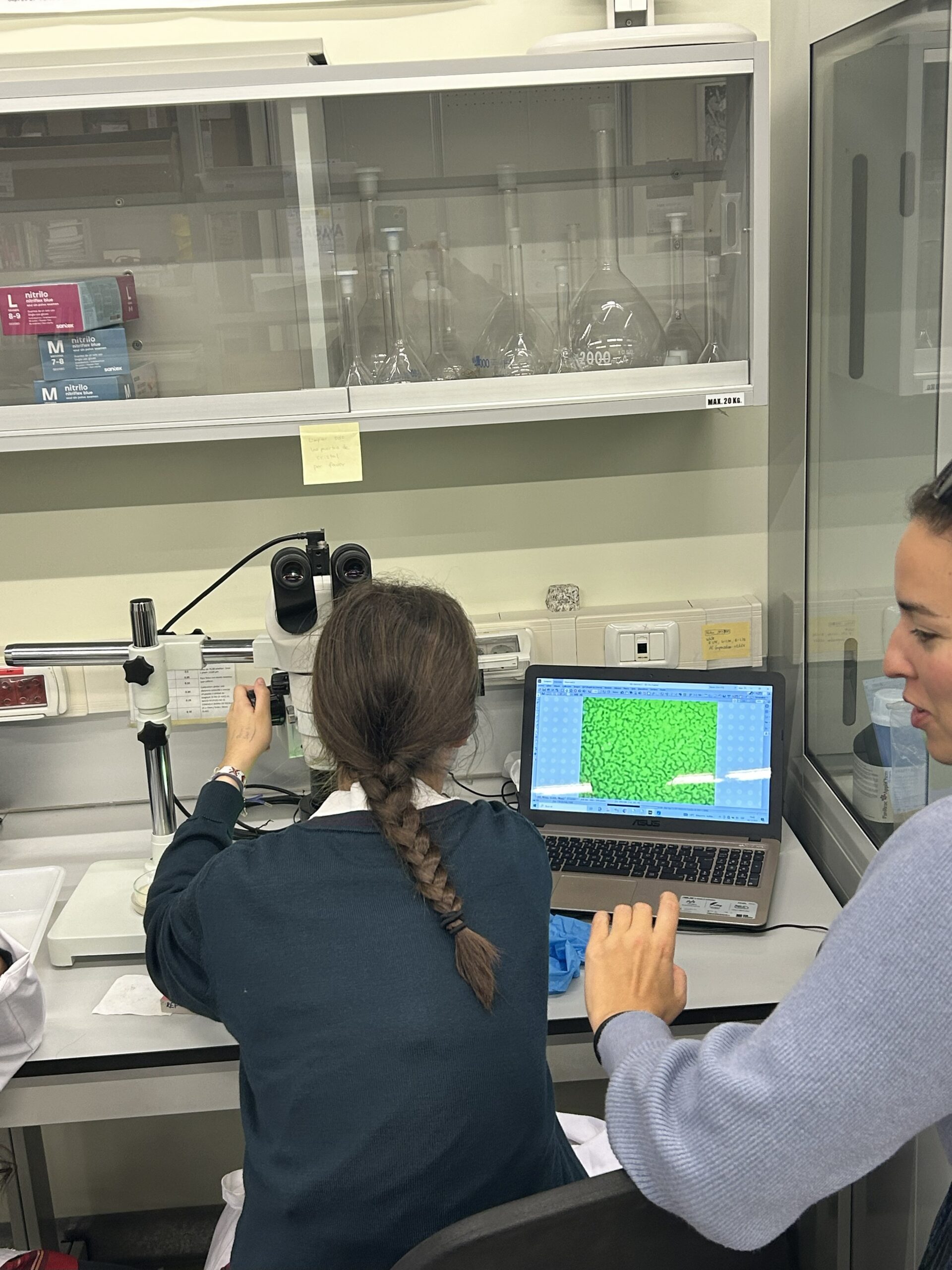
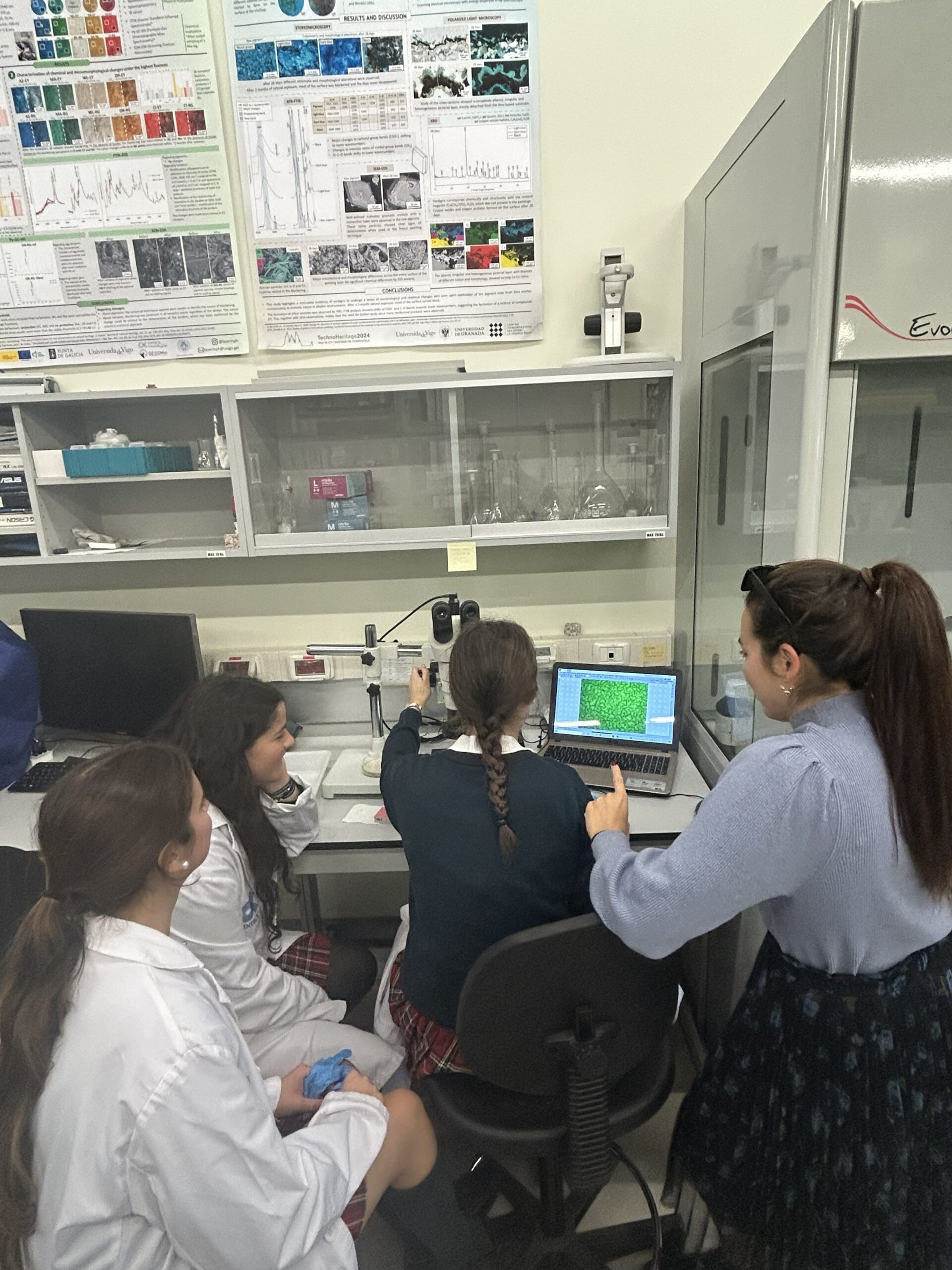
During the 2024-2025 and 2025-2026 academic years, we have been working with Itziar, Ana and Julia, as well as their teacher Andrea, from the Colegio de Fomento As Acacias in Vigo as part of the STEAMBach initiative. Our joint work has focused on the project titled Discovering Street Art in Your Area.
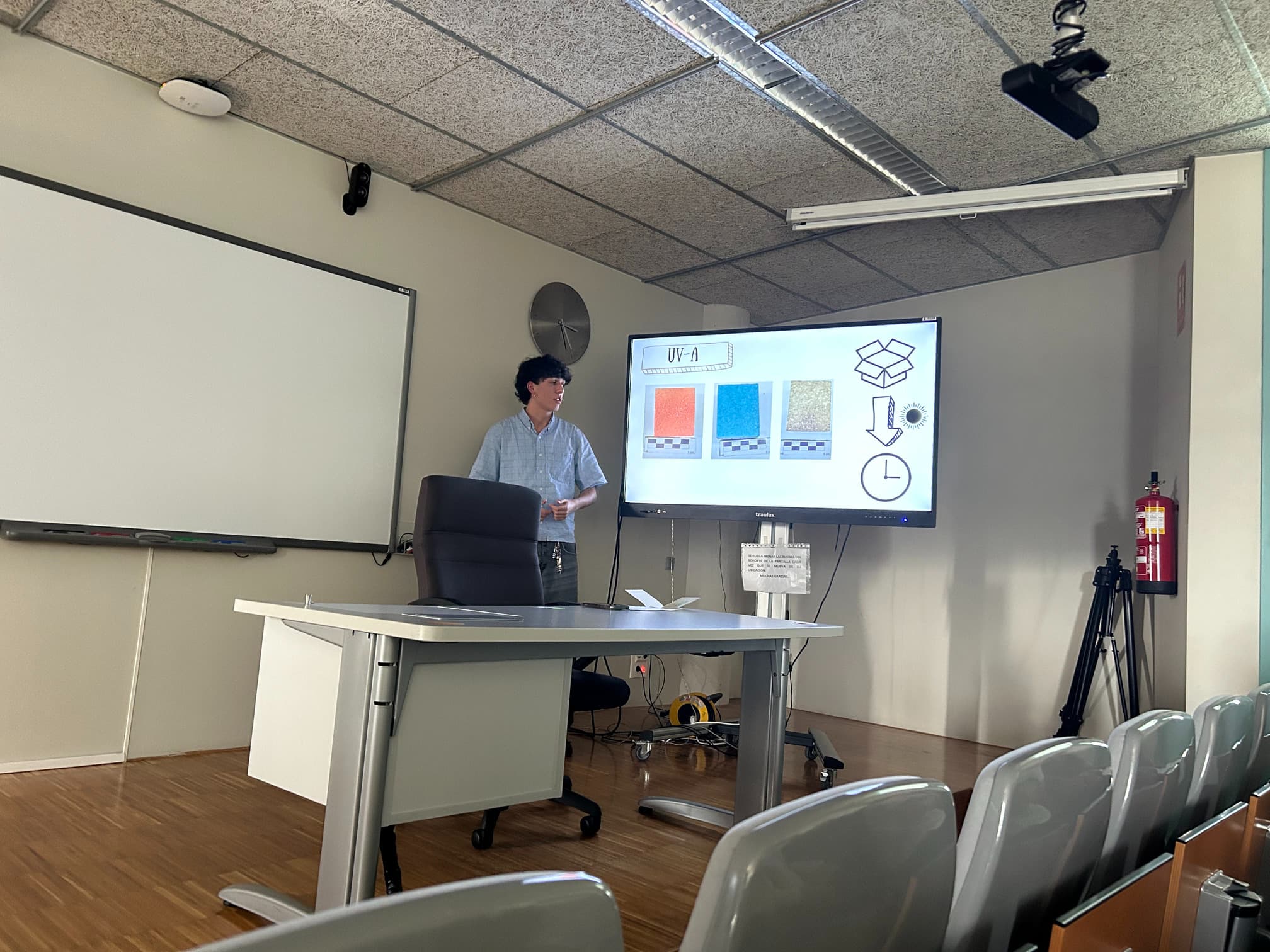
Over the past year, we have assessed the effectiveness of a protective coating applied to artworks with different compositions, named alkyd and polyvinyl acetate. To conduct this evaluation, we exposed the samples to both UV-A and UV-B radiation.
We are now in process of comparing these results with those obtained from samples exposed to natural weathering at their school, as well as from a real artwork located in the center of Vigo, created by the artist Loyola.
Sustainable strategies for urban art conservation
Noemí Da Silva Vidal is an energy engineer from the School of Mining and Energy at the University of Vigo. Her bachelor thesis, within SmArt project (CINTECX Challenge2024 project: Sustainable strategies for urban art conservation) focuses on the study of degradation in four graffiti paints with colour protectors, after exposure to various orientation and locations. More specifically, the project examines two polyvinyl acetate and two alkyd paints-green and pink- that were coated with a UV protector. During their exposure, surface temperature was measured using T-type surface thermocouples. Additionally, colour measurements were performed every 45 days to stablish relationships between colour, temperature and degradation. The painted mock-ups were subjected to different environmental conditions based on factors such as proximity to the sea, altitude and orientation.
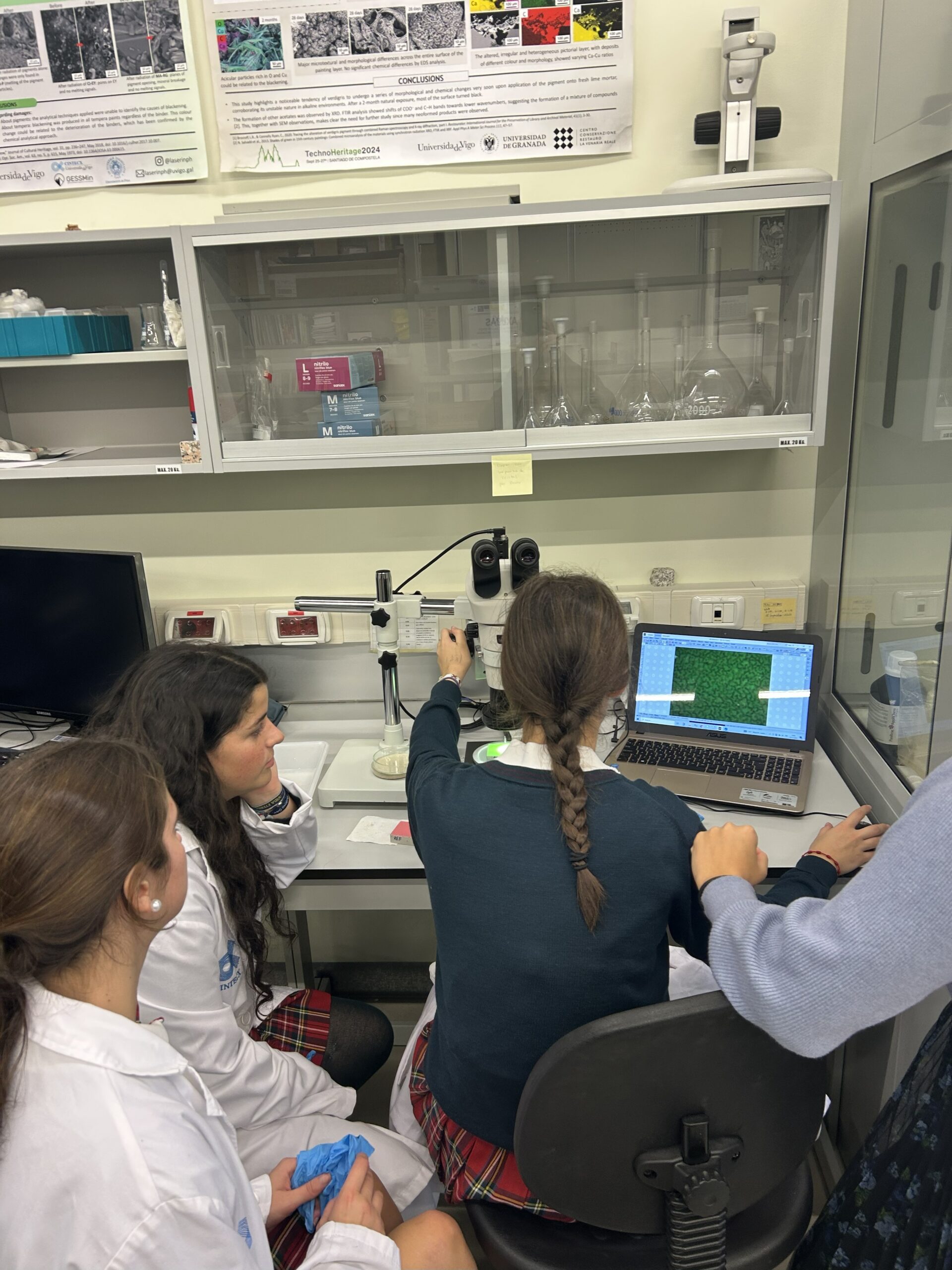
The characterisation of the samples was carried out using a multi-analytical approach, which included stereomicroscopy, Fourier-transform infrared spectroscopy (FTIR) and scanning electron microscopy (SEM-EDS).
More information about the project on https://www.youtube.com/watch?v=ZgGDM6L9MN8
Acknowledgements: This study is part of the (SOS-Murals) Safeguarding the urban murals: cleaning and protection (CNS2022-135645) research project funded by MICIU/AEI/10.13039/501100011033 and, by “European Union NextGenerationEU/PRTR” and by the CINTECX Challenge2024 project: Estrategias sostenibles para la conservación del arte urbano.
SOS Muras. Safeguarding the urban murals
Alejandro Loroño is a bachelor student from the School of Mining and Energy at the University of Vigo.
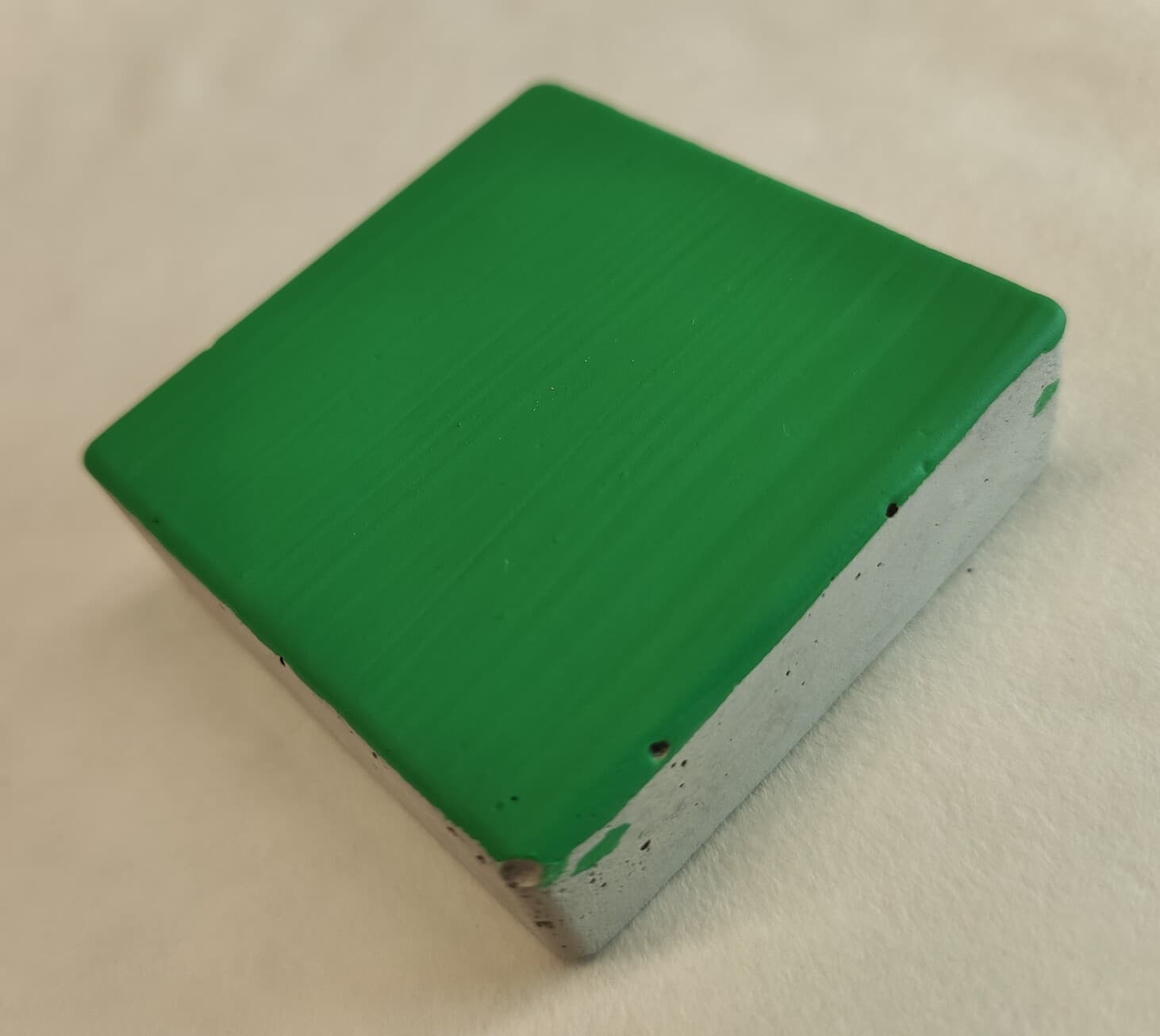
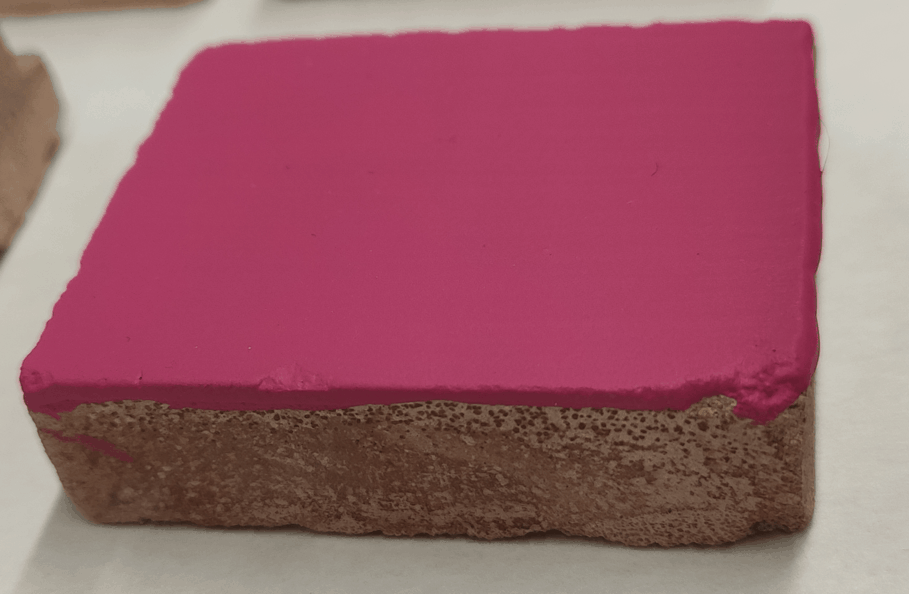
His bachelor’s thesis, within the SOS-Murals project, focuses on evaluating cleaning procedures that are more sustainable and environmentally friendly than commercial chemical products. Brick and concrete were selected as substrates for the preparation of mock-ups, which were then painted using two polyvinyl acetate and two alkyd paints – green and pink. The mock-ups were soiled with soot from diesel engine exhausts and subsequently subjected to an artificial ageing under controlled temperature (18ºC) and humidity (80%RH) conditions, as well as exposure to 200ppm of SO2 gas for 40 days.
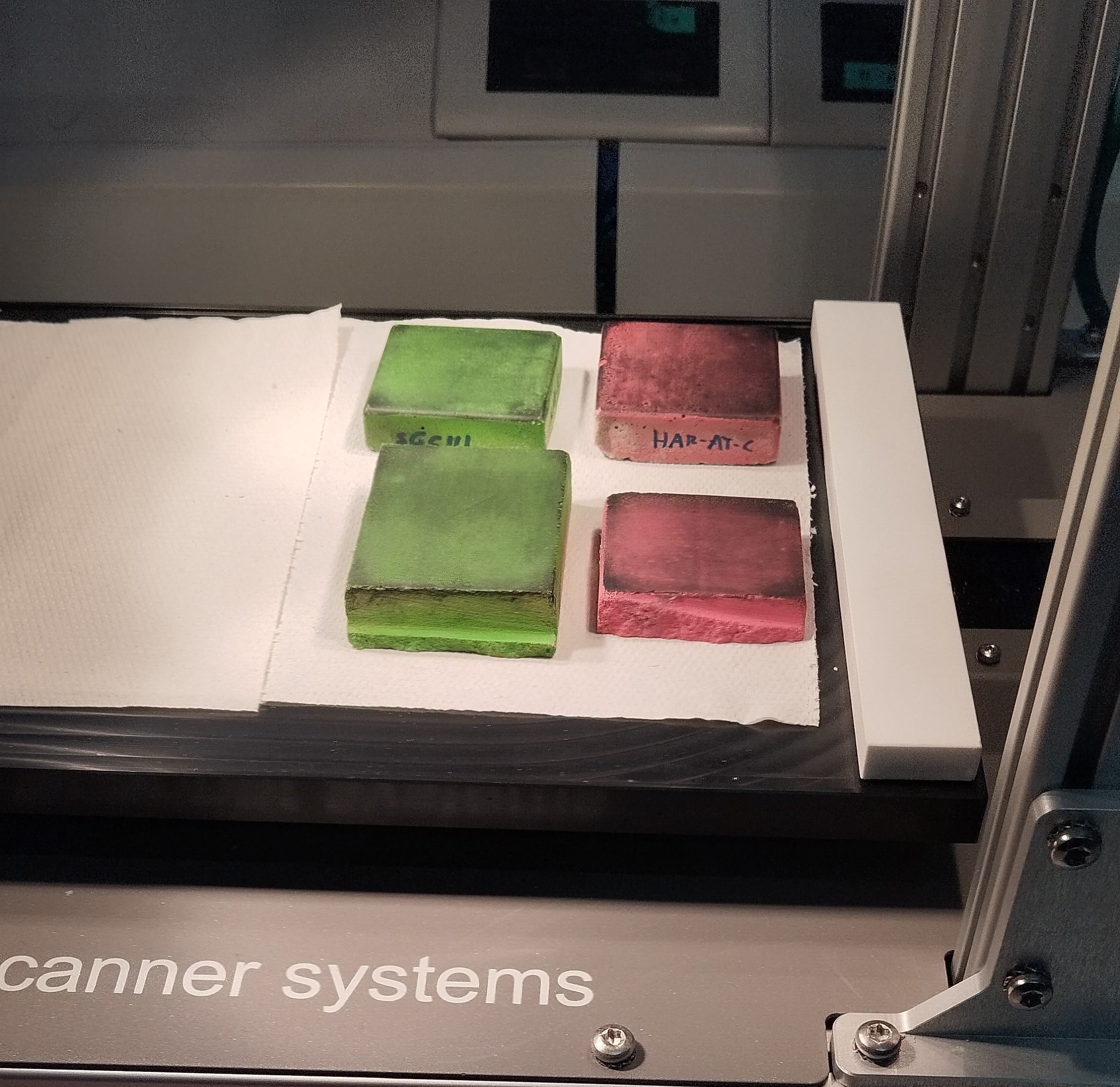
For cleaning, the project explores the use of low-toxic solvent ternary mixture, considering two cleaning agents (Tween20 and modified Papetta AB57) and two cleaning vehicles (agar-agar and methylcellulose). Therefore, 4 cleaning methods were considered. He is now assessing the cleanings through a multi-analytical approach combined stereomicroscopy, colour measurements, hyperspectral imaging, FTIR and SEM.
Welcome to the team, Álex!
Acknowledgements: This study is part of the (SOS-Murals) Safeguarding the urban murals: cleaning and protection (CNS2022-135645) research project funded by MICIU/AEI/10.13039/501100011033 and, by “European Union NextGenerationEU/PRTR”
SOS Murals. Safeguarding the urban murals
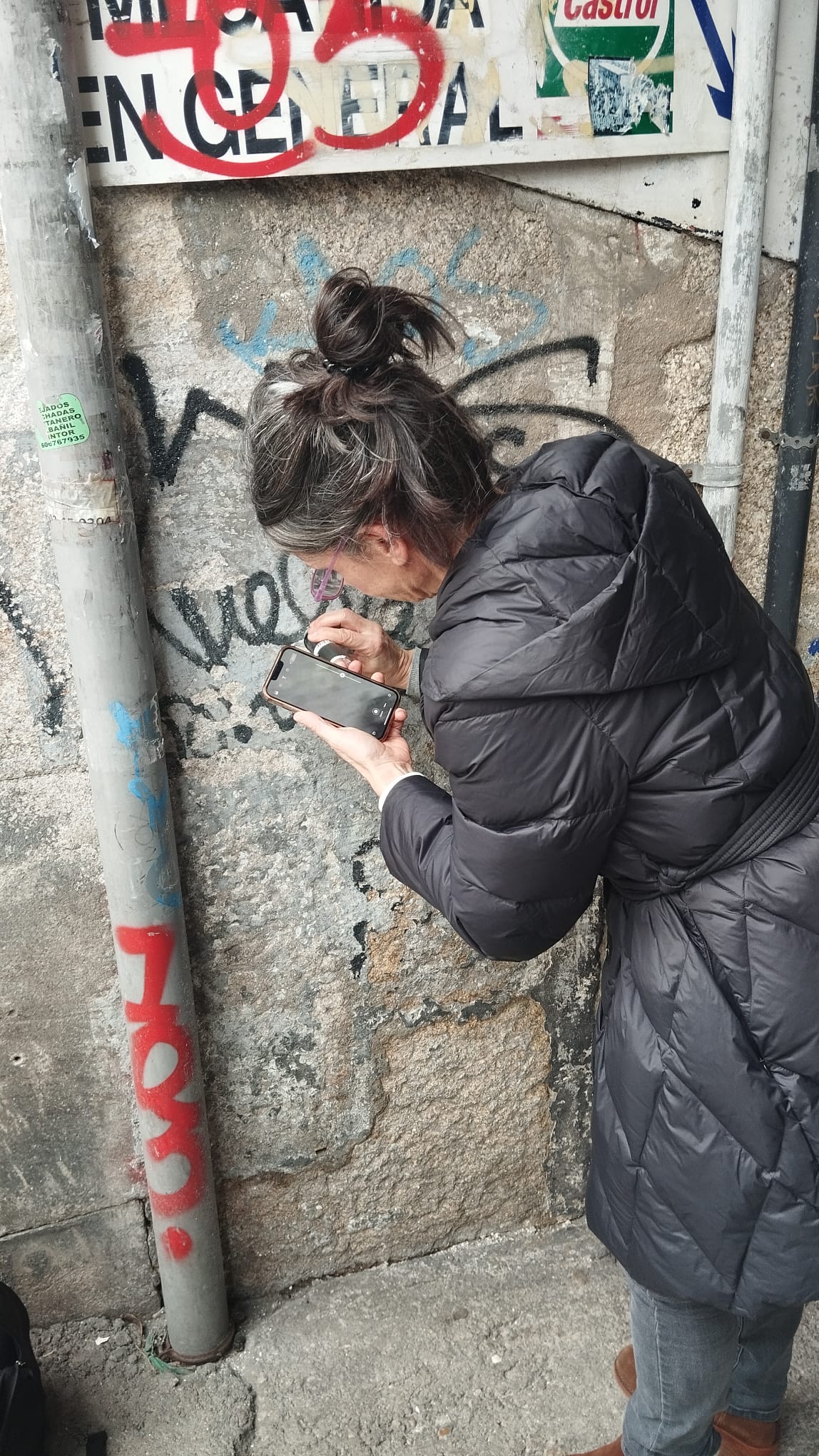
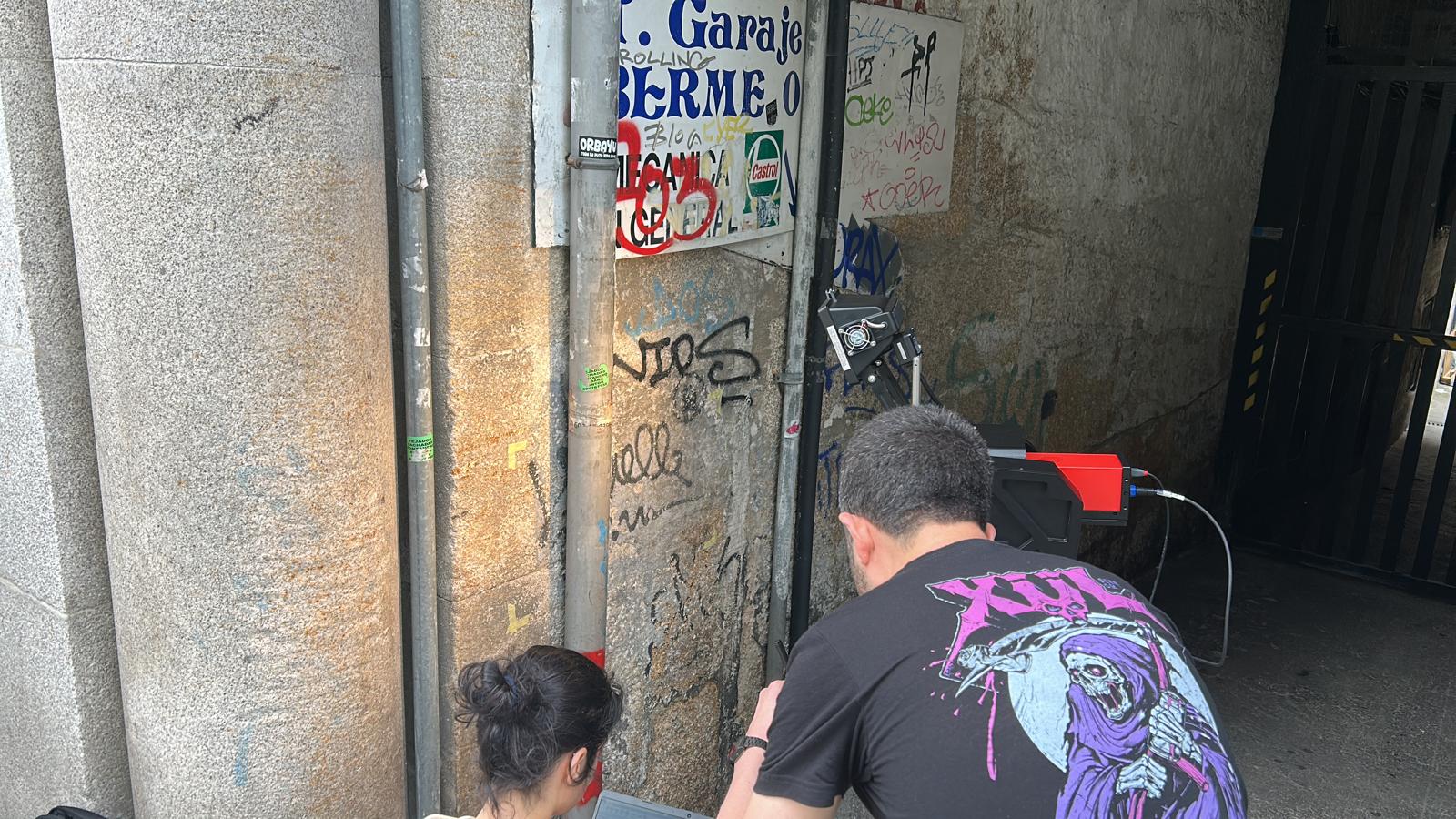
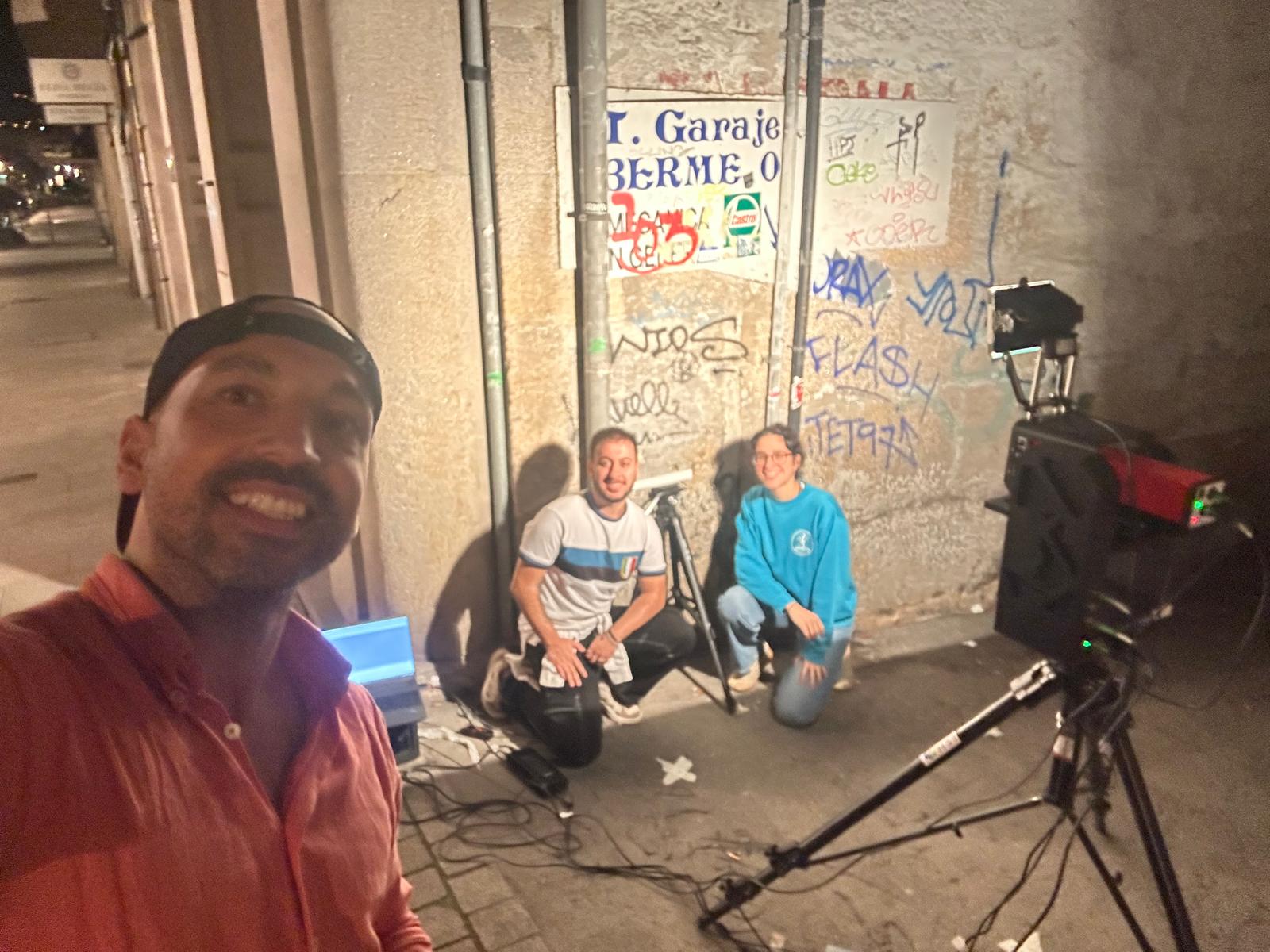
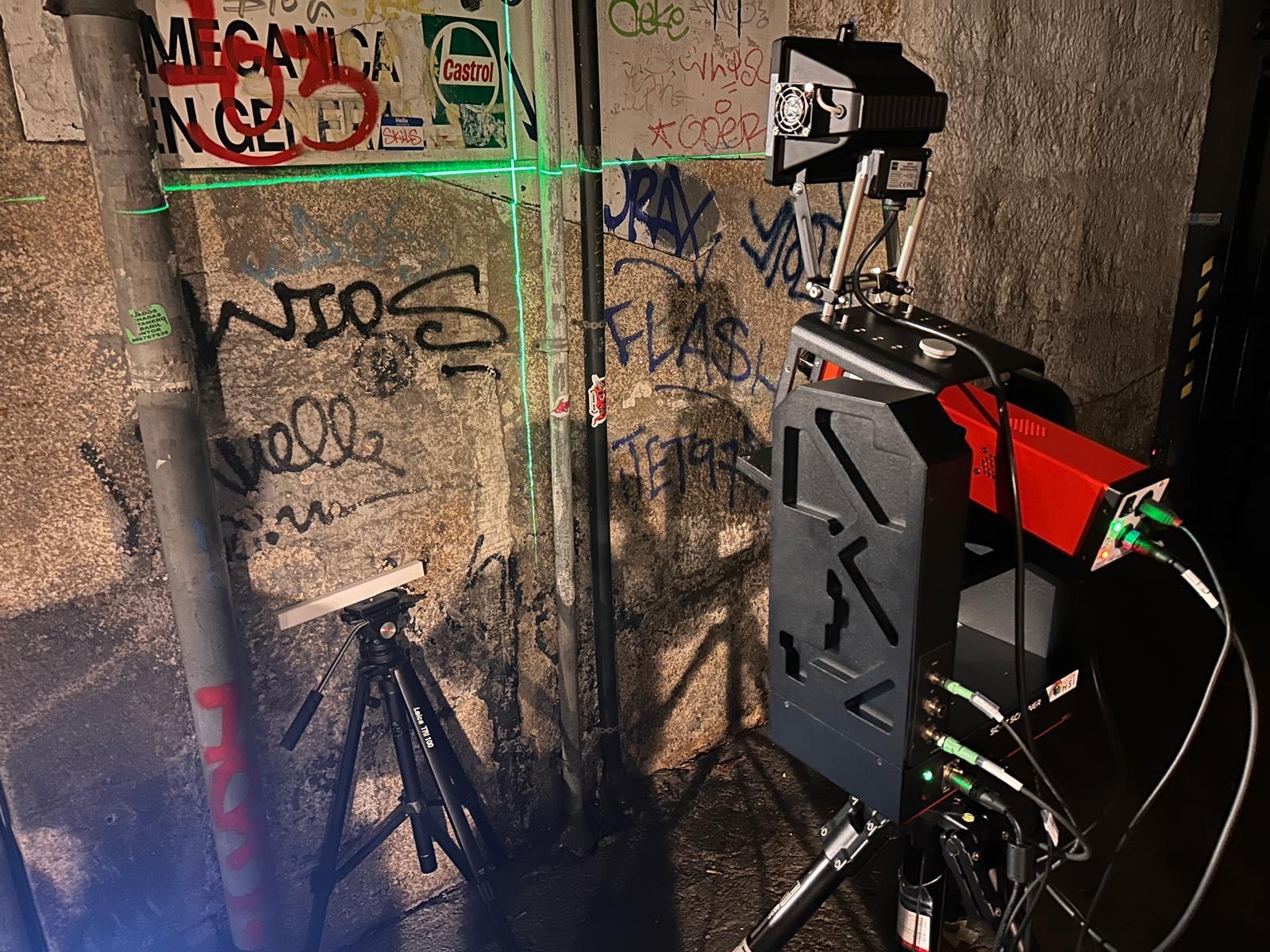
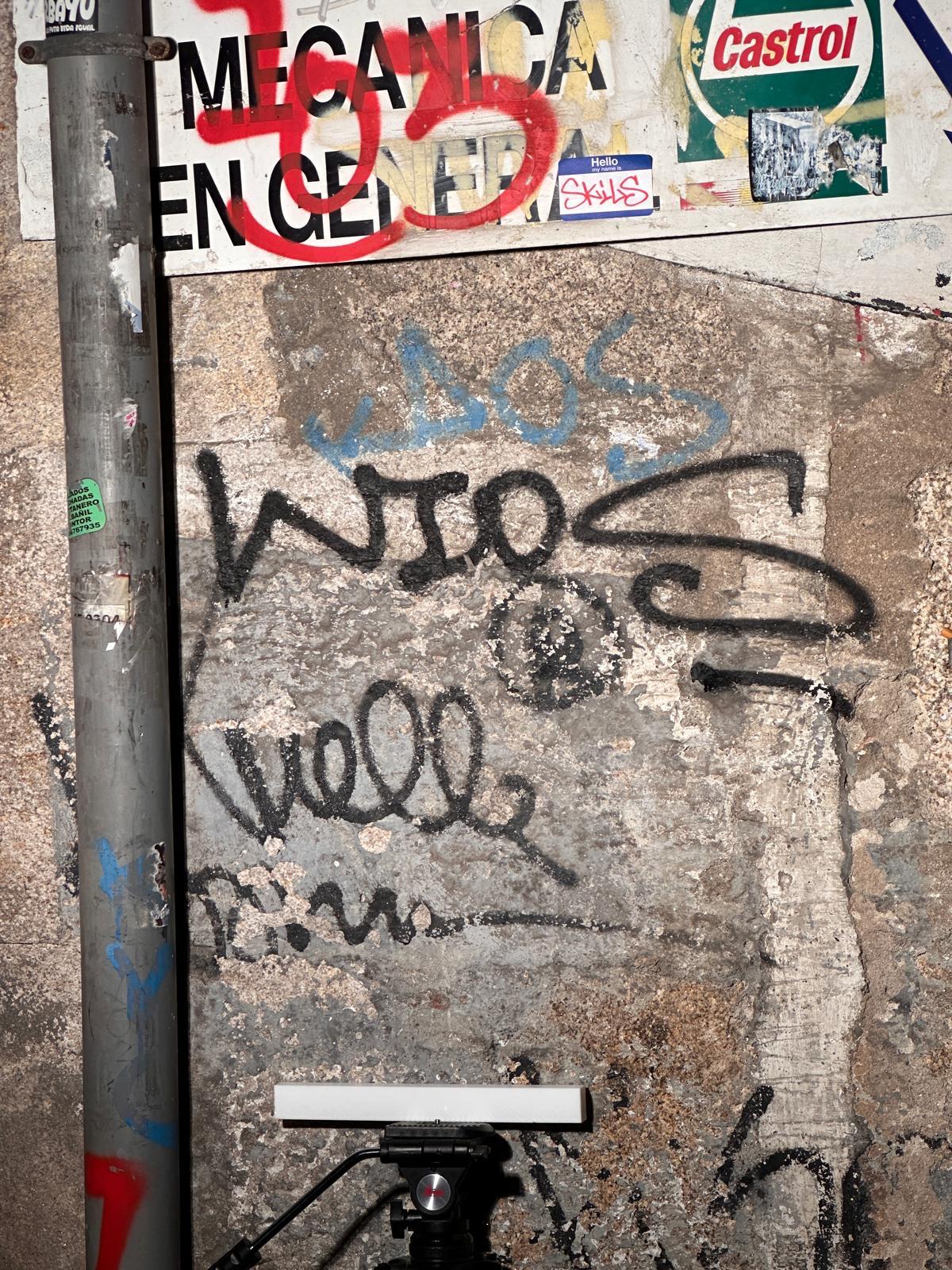
In collaboration with Alberto Santos, from the Escuela Universitaria CEU de Magisterio in Pontevedra, our team is working in the preservation of one of the few remaining tags created by Muelle, recognised as Spain’s first graffiti artist. This tag is still visible close to Praza Compostela of Vigo (in the north west of Spain).
Through comprehensive material analyses and hyperspectral imaging, we are assessing the current state of conservation of this significant piece of street art. The aim of this study is to propose strategies to safeguard it against weathering, pollution, and subsequent graffiti layers.
We are delighted that our work helps to highlight street art as an important part of the cultural heritage and contributes to ensuring the ling-term preservation of Muelle’s artistic legacy for future generations.
Acknowledgements: This study is part of the (SOS-Murals) Safeguarding the urban murals: cleaning and protection (CNS2022-135645) research project funded by MICIU/AEI/10.13039/501100011033 and, by “European Union NextGenerationEU/PRTR”